InfoSAWIT, JAKARTA – Forest and land fires have once again affected several parts of Indonesia, disrupting public health, education, transportation, and daily life. The government has responded with firefighting operations, the deployment of security personnel, and arrests of people suspected of deliberately starting fires.
In August 2026, Indonesian police announced that 72 people had been named suspects in 89 forest and land fire cases across Sumatra and Kalimantan. Matches, jerry cans, machetes, and oil palm seedlings were presented as evidence. Some of the suspects were reportedly accused of intentionally using fire because it was cheaper than clearing land without burning.
The arrests quickly created the impression that communities, particularly independent smallholder oil palm farmers, were the main drivers behind the fires.
There is no denying that some people do clear land by burning. Some do so to establish oil palm plantations, while others use controlled fire as part of traditional cultivation for upland rice and other food crops. When fire is poorly controlled, spreads to neighboring land, or puts communities at risk, those responsible must be held accountable.
But identifying who started a fire is not enough to explain why forest and land fires continue to recur.
A match may ignite a fire, but it does not explain why a landscape has become so dry, exposed, and vulnerable to burning. It does not reveal who controls the land, how water systems have been altered, what permits were issued, or who ultimately benefits economically from the area.
At roughly the same time, the government identified dozens of company concessions considered at high risk of fire. Nineteen companies were investigated after fires were found across approximately 11,047 hectares within their concession areas.
Yet the names of those companies were not immediately made public. Communities quickly saw individuals identified as suspects, while corporations remained largely represented as unnamed figures under investigation.
This exposes a significant imbalance in how responsibility is presented.
Violations allegedly committed by individuals are publicly displayed, often alongside evidence and explanations of their motives. Corporate responsibility, meanwhile, is more frequently discussed through lengthy administrative investigations that receive less public visibility.
That does not mean every company whose concession has burned is responsible for starting the fire. Fires can originate outside concession boundaries and spread inward. But companies cannot simply avoid responsibility by arguing that the fire came from surrounding communities.
Every permit holder has a responsibility toward the land under its control. Large-scale land control should come with an equally substantial obligation to prevent fires. The condition of canals and peatlands, firefighting infrastructure, patrol systems, land-tenure conflicts, and the historical management of concessions should all form part of the investigation.
Without such scrutiny, law enforcement risks stopping at the person found closest to the flames.
The Layers Behind Forest and Land Fires
Forest and land fires have multiple causes. There may be someone who lights the fire, but there may also be a prolonged dry season that allows flames to spread rapidly, drained peatlands, cleared forests, abandoned land, and disputes over land ownership.
Behind these factors lies a complex history of overlapping plantation, forestry, and mining permits.
This disorder in land governance is not merely an allegation. The Corruption Eradication Commission (KPK) has previously found weaknesses in the accountability of oil palm plantation licensing, creating opportunities for corruption. The agency has also recorded overlaps involving millions of hectares between cultivation rights and other land-based permits.
The Audit Board of Indonesia (BPK) has previously identified around 2.91 million hectares of oil palm plantations located within forest areas without forestry permits.
These problems did not emerge overnight.
Since the New Order era, forests have often been treated as spaces that could be allocated to support investment. Permits became a pathway for companies to control land on a large scale, while communities that had lived on and managed those areas long before permits were issued were often recognized only after conflicts emerged.
When a company controls thousands of hectares, the state may describe it as investment. When communities cultivate several hectares, their activities are more readily labeled encroachment.
That perspective continues to shape the debate.
The state has placed considerable faith in large-scale investment as a driver of economic growth and regional development. At the same time, communities living around plantations have not always received adequate access to land certainty, technology, or financing to manage their own land.
They are told not to burn, while the full cost of finding alternatives to fire-based land clearing is often placed on their shoulders.
Fire bans are necessary. But prohibitions without practical alternatives can simply shift the burden of policy onto those with the least resources.
The government spends substantial amounts on water bombing, weather modification, firefighting operations, and security deployments. Meanwhile, support for equipment and financing to help small farmers clear land without fire remains far below actual needs on the ground.
Smallholders Are Not a Homogeneous Group
Palm oil smallholders cannot simply be treated as a single, uniform group.
Experience with sustainability certification shows that fire prevention is not merely about issuing warnings when the dry season arrives. It requires plantation mapping, record keeping, training, internal monitoring, traceability, and group-level rules that can actually be implemented.
Sustainability standards prohibit the use of fire for plantation establishment and require environmental management practices that can be audited. When a violation occurs on a member’s plantation, the consequences can extend beyond that individual and affect the entire group.
This experience demonstrates that farmers must be accountable. But it also shows why millions of independent smallholders should not be treated as a single group and collectively viewed with suspicion.
Certification does not make farmers immune from wrongdoing, nor should certification be used as a shield against scrutiny. Instead, it demonstrates that farmers can operate within systems of accountability when they have access to institutions, knowledge, and adequate resources.
If farmers are required to map their plantations, record their activities, disclose the origin of their production, and undergo audits, similar standards of transparency should apply to companies and government institutions.
This is what disappears when farmers are portrayed simply as fire starters.
The public rarely sees farmers who work to improve plantation practices, maintain land boundaries, participate in training, or bear the costs of meeting environmental standards. Farmers are more likely to appear in the news when they are arrested than when they contribute to fire prevention.
Traditional Farming Should Not Be Confused with Commercial Expansion
Traditional shifting cultivation should also not automatically be equated with burning for commercial plantation expansion.
For some communities in Kalimantan, upland rice cultivation is more than a means of producing food. It incorporates knowledge of seasons, soil types, local seeds, division of labor, and fire management.
Recognizing local knowledge does not mean accepting every form of burning carried out in the name of tradition.
The landscape has changed. Population has increased, land ownership patterns have shifted, and dry seasons have become more difficult to predict. Traditional practices therefore need to adapt to new risks.
But such changes should be developed together with communities through knowledge and technological support, rather than relying solely on criminal penalties.
Palm Oil Should Not Become the Sole Target
Beyond farmers, palm oil itself continues to be treated as a convenient scapegoat.
Deforestation, fires, and biodiversity loss are often discussed as though oil palm were an independent actor. Yet crops do not issue permits, build drainage canals, seize land, or bribe officials.
Those are decisions made by people, companies, and governments.
There is no reason to deny that oil palm expansion has contributed to forest, peatland, and wildlife habitat destruction in many places. Defending palm oil while ignoring environmental damage would merely turn the industry’s defenders into its spokespersons.
But assigning all responsibility to a single commodity can also obscure the deeper problem.
The issue is not simply palm oil. It is how the commodity is produced.
Oil palm cultivated legally on community land, managed without fire, established without replacing natural forests, and operated within a traceable system should not be treated in the same way as plantations associated with forest clearing, peatland drainage, land conflicts, or problematic permits.
Palm Oil Between Environmental Protection and Global Trade
Global demand for vegetable oils will not disappear simply because palm oil is rejected. The world continues to require vegetable oils for food, cosmetics, energy, and industrial applications.
If palm oil is replaced by soybean, rapeseed, or sunflower oil, the land requirement does not automatically become smaller. Environmental pressure may simply shift to forests, savannas, or grasslands elsewhere.
The International Union for Conservation of Nature (IUCN) has also warned that simply rejecting palm oil could shift biodiversity loss rather than eliminate it.
Behind the environmental debate is also a major commercial competition.
Palm oil competes directly with soybean, rapeseed, and sunflower oils. Disputes involving Indonesia, Malaysia, and the European Union over the treatment of palm oil under biofuel policies have also reached the World Trade Organization.
These developments demonstrate that palm oil is being debated simultaneously in conservation policy and international trade.
That does not mean every environmental standard represents a trade conspiracy. Strong standards remain necessary to stop deforestation and protect biodiversity.
However, such standards should assess all commodities using comparable benchmarks. They must also take into account the ability of smallholders to meet requirements related to legality, mapping, traceability, and other documentation demanded by international markets.
It is possible to defend farmers without defending uncontrolled burning. It is possible to support palm oil without denying environmental damage. And it is possible to support sustainability standards while questioning unfairness in the global vegetable oil trade.
Look Beyond the Person Holding the Match
The government should therefore move beyond explaining forest and land fires solely through the number of people arrested.
The public needs to know where fires occur and how those locations relate to company concessions, cultivation rights, peatlands, customary territories, and smallholder plantations. The names of companies whose concessions are affected by fires should be made public.
Permit histories, land-cover changes, water-management conditions, and fire-prevention obligations should also be examined.
Every case should investigate who owns the land, who financed the clearing, who ordered the burning, and who ultimately benefits from the economic activity that follows.
Arresting workers or farmers found at the site without investigating the capital and interests behind them risks producing a form of justice that stops at the lowest level.
Farmers and palm oil ultimately face a similar fate.
Farmers become the public face of fires, while palm oil becomes the face of biodiversity loss. Both are easy to point to because they are visible on the surface.
What is discussed less often is who controls land, supply chains, permits, and markets.
The question, therefore, should not stop at who lit the fire.
It should also ask who controls the land, who altered its water system, who issued the permits, who failed to supervise it, and who ultimately profits after the land is cleared.
Arresting one person responsible for a fire may extinguish one point of ignition. But unless the land-governance and licensing systems that allow fires to recur are addressed, the state risks continuing to arrest people holding matches without ever confronting the machinery that produces the smoke. (*)
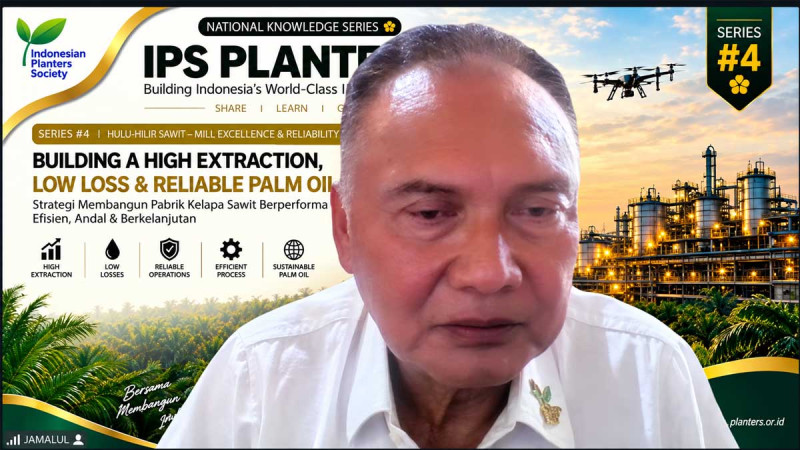
By Jamaluddin, Chairman of the Belayan Sejahtera Plantation Cooperative
Disclaimer: This article represents the personal opinion of the author and is entirely the author’s responsibility. It does not represent the views of InfoSAWIT.