InfoSAWIT, JAKARTA – The issue of palm oil plantations located within forest areas should not be treated solely as the responsibility of the central government. Local governments, particularly regents as regional heads, are considered to have a role and authority in helping resolve problems faced by communities in their respective jurisdictions.
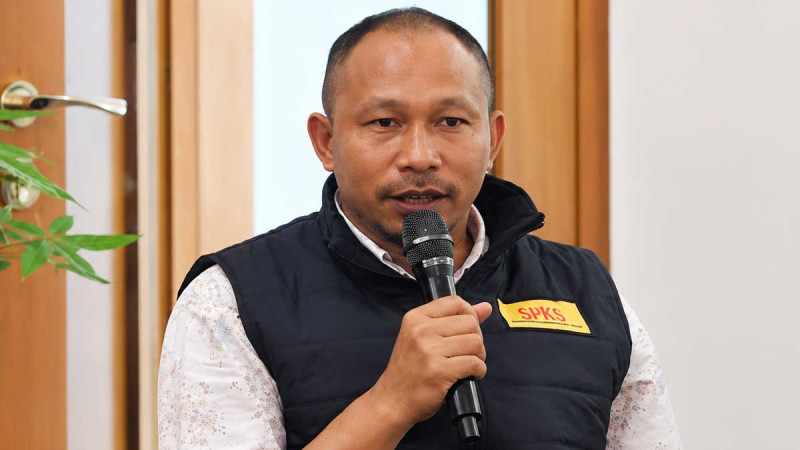
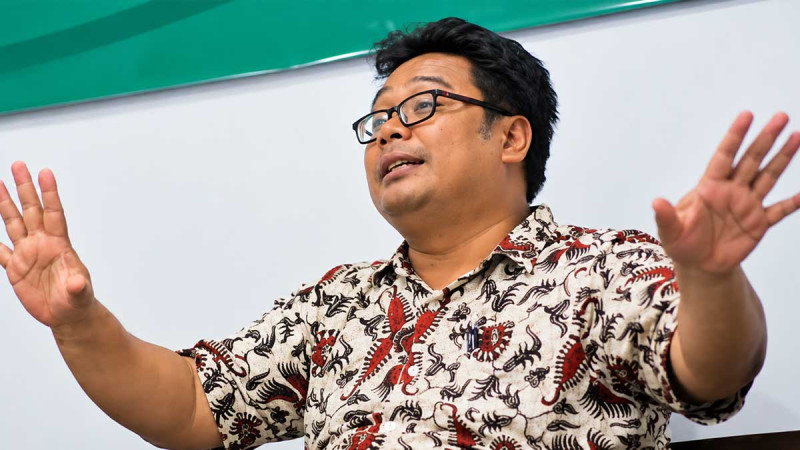
Gunawan, Senior Adviser at the Indonesian Human Rights Committee for Social Justice (IHCS), raised the issue while discussing communities and plantations located within forest areas during the Pre-National Conference Webinar on Smallholder Plantations II attended by InfoSAWIT, on Friday, September 4, 2026.
According to Gunawan, regional heads should be able to take action when residents own or manage land located within forest areas. Local governments are also in a strategic position to bridge the issue between communities and the central government.
“The regent should be the one submitting a legalization request when residents' land is located within the area,” Gunawan said during the webinar.
He explained that regional heads should not merely serve an administrative function. They also have a role in helping resolve problems involving communities in their respective regions.
Therefore, when residents face difficulties because their plantation land lies within a forest area, local governments should not remain passive. Community concerns need to be taken into consideration and followed by efforts to identify a resolution in accordance with applicable regulations.
Gunawan also pointed to the broader issue of community plantations located inside forest areas. In his view, the situation requires a more comprehensive response, including efforts to inform communities about the legal status of their land and the consequences of managing land within forest areas.
He stressed that not every parcel located within a forest area can automatically be treated in the same way. A clear mechanism is therefore needed to examine the circumstances of each parcel and the communities that have lived or carried out activities there.
“There still needs to be socialization regarding the role [of the government] so that forest-area problems are not all...” Gunawan said.
According to him, the government needs to ensure that resolution mechanisms take community circumstances into account while continuing to comply with regulations governing forest areas.
The issue becomes particularly important when plantation activities have been taking place for a considerable period in an area that was later determined to have forest-area status.
In such cases, clarity is needed over the steps to be taken, including which authority is responsible for submitting applications and what role the local government should play.
Gunawan said regional heads occupy a strategic position because local governments are directly connected to communities. When residents need assistance in resolving land-related problems, local governments should therefore be able to facilitate and coordinate with the relevant government authorities.
Such an approach is considered important to ensure that community plantations located within forest areas are not reduced to an administrative issue, but instead receive solutions that provide certainty for residents while continuing to respect forestry regulations. (T2)