InfoSAWIT, JAKARTA – Long-running land conflicts in Indonesia’s palm oil-producing regions have prompted renewed calls from civil-society groups for the government to take concrete steps to protect local communities and resolve disputed land claims.
The cases involve residents of Rakawuta Village in South Konawe, Southeast Sulawesi, and the Muara Tae Indigenous Community in West Kutai, East Kalimantan.
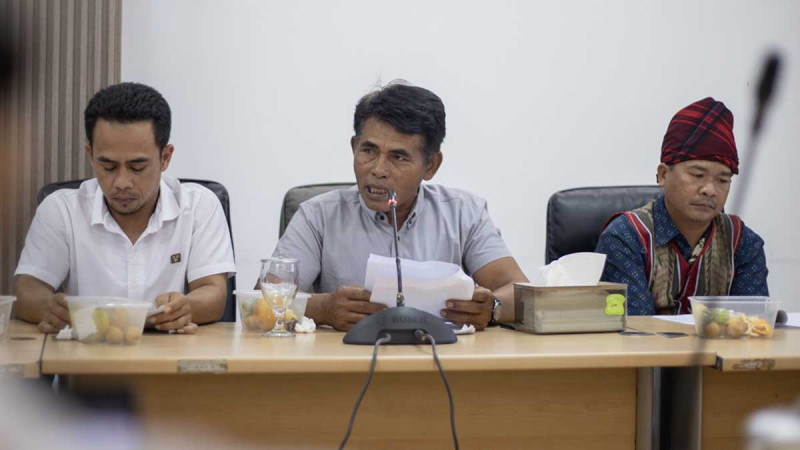
Kaoem Telapak, KOMNASDESA Southeast Sulawesi, WALHI Southeast Sulawesi and other civil-society organizations, together with indigenous and local communities, issued a joint statement on September 3, 2026, urging authorities to address the two disputes.
Rakawuta Land Dispute Has Lasted More Than a Decade
According to the civil-society groups, the Rakawuta dispute has continued for more than a decade. They said a land conflict involving approximately 105 hectares between residents and PT Merbau Jaya Indah Raya has affected 33 families who have lost access to land they previously managed.
The groups also said some community land had received certificates since 2023, while company activities in the disputed area remained a concern.
The case has also been linked to sustainable palm oil standards. Based on field monitoring and complaints submitted by indigenous communities, the civil-society groups alleged violations of principles and criteria under Indonesia’s Sustainable Palm Oil (ISPO) framework.
They said certification body PT TUV conducted a special audit following complaints and, according to the joint statement, identified five alleged violations, including land conflict and the opening of river buffer areas.
Women Bear Additional Economic Burden
The prolonged conflict has also affected the economic and social conditions of Rakawuta residents, particularly women.
Civil-society groups said the loss of access to productive land had forced some women to seek alternative sources of income, including casual labor, plantation work and home-based businesses.
Sugiyanti, a woman from Rakawuta, said women faced a double burden because they continued to carry family responsibilities while also seeking income.
Some women, she said, work clearing weeds and applying fertilizer on plantations, while others have turned to activities such as producing crackers, peeling onions, making fermented cassava and seeking work outside the village.
The situation illustrates how agrarian disputes can extend beyond land ownership issues, affecting household livelihoods and the economic resilience of local communities.
Muara Tae Dispute Dates Back to 2011
The second case involves the Muara Tae Indigenous Community in West Kutai, East Kalimantan, where the dispute has reportedly continued since 2011.
Civil-society groups said activities they described as evictions occurred again in June 2026 in the Muara Tae customary area and attributed them to PT Borneo Surya Mining Jaya (BSMJ), which they said is a subsidiary of First Resources Ltd.
According to Kaoem Telapak campaigner Ziadatunnisa, various dispute-resolution mechanisms have previously been pursued, including a National Inquiry by the National Human Rights Commission, the Roundtable on Sustainable Palm Oil (RSPO) grievance mechanism and international recognition through the Equator Prize.
However, she said recommendations resulting from those processes had not been implemented as expected, allowing the dispute to resurface.
The group also raised concerns about potential horizontal conflict when corporations enter areas occupied by indigenous or local communities, arguing that such tensions can obscure the underlying issues surrounding land ownership and use.
Indigenous Community Raises Forest Concerns
Masrani of the Dayak Benuaq Indigenous Community in Muara Tae said the land dispute has consequences not only for social conditions but also for environmental sustainability.
Forests and water catchment areas form an important part of the community’s living space, he said. Areas containing fruit trees, rattan and rubber, along with forests traditionally protected by the community, are also considered vulnerable.
The community fears its customary territory, which it has sought to defend since 2011, could continue to shrink without clear protection and a government-backed resolution.
Kaoem Telapak Campaign Leader Denny Bhatara said the Rakawuta and Muara Tae cases shared similar patterns, with company activities being questioned in areas where land disputes remain unresolved.
He called for stronger protection of customary territories, greater transparency surrounding land-use rights (HGU) and implementation of the Free, Prior and Informed Consent (FPIC) principle.
Civil-Society Groups Issue Five Demands
Civil-society groups outlined five demands in their joint statement.
They called on companies to halt expansion and activities in disputed areas of Muara Tae and ensure the restoration of land rights in Rakawuta. They also urged the government to strengthen oversight and take concrete action regarding demands for the restoration of land rights and an end to alleged evictions.
In addition, they called for a special coordination team established by Indonesia’s House of Representatives and the government to follow up on both cases.
The groups also demanded meaningful conflict-resolution processes that take gender, social justice and ecological considerations into account. Finally, they called on parliament, the Ministry of Agriculture, the Ministry of Agrarian Affairs and Spatial Planning/National Land Agency, the National Human Rights Commission and the National Commission on Violence Against Women to conduct direct monitoring and investigations in the disputed areas.
PT BSMJ Rejects Claims and Provides Right of Reply
PT BSMJ, through First Resources Ltd.’s sustainability team, provided a right of reply concerning the allegations related to Muara Tae.
The company stated that all of its operations were conducted under government-issued permits and within legally granted land-use rights. It also rejected claims that the administrative area of Muara Tae Village is located within or overlaps with its concession.
“The administrative area of Muara Tae Village that is at issue is neither within nor overlapping with PT BSMJ’s concession area,” the company said.
First Resources said development in its operating area was guided by High Conservation Value (HCV) and High Carbon Stock (HCS) assessments. According to the company, those processes identified areas with conservation, social and cultural values requiring protection.
The company said development therefore did not take place in areas identified as forests requiring conservation or areas with cultural values requiring protection.
First Resources also reaffirmed its commitment to sustainable palm oil practices and RSPO principles and criteria, including FPIC.
First Resources Says Land Acquisition Was Voluntary
Regarding land acquisition, PT BSMJ said FPIC was implemented through consultation, open communication and deliberation with landowners before decisions were made.
The company said transfers of land rights were conducted voluntarily and without coercion, with ownership documents verified in accordance with applicable laws.
It added that the processes were witnessed or known by relevant parties, including neighboring landowners and local government representatives such as village heads and subdistrict officials.
According to the company, land parcels were acquired through compensation paid to parties verified as owners or legally entitled to the land. Where ownership claims or disagreements arose, the company said it sought to facilitate dialogue among the parties before proceeding further.
First Resources further stated that it recognizes and respects legitimate customary land rights and understands the importance of protecting indigenous peoples’ rights under applicable law.
At the same time, the company said recognition and formal determination of customary land rights must follow the relevant legal and administrative framework and cannot be established solely on the basis of unilateral claims.
The company expressed hope that its clarification would be taken into account in reporting concerning the Muara Tae dispute. (T2)