
InfoSAWIT, BOGOR – Indonesia’s palm oil industry is facing an increasingly complex challenge: maintaining its vital economic contribution while responding to growing demands for environmental and social sustainability.
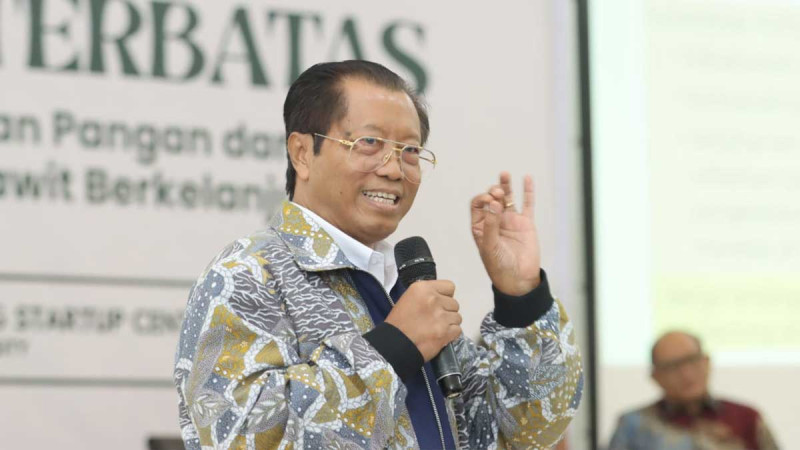
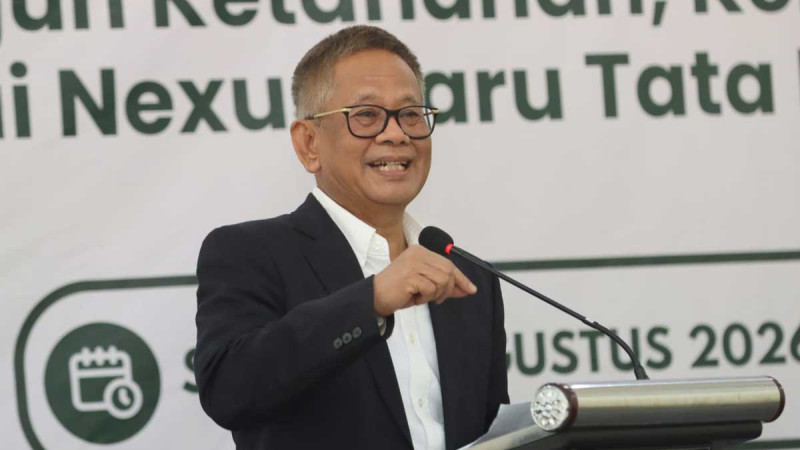
Against this backdrop, IPB University Professor of Agriculture Prof. Hariyadi, MS, has called for a rethink of how the palm oil sector is governed through the “New Nexus (7 TAS+)” framework.
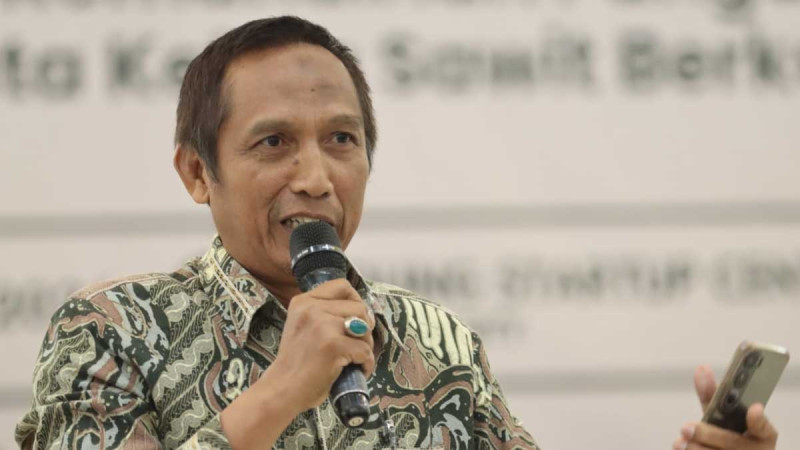
He presented the concept during a limited discussion forum organized by Rumah Sawit Indonesia (RSI) in Bogor, attended by InfoSAWIT on Monday, August 31, 2026.
Prof. Hariyadi argued that a fragmented approach focused solely on production growth or environmental issues is no longer sufficient. The palm oil sector requires an integrated framework that recognizes the interconnected nature of economic, environmental, social, spatial and institutional dimensions.
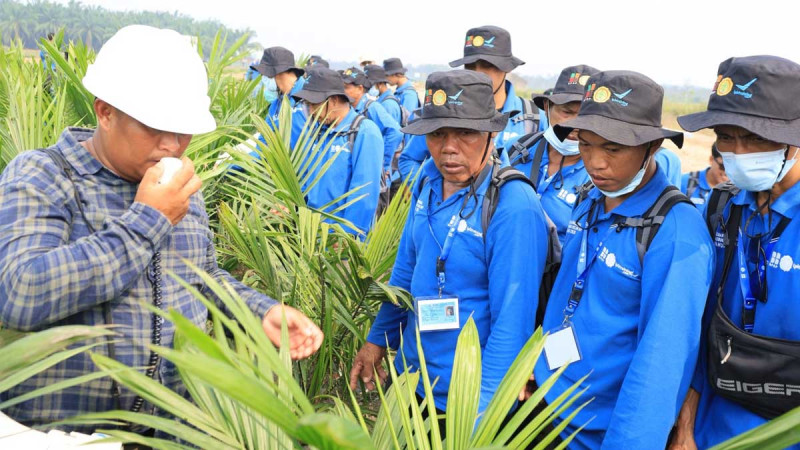
The industry is currently dealing with increasingly complex challenges, including agrarian conflicts, land-legality issues, deforestation concerns, energy efficiency and increasingly stringent international traceability requirements.
The New Nexus framework is positioned as a potential transformative approach to addressing these interconnected challenges.
Sustainability Requires an Integrated Approach
According to Prof. Hariyadi, sustainability can no longer be viewed simply as a question of palm oil production or environmental protection.
Instead, sustainability involves dynamic interactions among economic, environmental, social, spatial-planning and governance dimensions.
The environmental dimension includes issues such as deforestation, biodiversity conservation, carbon-emission reduction, soil and water restoration, waste management, as well as the relationship between palm oil production and national food and energy needs.
The economic dimension, meanwhile, covers efforts to improve productivity and efficiency, strengthen competitiveness, expand downstream value creation, increase export capacity and ensure sustainable incomes for both industry players and farmers.
Farmers and Communities at the Center
The social dimension is equally important. Prof. Hariyadi highlighted the welfare of independent smallholders, protection of workers’ rights, recognition of indigenous and local communities’ rights, resolution of agrarian conflicts and the development of inclusive regions.
These issues are increasingly connected to the long-term sustainability of the palm oil industry.
From a governance perspective, legal certainty, land-legality resolution, supply-chain transparency, institutional accountability and active stakeholder participation are also critical.
The framework also considers palm oil’s role in supporting national food security while contributing to the renewable-energy transition through the biodiesel program.
This balance is particularly important because energy and food priorities must be managed without undermining appropriate land-use planning.
Moving Beyond Isolated Policies
The New Nexus approach emphasizes that policies should no longer be developed in isolation.
Decision-makers and industry stakeholders need to consider cross-dimensional impacts before implementing regulations or development programs.
A policy designed to address one issue, for example, could generate unintended consequences in another area if economic, social, environmental and spatial factors are not considered simultaneously.
For Indonesia’s palm oil industry, the proposed approach offers a broader way to understand sustainability—not as a collection of separate obligations, but as an interconnected governance challenge.
As global markets demand greater traceability and sustainability while Indonesia continues to rely on palm oil for economic, food and energy objectives, an integrated governance framework could become increasingly important.
The New Nexus (7 TAS+) concept therefore places interconnected decision-making at the center of efforts to build a more sustainable and resilient palm oil industry. (T2)