JAKARTA, InfoSAWIT – A Constitutional Court ruling is being viewed as an important legal instrument to protect communities that have lived for generations in forest areas, particularly those who rely on forest resources to meet their daily needs rather than for large-scale commercial purposes.
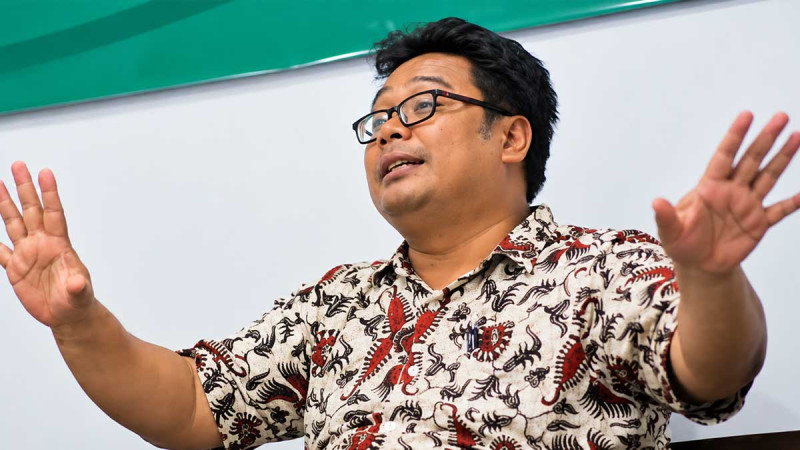
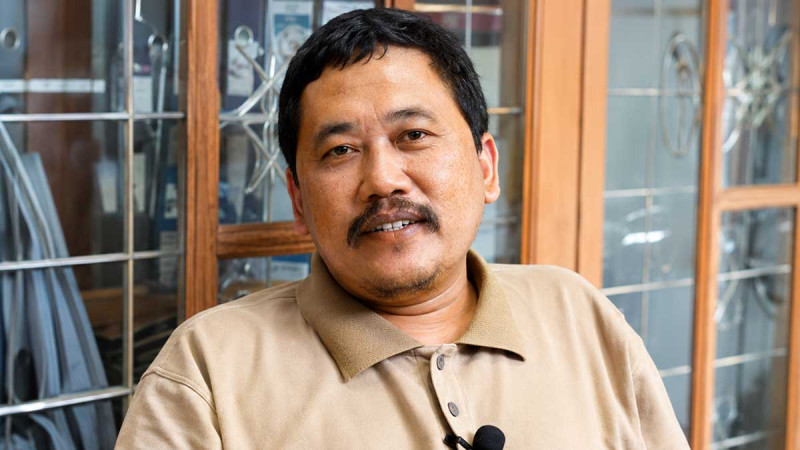
Achmad Surambo, Executive Director of Sawit Watch, said the ruling discussed during the Pre-National Conference Webinar on Smallholder Plantations II on Friday, September 4, 2026, should be understood as a form of protection for communities that have long lived in and depended on forest resources.
According to Surambo, recognition of generational communities should not depend solely on formal documents or official recognition from the state. Their existence can also be established through factual conditions showing an intergenerational relationship with a particular area.
“The legal concept is that communities are recognized based on factual conditions, rather than formal legal status,” Surambo said during the webinar attended by InfoSAWIT.
He explained that the existence of such communities can be demonstrated through their ties to the land, dependence on forest resources, and livelihood practices maintained across generations. In this context, traditional rights may exist even when a community has yet to obtain a government decree or land certificate.
Surambo said one indicator is an intergenerational relationship with a particular territory. The presence of grandparents, parents, and grandchildren living and carrying out their activities in the same area, for example, can demonstrate such a relationship.
Social and cultural ties to the territory are another indicator. These may include local knowledge of place names, hills, and other areas that have been known and passed down within the community over generations.
Not Always Indigenous Communities
One point highlighted by Surambo is that generational communities should not automatically be equated with indigenous peoples.
He said communities that are not originally from an area may also fall into the category if they have lived there across several generations. He cited the example of a person from Java who has lived in Sumatra for a long period and subsequently established an intergenerational connection with the area.
“This can be used for communities that are not indigenous to an area, but it can also be applied to indigenous communities,” he said.
Under this approach, legal protection would not be determined solely by the formal identity of a group. The factual circumstances of people who have lived in, depended on, and built relationships with a particular territory over several generations would also need to be considered.
Limits on Commercial Activities
At the same time, Surambo stressed that the protection relates to activities carried out to meet people's basic needs, rather than large-scale commercial operations.
He described non-commercial activities as those intended to provide everyday necessities such as food, clothing, and housing. If part of the produce is sold, he said, that does not automatically make the activity commercial when the proceeds are used to meet family needs.
“Even when some of it is sold, it is usually to cover other needs, such as children's school expenses and other necessities,” he explained.
By contrast, activities driven by profit, involving corporations in a structured manner, or operated under a company-like model are more readily categorized as commercial activities.
Surambo said the distinction between livelihood activities and commercial operations is important when applying legal protection to generational communities.
He argued that the Constitutional Court ruling should encourage a shift in law enforcement, away from an approach that is purely repressive and toward one that emphasizes restorative justice and social fairness.
For smallholder plantation communities, the interpretation is particularly relevant because some have managed land for many years to support their families. Determining whether an activity is commercial or primarily intended to meet household needs therefore needs to be done carefully, based on factual conditions on the ground.
Surambo emphasized that recognition of generational communities should not necessarily have to wait for formal acknowledgment. In his view, traditional rights are already attached to communities based on the factual reality of their lives across generations in a particular territory. (T2)