InfoSAWIT, JAKARTA – Indonesia needs to strengthen its Sustainable Palm Oil National Standard (SNI) to respond to increasingly demanding global market requirements, including the European Union Deforestation Regulation (EUDR).
The standard is expected to serve not merely as a compliance instrument but also as a mechanism for strengthening governance, legal certainty, and the competitiveness of Indonesia’s palm oil industry.
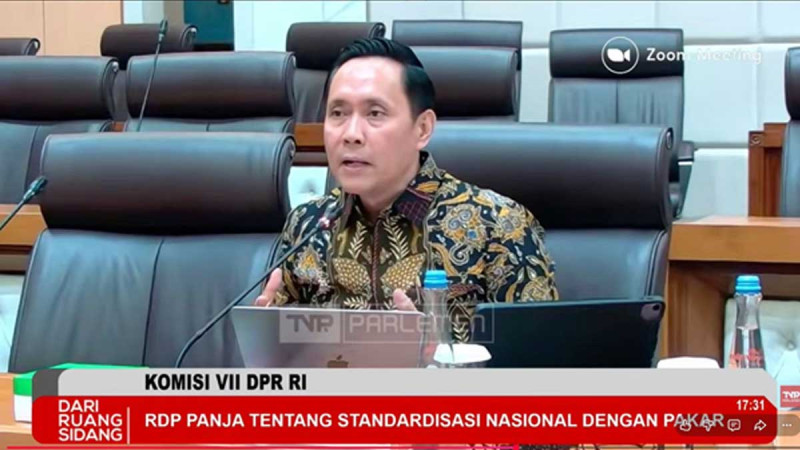
The view was presented by Prof. Dr. Ermanto Fahamsyah, S.H., M.H., Professor of Economic Law at the University of Jember, during a public hearing of the Working Committee on SNI at Commission VII of the Indonesian House of Representatives (DPR RI) in Jakarta on Tuesday (September 8, 2026).
According to Ermanto, the SNI should function as a technical standard that complements the Indonesian Sustainable Palm Oil (ISPO) certification system rather than replacing it.
Aligning ISPO indicators with EUDR requirements will be important, particularly in areas such as legality, traceability, and deforestation-free production. At the same time, the process must ensure that smallholders are not left behind.
As reported by InfoSAWIT on Wednesday (September 9, 2026), Ermanto explained that the EUDR covers palm oil and requires products entering the European Union to be deforestation-free, produced in compliance with the legislation of the country of production, and accompanied by a due diligence statement.
Geolocation and end-to-end traceability requirements from upstream to downstream could create significant challenges for businesses and smallholders, particularly those with limited resources and data-management capacity.
Integrating Palm Oil Data Through SI-ISPO
Ermanto also proposed greater integration of data through the SI-ISPO system.
Under the concept he presented, a single mapping exercise should ideally be capable of supporting multiple purposes, including ISPO certification, replanting programs, financing, contracts, and EUDR compliance.
Such an approach could reduce duplication while making data management more efficient across different regulatory and business requirements.
However, he emphasized that the system needs to be supported by independent verification so that submitted evidence can be examined and its reliability and accountability maintained.
The integration of data is particularly important as traceability becomes an increasingly central requirement in international palm oil trade. For Indonesian producers, the ability to demonstrate where palm oil originates and whether production complies with applicable legal and environmental requirements will increasingly influence market access.
SNI as a Foundation for Competitive and Sustainable Palm Oil
Strengthening the national standard is therefore expected to provide benefits beyond meeting international market regulations.
Rather than creating another layer of compliance, the SNI approach could be used to reinforce existing sustainability governance while helping Indonesian palm oil producers respond to requirements such as the EUDR.
At the same time, alignment between SNI, ISPO, and international market requirements needs to take into account the realities faced by smallholders. Compliance mechanisms that require extensive mapping, documentation, and traceability could become a burden if they are not accompanied by adequate support and accessible systems.
The proposed integration of data through SI-ISPO is intended to help address some of these challenges by allowing information gathered through one process to support multiple requirements.
With such an approach, palm oil standardization is expected to evolve beyond simply satisfying international market rules. It could become a foundation for an Indonesian palm oil industry that offers greater legal certainty, fairness, competitiveness, and sustainability. (T2)