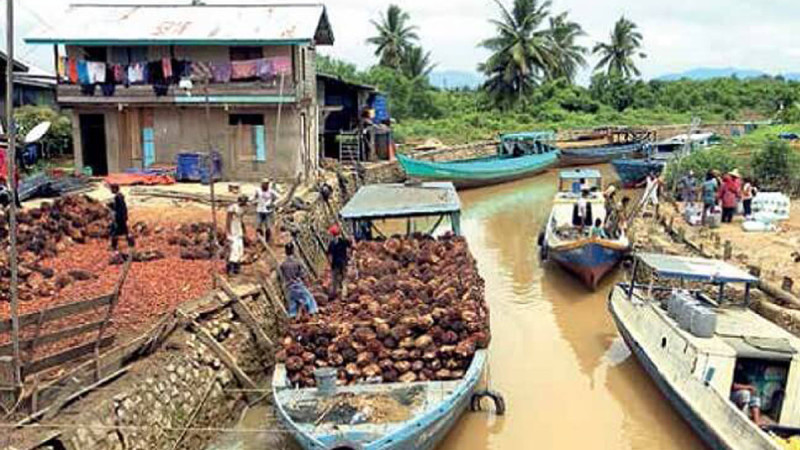
InfoSAWIT, JAKARTA – Indonesia’s Ministry of Agriculture is stepping up oversight of the palm oil sector, with particular attention to the purchase of fresh fruit bunches (FFB) from partner smallholders. The move is aimed at making FFB pricing more transparent and fair while shortening the supply chain between farmers and palm oil mills.
The policy direction was outlined during the Ministry of Agriculture’s Palm Oil Governance Socialization and Coordination event held on September 2, 2026. The government views FFB pricing as an important mechanism to protect partner smallholders, ensure market access for their harvests, secure raw material supplies for palm oil mills, and prevent unfair business practices.
The framework is based, among other regulations, on Minister of Agriculture Regulation No. 13 of 2024 concerning the Purchase of FFB Produced by Partner Smallholders.
Regional Teams to Determine FFB Prices
Under the mechanism, FFB prices are determined by the head of the provincial agriculture agency on behalf of the governor, based on recommendations from a designated pricing team.
The team includes representatives from provincial and local governments, palm oil mills and/or palm oil business associations, as well as smallholder institutions and farmer associations.
The pricing team is responsible for proposing the K Index, verifying its calculation and supporting components, and holding FFB pricing meetings at least once every two weeks. The results are subsequently submitted as the basis for determining the purchase price of FFB.
The team is also tasked with monitoring developments in FFB prices, the volume of fruit processed by individual mills, and their crude palm oil (CPO) and palm kernel (PK) production.
K Index Becomes Key Pricing Component
The K Index remains a central element in calculating FFB prices. Palm oil mills working with partner smallholders are required to submit their proposed K Index calculations, accompanied by accountable supporting data.
The proposals are then weighted and compiled to establish the average K Index applicable in each region. FFB prices also take into account weighted CPO and PK prices as well as extraction rates.
For plasma smallholders, the calculation is based on plantation age. For independent smallholders, the mechanism uses block-level yield assumptions or yield-correction factors.
The ministry has also highlighted differences between plasma and independent smallholders, noting that variations in the composition of tenera and dura palms can affect extraction rates and, ultimately, the price received by farmers.
Palm Oil Mills Face Stronger Transparency Requirements
The government’s governance reforms also place greater emphasis on transparency at the mill level. Provincial and local authorities are expected to conduct periodic supervision of FFB purchase prices.
A task force involving the Directorate General, the Ministry of Agriculture’s Inspectorate General, regional governments, regional inspectorates and related agencies will support the monitoring process.
Among its responsibilities are overseeing the implementation of FFB prices, receiving complaints from parties involved in partnerships, facilitating dispute resolution, and monitoring the submission of K Index documents and supporting data.
Palm oil mills are also required to report their FFB purchase prices to plantation agencies on a daily basis through the government’s designated system.
In addition, mills must periodically report the implementation of the 20% community plantation development facilitation requirement through SIPERIBUN, while regional governments are expected to coordinate agreements covering 20% of raw material supplies as part of industrial licensing requirements.
Government Targets Shorter FFB Supply Chains
The Agriculture Ministry has identified long marketing chains as one of the challenges facing independent smallholders. In some areas, FFB passes through several intermediaries, including collectors, larger traders and delivery-order holders before reaching palm oil mills.
Such chains can shift a larger share of margins toward intermediaries. Other challenges include limited transparency over yields and quality, inadequate access to mill price information, weak farmer institutions and uneven implementation of officially determined prices.
Through the implementation of Regulation No. 13 of 2024, the government aims to reduce unnecessary intermediaries, provide mills with greater certainty over raw material supplies and limit the potential for unfair competition.
The broader palm oil governance strategy also covers smallholder replanting, infrastructure support, farmer registration through STDB, land certification and ISPO, human-resource development and access to financing through KUR.
For large plantations, the government’s agenda includes business certainty, the 20% community plantation requirement, gradual resolution of oil palm plantations located in forest areas, development of the B50 bioenergy program and downstream processing.
The government is now calling for FFB price monitoring task forces to be established in every province, while pricing mechanisms for both plasma and independent smallholders in major palm oil-producing regions are expected to be implemented and reported to the Directorate General of Plantations. (T2)