InfoSAWIT, PALEMBANG – A total of 174 palm oil farmers from Ogan Komering Ulu (OKU), South Sumatra, participated in a six-day palm oil cultivation training program designed to strengthen their technical knowledge and skills in plantation management.
Held from August 26–31, 2026, at the Beston Hotel Palembang, the program combined classroom learning with practical sessions and field visits. The training formed part of the 2026 Palm Oil Plantation Human Resources Development Program, a collaborative initiative involving the Palm Oil Plantation Fund Management Agency (BPDP), the Directorate General of Plantations at the Ministry of Agriculture and IPB Training.
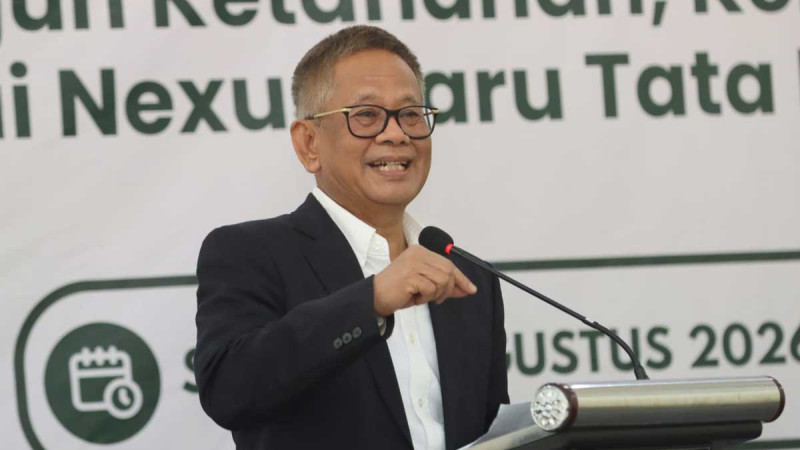
According to an official statement received by InfoSAWIT on Monday, August 31, 2026, participants were divided into six training groups, numbered XXIV through XXIX. The opening session was attended by stakeholders from provincial and district governments, representatives of BPPSDMP, the Directorate General of Plantations and IPB Training Lead Trainer Prof. Hariyadi, M.S.
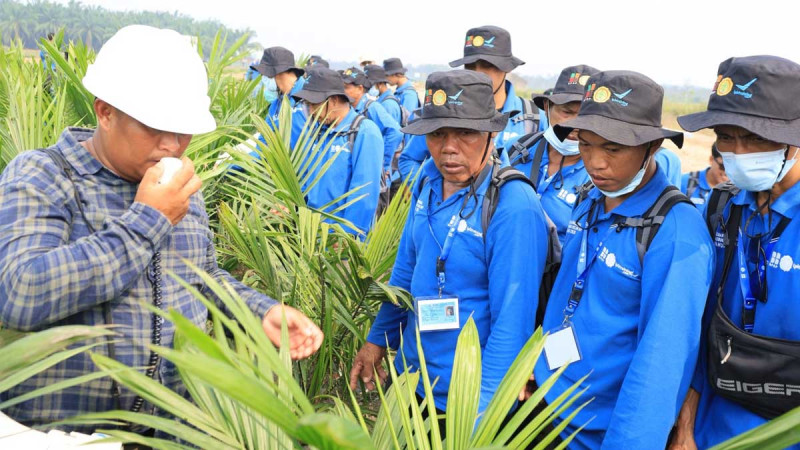
The training program went beyond classroom instruction. Participants took part in discussions, practical exercises and field visits, allowing them to connect technical lessons with challenges encountered in their own plantations.
The curriculum covered a broad range of topics, from plantation policies and regulations to practical palm oil cultivation techniques.
Focus on Quality Planting Materials and Nurseries
One of the key subjects was planting material. Farmers were introduced to high-quality planting materials, procurement procedures, pre-nursery (PN) and main nursery (MN) management, as well as methods for distinguishing genuine seedlings from counterfeit or unauthorized planting materials.
The topic was particularly relevant for participants who already had experience managing nurseries independently and had encountered difficulties in obtaining reliable planting materials.
The practical component included transferring seedlings from the pre-nursery to the main nursery using a ponjok, giving farmers an opportunity to apply the techniques directly.
Training also covered land preparation, including site suitability, replanting and field lining. After learning about planting patterns and spacing, participants practiced field lining themselves.
From Planting to Plantation Maintenance
The curriculum continued with planting and crop maintenance. Participants learned about transferring seedlings to the field, managing plant populations and spacing, preparing planting holes, applying basal fertilizer, using cover crops and managing immature and mature oil palms.
Field-based learning was another important part of the program. Farmers practiced several plantation operations, including the use of harvesting poles (egrek), castration, manual and mechanized circle maintenance, and tractor operation.
During the sessions, participants also engaged in discussions with instructors from IPB Training and PT Dutareka Mandiri to deepen their understanding of plantation management practices.
Fertilization and Pest Management
The training also addressed fertilizer management and weed control. Participants learned about equipment calibration, spraying techniques, plant nutrient requirements and the 5T principles of fertilization.
Practical exercises included measuring soil and fertilizer pH, helping participants understand the importance of proper nutrient management in maintaining plantation productivity.
Plant pest and disease management was another major component. Participants were introduced to integrated pest management, pest identification, early detection, pest and disease census methods, biological control agents and beneficial plants.
Rat attacks, which are reportedly common in some of the participants’ plantation areas, were also discussed as part of the pest-management sessions.
Strengthening Palm Oil Plantation Human Resources
The six-day program demonstrated the importance of strengthening farmers’ capabilities through a combination of technical knowledge and practical experience.
Rather than relying exclusively on classroom instruction, the program incorporated discussions and field exercises, allowing farmers to relate the lessons directly to conditions in their own plantations.
The training also provided a forum for farmers to share challenges they encounter in day-to-day plantation management. At the same time, the interaction allowed instructors and organizers to gain a better understanding of the practical issues faced by smallholders.
By bringing together plantation policy, technical knowledge, farmers’ experience and hands-on practice, the program forms part of broader efforts to strengthen the human resources that directly support Indonesia’s palm oil plantation sector. (T2)