InfoSAWIT, JAKARTA – Improving oil palm productivity requires more than maximizing yield potential. Harvesting methods, timing, workforce availability, equipment and field management all play important roles in determining how effectively production targets can be achieved.
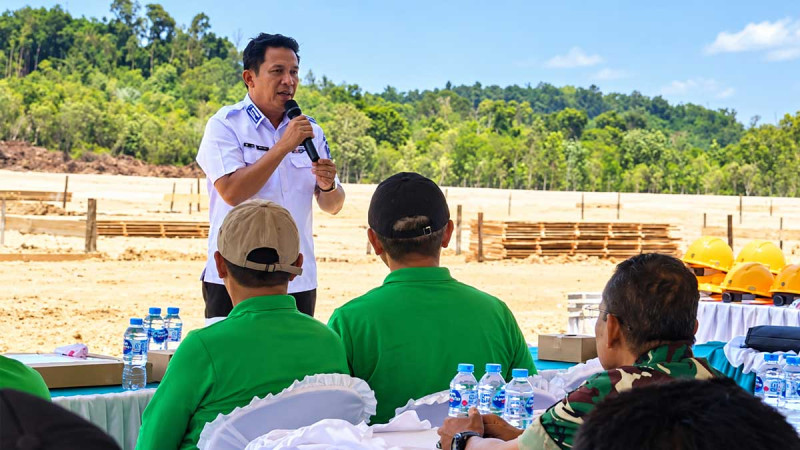
The issue was highlighted by plantation practitioner Soemanto Sastro during IPS Planters Talk 2026, themed “From High Yield Estate to Sustainable Excellence”, attended by InfoSAWIT on Saturday (September 26, 2026).
Soemanto said high production targets must remain aligned with the company’s budget, while field operations need to combine the right methods with precise timing.
“The right method determines production quantity, while the right timing determines production quality,” he said.
He emphasized consistent harvesting rotations. Companies may apply seven-day or 10-day rotations, depending on plantation conditions, workforce availability and operational capacity. According to Soemanto, there is no single harvesting rotation that can automatically be applied to every plantation.
Access and Harvesting Standards Matter
Field access is another critical element. Soemanto referred to a 3A concept, emphasizing access to plantation blocks through adequate roads, bridges, harvesting paths and palm circles.
Good access helps ensure maintenance activities and harvesting can be completed on schedule. Harvesting maturity standards must also be clearly defined to ensure that harvested fresh fruit bunches meet the required criteria.
The harvesting system itself also needs to be adapted to plantation conditions. Various approaches, including ancak giring and fixed ancak systems, have their own strengths and weaknesses.
Soemanto said management should focus on identifying and reducing the weaknesses of whichever system is selected rather than assuming that one system is universally superior.
Workforce and Equipment Cannot Be Overlooked
Adequate and skilled workers are equally important. Harvesting plans can fail when workforce numbers or competency levels do not match operational requirements.
Harvesting equipment should also receive sufficient attention because equipment quality can affect field efficiency and the ability to complete work within the targeted timeframe. Regular monitoring of attendance, discipline and productivity is therefore necessary.
Soemanto linked these practices to the broader 35:26 Palm Vision, emphasizing that productivity begins with quality planting material and continues through uniform planting, proper maintenance, competent teams, good field access, timely harvesting, efficient transportation and low mill losses. (T2)