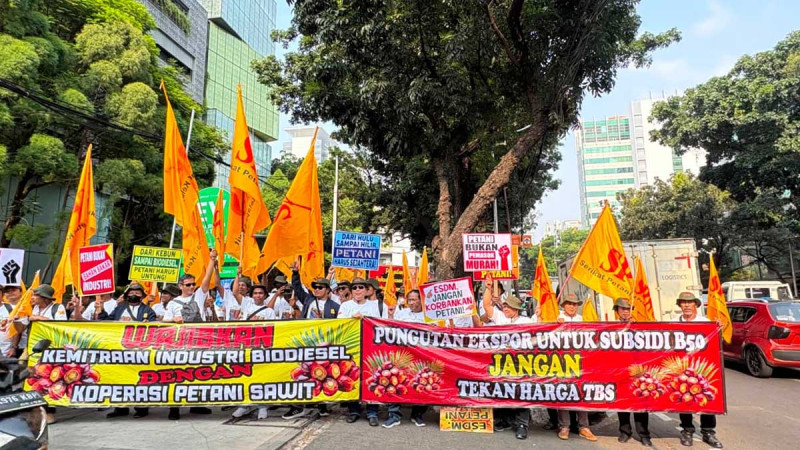
InfoSAWIT, JAKARTA – Indonesian palm oil farmers are calling for stronger participation in the country’s B50 biodiesel supply chain, arguing that higher palm oil demand for biodiesel should translate into more direct economic benefits for farmers.
The Serikat Petani Kelapa Sawit Indonesia (SPKS) made the call as part of its National Farmers’ Day agenda on September 24, 2026, under the theme of farmer inclusion in the B50 supply chain and cooperative-based biodiesel downstream development.
SPKS said palm oil farmers play an important role in supplying raw materials for the energy and downstream industries. However, the organization argued that increased CPO demand from the B50 program has not automatically created direct links between farmers and biodiesel producers.
Many farmers, according to SPKS, continue to sell fresh fruit bunches (FFB) through traders and intermediaries, while supplies to the biodiesel industry move through longer commercial chains.
Farmers Seek Direct Cooperative Partnerships
SPKS is proposing that biodiesel fuel business entities be required to establish partnerships with farmer cooperatives. Under the proposed arrangement, part of the biodiesel feedstock would come from farmer production, while cooperatives would have opportunities to develop beyond their traditional role as FFB collection institutions.
The organization is also calling for measurable minimum farmer-supply requirements within B50 allocations. Such requirements, it said, should be verifiable and incorporated into evaluations of the program.
SPKS further urged the government to periodically evaluate B50 implementation and consider a more flexible blending approach based on CPO availability, domestic demand and export market conditions.
The farmers’ organization also raised concerns over the 12.5% CPO export levy, arguing in its policy document that the levy could put pressure on FFB prices while supporting biodiesel incentives. SPKS therefore called for policies that prevent the financing burden of biodiesel development from being disproportionately borne by farmers.
PSR Seen as Key to Future Feedstock Supply
SPKS also called for faster implementation of the People's Palm Oil Replanting Program (PSR), alongside increased government support of Rp90 million per hectare and assistance with farmers’ living costs during replanting.
The organization said future biodiesel feedstock needs should be met by improving productivity on existing plantations rather than encouraging new land clearing. It also stressed that B50 should not create incentives for new deforestation.
For SPKS, integrating farmer cooperatives into the biodiesel ecosystem would allow farmers to participate not only as raw-material suppliers but also in market access, partnerships and downstream value creation. (T2)
Source: InfoSAWIT