InfoSAWIT, JAKARTA – Efforts to prepare Indonesian smallholder palm oil farmers for compliance with the European Union Deforestation Regulation (EUDR) are increasingly focusing on the fundamentals of legality, traceability, farmer institutions and partnerships.
For the Serikat Petani Kelapa Sawit (SPKS), the transition toward a more sustainable smallholder palm oil sector begins with better data: identifying farmers, mapping their plantations and establishing clearer information on how their land is managed.
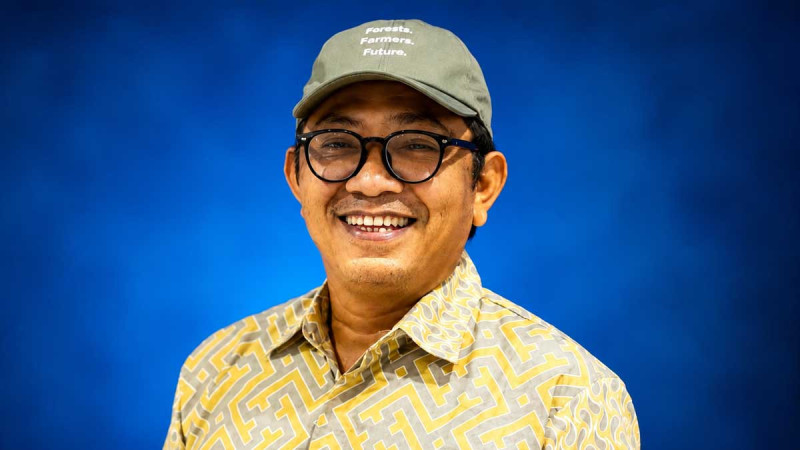
SPKS Chairman Sabarudin described the process as an effort to build a foundation that has been missing for years. According to him, many smallholders remain insufficiently documented, creating challenges related to legal status, market access and financing.
“Without data, we cannot talk about transparency. Without transparency, farmers will remain in the weakest position,” Sabarudin said.
Mapping Farmers and Plantation Areas
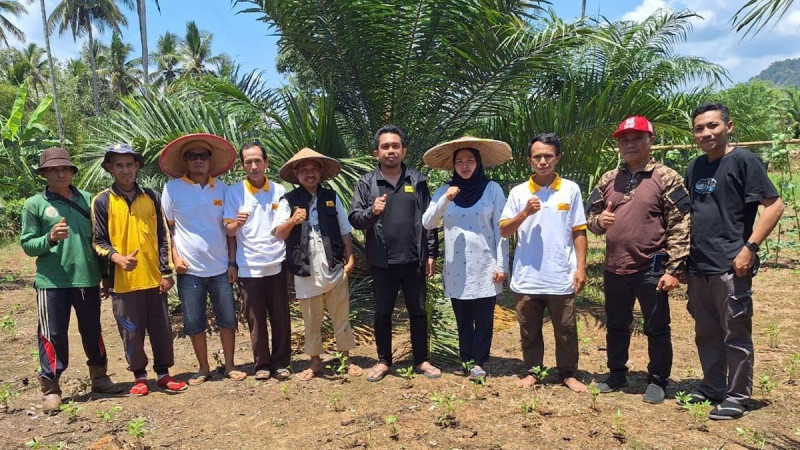
One of the initiatives highlighted by SPKS is the registration and mapping of 2,000 smallholders across 18 villages in Sekadau.
The mapping process goes beyond administrative data collection. Each mapped plantation provides information that can support farmers in obtaining the Surat Tanda Daftar Budidaya (STDB), an important document for plantation legality and access to formal supply chains.
For smallholders, the documentation process can provide greater clarity over plantation ownership and management while supporting efforts to improve traceability.
Linking Productivity with Environmental Protection
SPKS also emphasizes that smallholder transformation cannot stop at legal documentation. Sustainable practices must extend into day-to-day plantation management, including fertilization and harvesting practices as well as farmers’ understanding of surrounding forests.
Through the Sustainable Agriculture for Forest Ecosystems (SAFE) Project, SPKS is working on sustainable agriculture practices with support from the German Federal Ministry for Economic Cooperation and Development and the European Union. The program also involves collaboration with Sinar Mas Agribusiness and Food, PT Agro Andalan and Widya Erti Indonesia.
The program targets 2,000 independent smallholders, with the objective of encouraging not only greater knowledge but also changes in farming practices.
Protecting High-Value Forest Areas
In Mondi Village, the initiative also examines the relationship between oil palm plantations and surrounding forest landscapes, including tembawang, culturally significant areas and forests that serve as water sources.
Through High Conservation Value (HCV) and High Carbon Stock (HCS) approaches, more than 850 hectares of conservation-value areas have been identified.
SPKS sees the participatory approach as important because local communities are involved not merely as conservation beneficiaries but also as guardians of the landscape.
The initiative reflects a broader shift in smallholder palm oil development—from focusing solely on plantation productivity toward a landscape approach that considers plantations, forests, water resources and local communities as interconnected elements.
For SPKS, stronger farmer data, traceability, legal documentation and environmental awareness can become important building blocks as smallholder palm oil producers navigate increasingly demanding sustainability requirements in international markets. (T2)