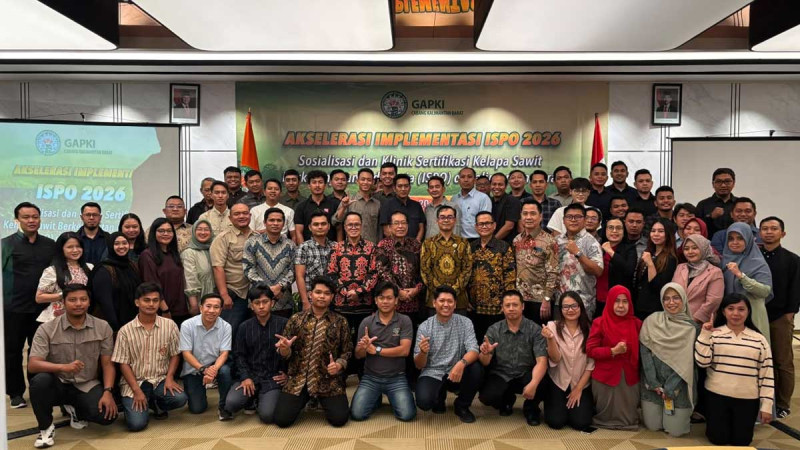
PONTIANAK, InfoSAWIT – The Indonesian Palm Oil Association (GAPKI) is accelerating efforts to strengthen sustainable palm oil governance through a new Indonesian Sustainable Palm Oil (ISPO) certification programme in West Kalimantan, as the industry works towards the goal of full certification among its members.
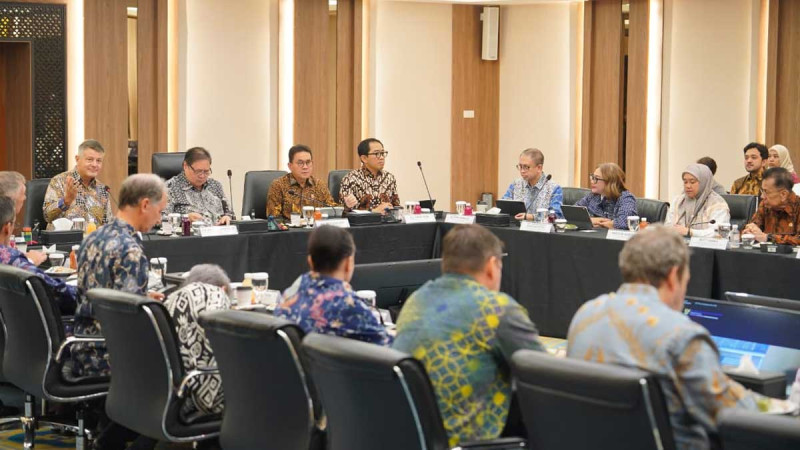
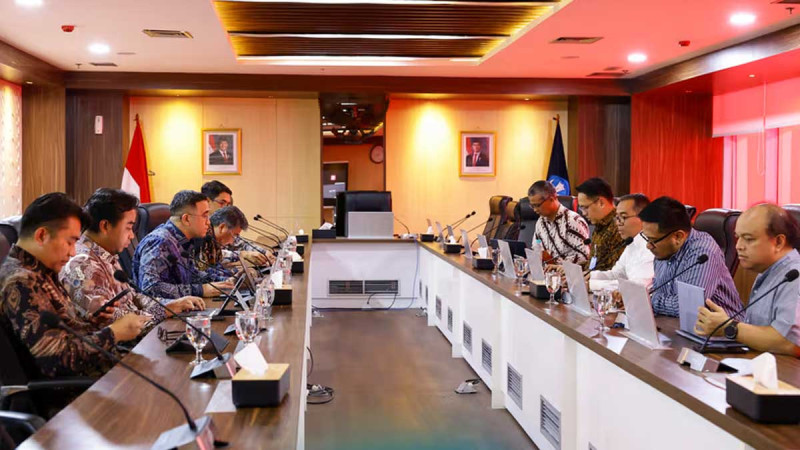
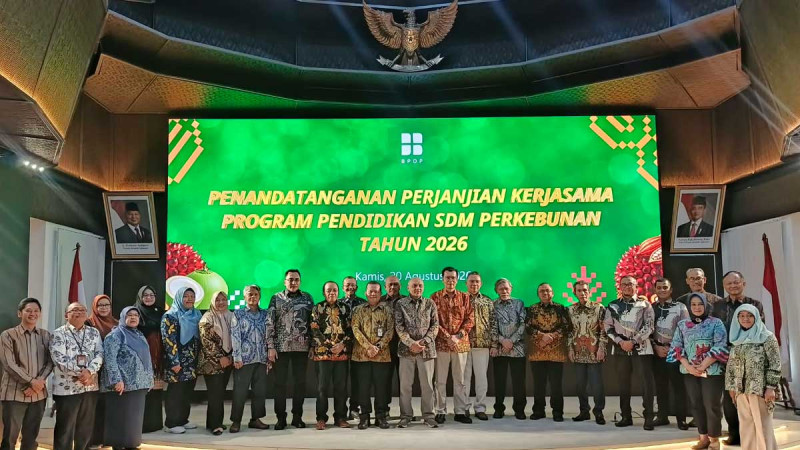
The programme, titled ISPO Implementation Acceleration 2026: Socialisation and Indonesian Sustainable Palm Oil Certification Clinic, was held in Pontianak on August 19–20 and brought together around 110 participants.
They included representatives of GAPKI member companies, ISPO internal auditors, sustainability teams, legal and occupational health and safety personnel, as well as other stakeholders and non-member companies.
The programme featured speakers from the ISPO Team at the Directorate General of Plantations and representatives of certification bodies, providing regulatory updates and practical guidance on challenges faced by companies during the certification process.
Strengthening Sustainable Palm Oil Governance
The event was opened by the Acting Head of the West Kalimantan Provincial Plantation and Livestock Office, Rino Anteno Tengo, who highlighted the importance of accelerating certification as part of efforts to strengthen sustainable palm oil development in the province.
As one of Indonesia's major palm oil producing regions, West Kalimantan faces increasing pressure to strengthen governance and ensure that its industry keeps pace with evolving sustainability standards and market requirements.
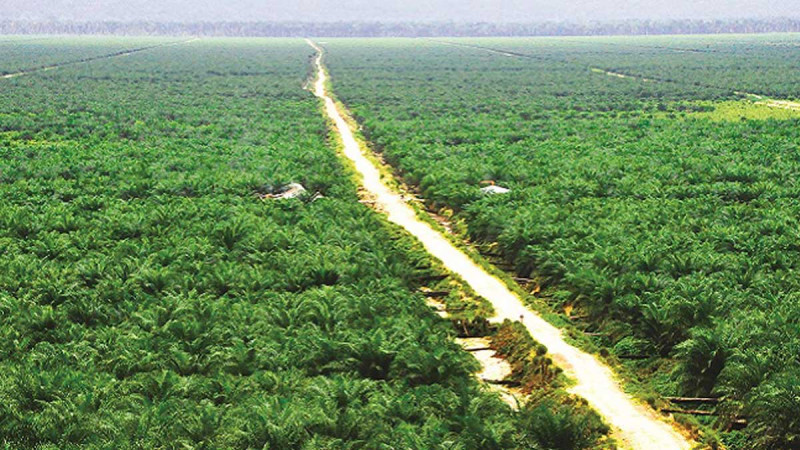
In 2025, West Kalimantan's oil palm area was recorded at more than 2.3 million hectares, with combined crude palm oil (CPO) and palm kernel (PK) production reaching nearly 8 million tonnes.
The scale of the sector, stakeholders noted, must be matched by stronger governance and wider implementation of sustainability principles to improve the competitiveness of palm oil products in international markets.
New Regulations Expand ISPO Coverage
The push for faster certification is being supported by a strengthened regulatory framework, including Presidential Regulation No. 16 of 2025 on the Indonesian Sustainable Palm Oil Certification System and Agriculture Ministerial Regulation No. 33 of 2025 on the implementation of sustainable palm oil certification.
Under the updated framework, the scope of ISPO implementation extends beyond plantation operations.
The certification system now also covers downstream industries and palm oil-based bioenergy businesses, widening the range of companies and activities required to align with Indonesia's sustainable palm oil standards.
The West Kalimantan provincial government hopes the socialisation and certification clinic will help companies and smallholders better understand the regulatory changes while accelerating their readiness to comply with ISPO principles and criteria.
As of June 2026, a total of 119 plantation companies in West Kalimantan had obtained ISPO certificates. Two smallholder institutions in Sekadau Regency had also received certification.
ISPO Must Go Beyond Administrative Compliance
Chairman of GAPKI's West Kalimantan branch, Aris Supratman, said ISPO should not be treated merely as an administrative requirement or a process to be addressed only when an audit approaches.
Instead, he said, certification should become a tool for improving corporate governance, strengthening management systems, increasing regulatory compliance, reducing operational risks and enhancing the competitiveness of Indonesia's palm oil industry.
The certification clinic was designed not only as a forum for regulatory socialisation but also as a space for consultation, learning and problem-solving.
Participants were encouraged to openly discuss the challenges and gaps they continue to face in meeting ISPO certification requirements.
Companies are currently at different stages of compliance. Some have already obtained ISPO certificates and are undergoing surveillance audits, while others remain in the certification process or are still addressing outstanding requirements.
During the programme, participants received updates on ISPO policies, the principles and criteria of certification, the transition to the new regulatory framework, audit and surveillance mechanisms, as well as mock audit sessions.
The forum also allowed companies to exchange experiences and discuss practical implementation issues with businesses that have already secured ISPO certification.
GAPKI Maintains 100% Certification Target
At the national level, GAPKI continues to pursue its long-standing goal of ensuring that all of its member companies obtain ISPO certification.
The association first announced the target in 2019. However, the goal has yet to be fully achieved.
By July 2025, 587 GAPKI member companies had obtained ISPO certificates, representing around 79% of the association's 743 members.
With a number of companies still uncertified, GAPKI continues to promote capacity-building and assistance programmes to help close the remaining compliance gap.
The expanded scope introduced under Presidential Regulation No. 16 of 2025 has also added new challenges, as certification requirements now extend across a broader palm oil value chain, from upstream plantations to downstream industries and bioenergy.
Companies, therefore, will need to closely follow regulatory developments and ensure that their operational systems and governance practices remain aligned with sustainable palm oil principles.
GAPKI hopes the West Kalimantan certification clinic will produce concrete follow-up actions rather than ending as a one-off discussion forum.
Participants are expected to identify remaining compliance gaps, assign responsibilities and establish clear timelines for completing the necessary improvements.
Collaboration between government agencies, GAPKI, certification bodies, companies, academics and other stakeholders will remain essential to accelerating ISPO implementation.
Through stronger coordination and practical follow-up, the industry hopes that wider ISPO certification will not only improve regulatory compliance but also strengthen the competitiveness, accountability and sustainability of Indonesia's palm oil sector. (T2)
Source: InfoSAWIT