InfoSAWIT, SINGAPORE – Kencana Agri Limited reported stronger operational performance in the first half of 2026, with crude palm oil (CPO) production rising 5.6% year-on-year as higher fresh fruit bunch (FFB) processing volumes and improved oil extraction supported output growth.
According to Kencana Agri Limited’s official statement, as published by InfoSAWIT on Sunday (August 23, 2026), the group processed a total of 463,104 tonnes of FFB between January and June 2026, up 3.4% from 448,088 tonnes in the corresponding period last year.
Of the total volume, 374,518 tonnes came from the group’s own estates and plasma smallholder schemes. Meanwhile, third-party FFB purchases surged 55.4% to 88,586 tonnes.
The increase in external FFB procurement was aimed at maintaining mill utilisation rates, particularly at Kencana Agri’s operations in Bangka, where the company is currently undertaking a replanting programme.
CPO Production Reaches More Than 99,000 Tonnes
Higher FFB throughput translated into stronger CPO production during the first half of the year.
Kencana Agri produced 99,201 tonnes of CPO in the January–June 2026 period, compared with 93,981 tonnes a year earlier. The increase in CPO output outpaced the growth in FFB processing, supported partly by an improvement in the group’s oil extraction rate (OER).
The OER rose to 21.4% from 21.0% in the first half of 2025, reflecting continued improvements in processing efficiency across the company’s palm oil mills.
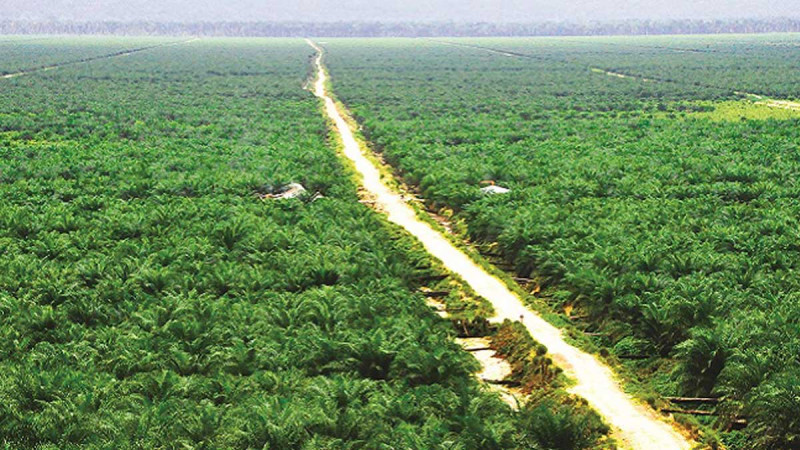
At the same time, Kencana Agri is managing changes in the age profile of its plantations. As of June 30, 2026, the group had a total planted area of 67,862 hectares, comprising 51,151 hectares of nucleus estates and 16,711 hectares under plasma schemes.
The figure was broadly unchanged from 67,885 hectares at the end of 2025.
However, plantation age is becoming an increasingly important strategic consideration. During the first half of 2026, approximately 6,716 hectares moved from the core productive age category of seven to 18 years into the over-18-year category.
As a result, mature palms aged above 18 years accounted for 35.9% of Kencana Agri’s total planted area. The shift has reinforced the importance of the company’s ongoing replanting programme as it seeks to gradually renew its production base and support long-term productivity.
B50, Geopolitics and El Niño Remain Key Market Drivers
Kencana Agri Chairman Henry Maknawi said the outlook for Indonesia’s palm oil industry will continue to be shaped by domestic policy, geopolitical developments and weather conditions.
The implementation of Indonesia’s B50 biodiesel programme could support domestic CPO demand and influence the balance between local consumption and export availability.
The company is also monitoring developments surrounding the government’s evolving export governance framework involving PT Danantara Sumberdaya Indonesia (DSI), which entered a transition phase in June 2026.
Kencana Agri said the impact on the palm oil industry would depend on the final scope and practical implementation of the framework.
External risks also remain a concern. Geopolitical tensions affecting global energy markets and major shipping routes could continue to create volatility in fuel, freight and fertiliser costs.
Weather is another factor being closely monitored. The company highlighted the ongoing El Niño conditions and the possibility of below-normal rainfall in several parts of Indonesia.
Prolonged dry conditions could eventually affect FFB yields and CPO production, although the impact may emerge with varying time lags depending on location, duration and the severity of drought conditions.
Against this backdrop, Kencana Agri said it will continue focusing on operational efficiency, disciplined cost management and prudent financial management.
The company also plans to optimise agronomic practices while carefully managing fertiliser costs and other production inputs.
With replanting programmes continuing alongside efforts to improve plantation and mill efficiency, Kencana Agri is seeking to strengthen its operational resilience and support sustainable long-term performance. (T2)