InfoSAWIT, JAKARTA – As global markets place increasing emphasis on traceability and sustainability, Roundtable on Sustainable Palm Oil (RSPO) certification is emerging as an important pathway for strengthening the competitiveness of independent oil palm smallholders.
Certification is no longer viewed solely as a mechanism for meeting industry standards. For smallholders, it can also provide wider market access, economic incentives and stronger capacity to manage oil palm plantations in a more sustainable manner.
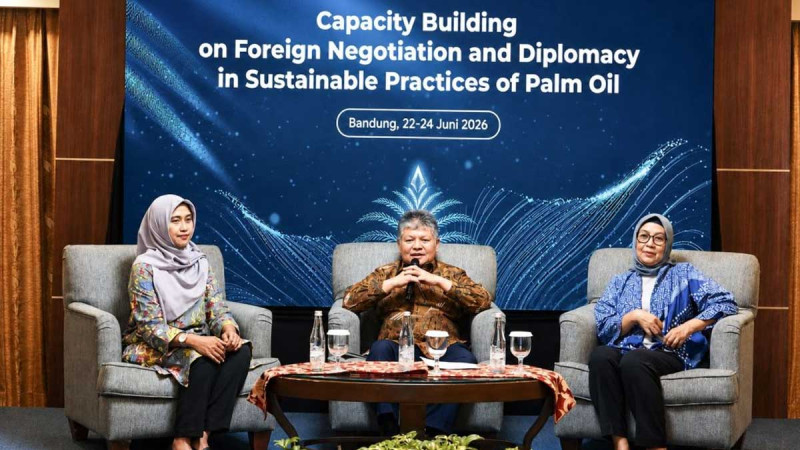
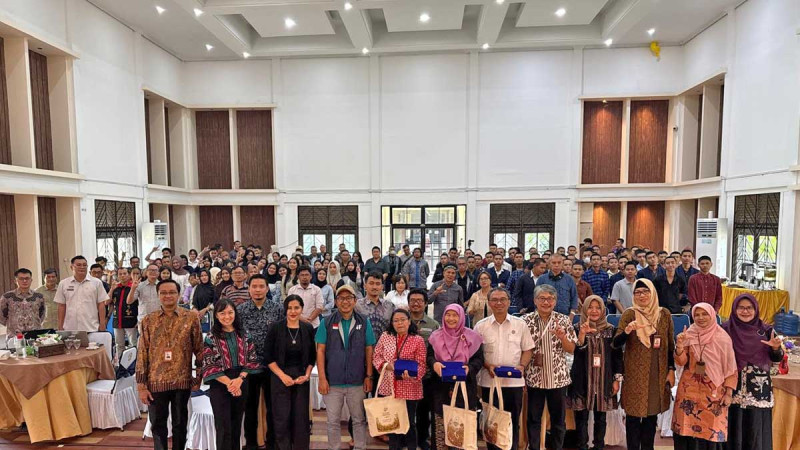
The issue was highlighted during an RSPO Media Brunch, where stakeholders discussed the need to strengthen the position of independent smallholders as global supply chains impose increasingly stringent sustainability and traceability requirements.
Building Stronger Smallholder Institutions
RSPO Head of Smallholder Global, Guntur Cahyo Prabowo, said certification should not be seen simply as an audit process or an exercise in administrative compliance.
Instead, he said, certification requires strong farmer organisations capable of consistently implementing sustainability standards.
“Certification requires an entity or organisation that can ensure compliance with the standards. At the same time, trust among farmers must also be built so that they are willing to organise themselves,” Guntur said during the RSPO Media Brunch in mid-June 2026.
Indonesia is home to around 2.6 million oil palm farmers, many of whom still operate independently and are not yet part of structured farmer organisations. This fragmented structure can limit their access to certification, financing and broader market opportunities.
Long and complex supply chains for fresh fruit bunches (FFB), from smallholder plantations to palm oil mills, also present additional challenges. According to Guntur, stronger farmer groups can improve smallholders’ bargaining power and potentially create more efficient routes to the market.
The objective, he said, is to enable farmers to gain a stronger position collectively and, where possible, access markets more directly.
Support for Sustainable Palm Oil Practices
To help independent smallholders meet these requirements, RSPO has developed standards designed to reflect conditions faced by farmers on the ground.
Working with local governments, universities, private-sector companies and other stakeholders, RSPO provides assistance covering sustainable agricultural practices, institutional strengthening and compliance with certification requirements.
RSPO data show that since 2013, global support funding has reached US$5.5 million, with approximately US$1.94 million allocated to Indonesia.
Between 2018 and 2026, around 89,650 hectares of oil palm land were certified, involving 41,134 independent smallholders. In addition, approximately Rp416 billion has been distributed to farmer groups through various incentive schemes.
The figures underline the growing role of sustainability certification in connecting independent smallholders with changing global market requirements. Beyond compliance, the process is increasingly positioned as a means of strengthening farmer institutions, improving plantation practices and creating new economic opportunities for smallholders within the palm oil supply chain. (T2)
Source: InfoSAWIT Magazine, June 2026 Edition