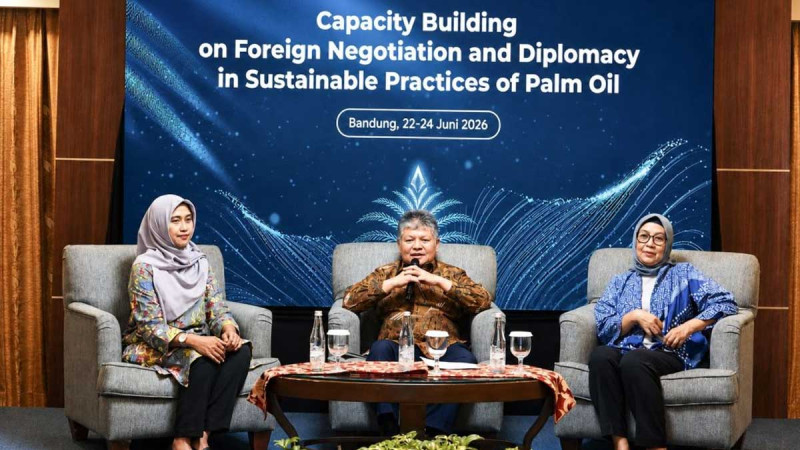
InfoSAWIT, BANDUNG – Indonesia is intensifying efforts to reinforce its position in the global palm oil trade by strengthening diplomatic capacity and building a more coordinated national strategy to address growing international scrutiny over the sustainability of its palm oil industry.
The initiative was highlighted during the second day of the Hybrid Training on International Negotiation and Diplomacy for Sustainable Palm Oil Practices, jointly organized by the Center for World Trade Studies (PSPD) of Universitas Gadjah Mada (UGM), the FAST Project UNDP Indonesia, and Indonesia's Coordinating Ministry for Economic Affairs. The program brought together representatives from seven ministries and government institutions to enhance negotiation skills and align Indonesia's diplomatic approach toward increasingly complex global trade challenges.
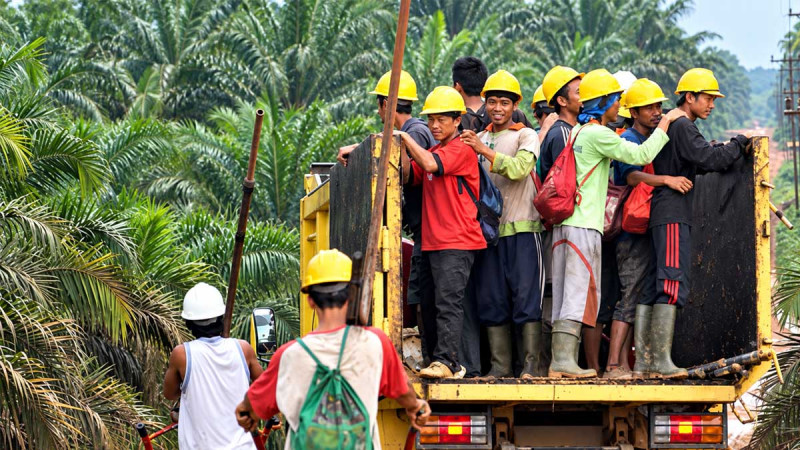
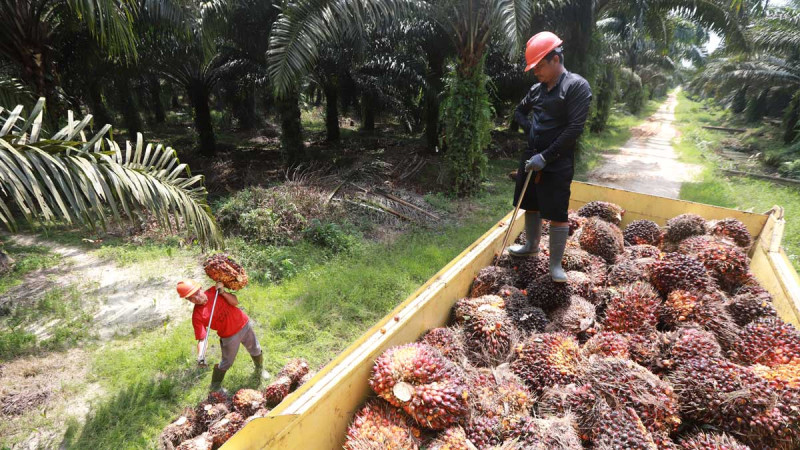
Government officials emphasized that palm oil remains one of Indonesia's most strategic economic sectors, supporting millions of smallholders while contributing significantly to national export earnings. However, they acknowledged that competition in the global vegetable oil market has evolved beyond pricing and productivity, with environmental and sustainability issues increasingly being used as trade-related instruments.
Dida Gardera, Senior Advisor for Connectivity and Services Development at the Coordinating Ministry for Economic Affairs, said Indonesia continues to improve governance across its palm oil industry through a series of policy reforms, including the implementation of a one-stop export system aimed at increasing transparency, streamlining export procedures, and reducing transfer pricing risks.
International perspectives were also presented during the training. Abi Ismarrahman, representing the UK Foreign, Commonwealth & Development Office (FCDO), noted that palm oil has become a geopolitical issue rather than merely a traded commodity. He stressed that Indonesia's diplomatic efforts should rely on evidence-based communication capable of translating scientific findings into messages that are easily understood by international audiences.
The importance of cooperation among palm oil-producing countries was echoed by Musdalifah Mahmud, Deputy Secretary-General of the Council of Palm Oil Producing Countries (CPOPC). She said stronger collaboration is essential to respond to trade policies that many producing nations consider discriminatory toward palm oil.
Musdalifah also highlighted the continued strengthening of Indonesia's Indonesian Sustainable Palm Oil (ISPO) certification scheme, which now covers downstream palm products and is expected to enhance Indonesia's competitiveness in international markets, including the European Union.
Meanwhile, Miftah Farid, Director for Primary Product Export Development at Indonesia's Ministry of Trade, outlined the government's strategy to broaden market access through greater trade data integration, improved transparency, and stronger export promotion institutions.
He said Indonesia aims to transform its role in the global palm oil market from a price taker into a price maker, while simultaneously expanding exports beyond traditional destinations into emerging markets across Africa and the Middle East to diversify trade amid ongoing geopolitical uncertainty.
A panel discussion reviewing Indonesia's experience in the WTO DS593 dispute underscored the growing importance of scientific evidence in defending the country's palm oil industry against sustainability-related allegations.
Experts, including Dr. Rosediana Suharto, Dr. Gede Wibawa, and Dr. Petrus Gunarso, argued that future diplomatic success will depend on robust scientific research capable of addressing claims against Indonesian palm oil. They also called for deeper analysis of protectionist policies, stronger rebuttals to the European Union's Indirect Land Use Change (ILUC) methodology under RED II, and the development of long-term land cover datasets to reinforce Indonesia's credibility in international negotiations.
Participants agreed that Indonesia should establish a permanent multidisciplinary expert team supported by continuous academic research and a consistent narrative on the concept of "like products" to strengthen the country's legal and diplomatic position in future trade disputes.
During the event, Fadil Hasan, a member of Indonesia's National Energy Council and Head of Foreign Affairs at the Indonesian Palm Oil Association (GAPKI), highlighted the resilience of Indonesia's palm oil industry, citing the balanced ownership structure between plantation companies and independent smallholders.
He added that downstream industrial development and the expansion of Indonesia's domestic biodiesel program will remain key pillars supporting the industry's long-term competitiveness amid global market volatility.
The training concluded with participants committing to establish a permanent cross-ministerial consortium, deepen collaboration with academia, and develop a dedicated panel of experts capable of providing scientific support for Indonesia's palm oil diplomacy.
The initiative reflects Indonesia's broader strategy to strengthen its international standing through science-based diplomacy, coordinated policymaking, and enhanced negotiation capacity to safeguard the interests of the country's palm oil industry and millions of smallholders. (T2)
Source: InfoSAWIT.