InfoSAWIT, JAKARTA – Indonesian smallholder organizations and civil society groups are calling for changes to the country’s palm oil governance, with greater emphasis on land access, legal certainty, cooperative development and smallholder participation in downstream industries.
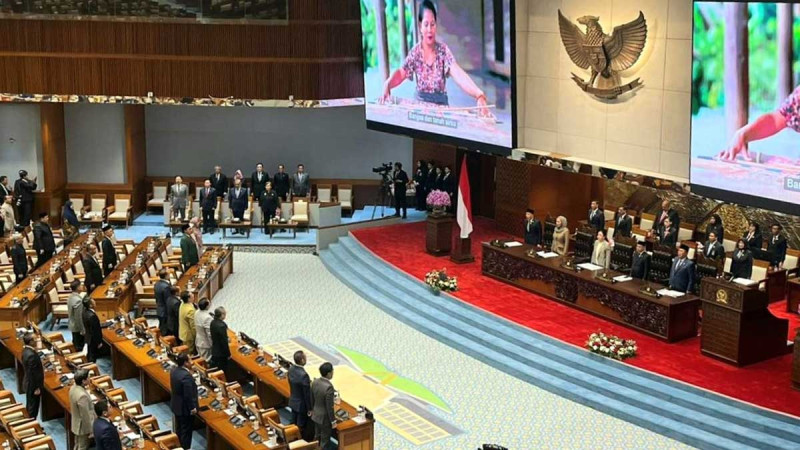
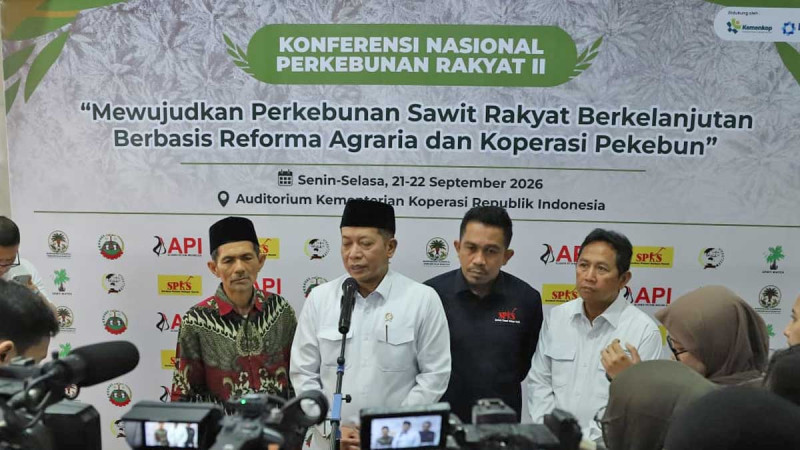
The demands emerged from the Second National Smallholder Plantation Conference, held under the theme “Building Sustainable Smallholder Palm Plantations Based on Agrarian Reform and Smallholder Cooperatives.” The forum brought together smallholder representatives from various parts of Indonesia.
The conference was initiated by the Indonesian Farmers Union (SPI), Indonesian Farmers Alliance (API), Indonesian Human Rights Committee for Social Justice (IHCS), Indonesian Palm Oil Farmers Organization (POPSI), Sawit Watch and the Indonesian Oil Palm Farmers Union (SPKS).
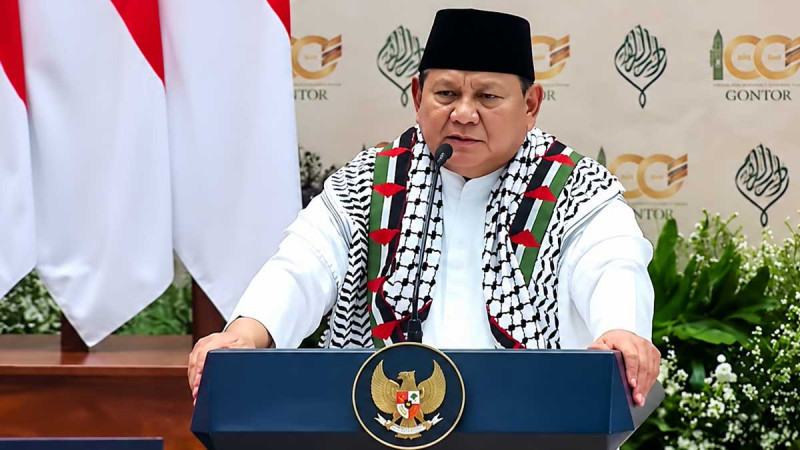
The event, opened by Cooperatives Minister Ferry Joko Juliantono, discussed agrarian reform, protection of smallholders’ managed land during forest-area restructuring and the strengthening of cooperatives as a platform for developing the smallholder palm oil industry.
Smallholders Seek Greater Role in Downstream Processing
SPKS Chairman Sabarudin said smallholder plantations have an opportunity to play a larger role in the palm oil industry, including through the development of small-scale processing facilities.
He argued that the scale of smallholder plantations provides a basis for greater participation in downstream activities.
“The momentum of the smallholder plantation conference sends a message that palm oil development and downstream processing can be realized by smallholder plantations,” Sabarudin said.
Meanwhile, Director of Food and Agriculture at the Ministry of National Development Planning (Bappenas), Jarot Indarto, described palm oil as one of the country’s priority commodities. He said the government would provide facilitation according to the needs of the sector’s development.
Three Main Issues Raised
The participating organizations outlined three major areas of concern.
The first was agrarian reform in the plantation sector. The coalition highlighted disparities in land control and called for policies that address the structure of plantation ownership.
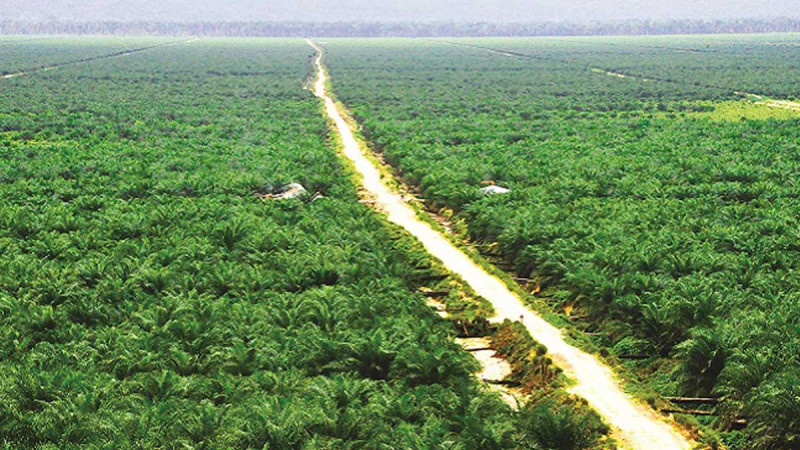
The coalition cited figures in its statement showing that private large-scale plantations account for 54.08 percent, or approximately 8.61 million hectares, of Indonesia’s national oil palm area, while smallholder plantations account for about 6.74 million hectares, or 42.29 percent.
The second issue was legal certainty and protection of smallholders’ managed land. The organizations called for transparency in forest-area enforcement processes, including mechanisms involving the Task Force for Forest Area Settlement (Satgas PKH), PPTKH and management by entities such as PT Agrinas Palma Nusantara.
The coalition also stressed the need to ensure that policies targeting forest areas do not adversely affect smallholders who have cultivated land for generations.
The third issue concerned smallholder palm oil downstreaming and fair fresh fruit bunch (FFB) prices. The coalition proposed processing industries that could be owned or managed through farmer cooperatives, alongside better access to financing and markets.
The groups also proposed integrating cooperative smallholder supply into the national B50 biodiesel program.
Cooperatives at the Center of the Smallholder Agenda
Cooperatives emerged as a recurring theme throughout the conference. SPI Chairman Henry Saragih said the development of smallholder plantations should move alongside agrarian reform and stronger cooperative institutions.
IHCS Senior Adviser Gunawan also argued that transforming the plantation sector requires more than land redistribution, with economic control and farmer cooperative structures also requiring attention.
API Secretary General Muhammad Nur Uddin proposed a Rp100 trillion budget allocation for agrarian reform implementation in priority locations, including support for institutions, agricultural infrastructure and smallholder cooperative assistance.
The conference ultimately placed agrarian reform, protection of smallholders’ managed land, cooperative strengthening, downstream development and market access among the key issues discussed for the future of Indonesia’s smallholder palm oil sector. (T2)
Source: InfoSAWIT