InfoSAWIT, JAKARTA – Amidst the judicial review of several articles concerning National Strategic Projects (PSN) in the Job Creation Law (UUCK) by the Constitutional Court (MK), two environmental organizations, MADANI Berkelanjutan and Satya Bumi, submitted an amicus curiae or "friend of the court" brief to the MK on Wednesday (1/10/2025). The document aims to strengthen the arguments of the civil society coalition, the People's Movement for Lawsuit (GERAM), that PSN is not only legally problematic but also potentially damaging to natural forests and Indonesia's climate future.
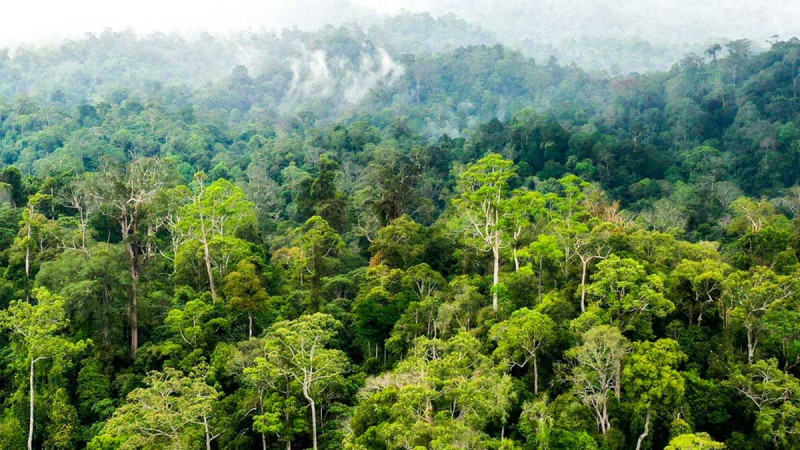
In the document, MADANI and Satya Bumi highlighted that the label "strategic" attached to PSN projects is often used to relax spatial planning and environmental regulations. Consequently, projects that should be subject to legal protection are instead granted exceptions, thereby threatening the preservation of natural forests, the existence of Indigenous Peoples, and the achievement of national climate targets.
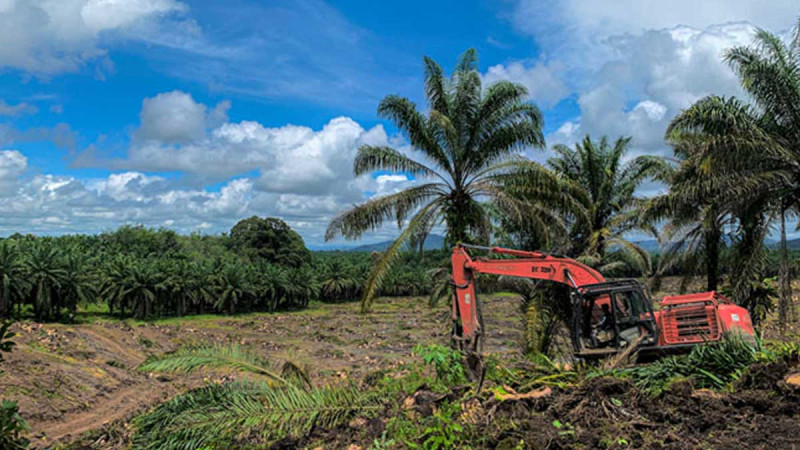
Data from the two organizations show that a number of PSN projects have accelerated the rate of deforestation. The food estate program in Merauke has cleared more than 4,500 hectares of forest during 2024–2025. Meanwhile, the Obi Island Industrial Area caused 800 hectares of deforestation, and the nickel smelter in Pomalaa has cleared 358 hectares of forest since being designated as a PSN. These areas are the living spaces of local and Indigenous communities who are now threatened with losing their livelihoods.
“More worryingly, a number of derivative PSN policies open up legal space for land clearing in protected forests and peat ecosystems that should be strictly conserved. This clearly contradicts the Forestry Law and the MK's ruling that affirms the state's obligation to maintain forest sustainability,” said Sadam Afian Richwanudin, researcher at MADANI Berkelanjutan.
The impact of PSN is also directly felt by communities on the ground. In Hakatutobu Village, Southeast Sulawesi, residents are experiencing air and water pollution, as well as marine sedimentation, due to the nickel smelter construction. According to Satya Bumi's monitoring, the project proceeded without the Free, Prior, and Informed Consent (PADIATAPA) process, which should be the right of the community as regulated in the Environmental Protection and Management Law.
“These findings show that the ease of investment and acceleration of PSN projects often sacrifice the community’s fundamental right to a healthy environment. Instead of bringing prosperity, PSN increases social and ecological burdens, especially for vulnerable groups,” said Salma Inaz, Satya Bumi Campaigner, in an official statement written by InfoSAWIT on Friday (10/10/2025).
Moreover, PSN projects are deemed to potentially derail Indonesia's climate commitments. The Merauke food estate project alone is estimated to generate an additional 782 million tons of CO₂ emissions, equivalent to economic losses reaching tens of trillions of rupiah. The massive deforestation triggered by PSN projects threatens the achievement of the Nationally Determined Contribution (NDC), FOLU Net Sink 2030, and Net Zero Emission 2060 targets.
MADANI and Satya Bumi assert that PSN contradicts Article 28H paragraph (1) and Article 33 paragraph (3) of the 1945 Constitution, which guarantee citizens' right to a good and healthy environment and affirm that the earth, water, and natural resources are used for the greatest prosperity of the people. The norm of “ease and acceleration” in PSN, they argue, prioritizes corporate interests over social justice and environmental preservation.
The main message of the amicus curiae is clear: “No Project on a Dead Planet.” MADANI Berkelanjutan and Satya Bumi urged the Constitutional Court to grant the judicial review and annul the legal norms that provide shortcuts for PSN. Development, they argue, will only be meaningful if it goes hand in hand with forest protection and environmental sustainability—because without a healthy environment, there is no future for development itself. (T2)