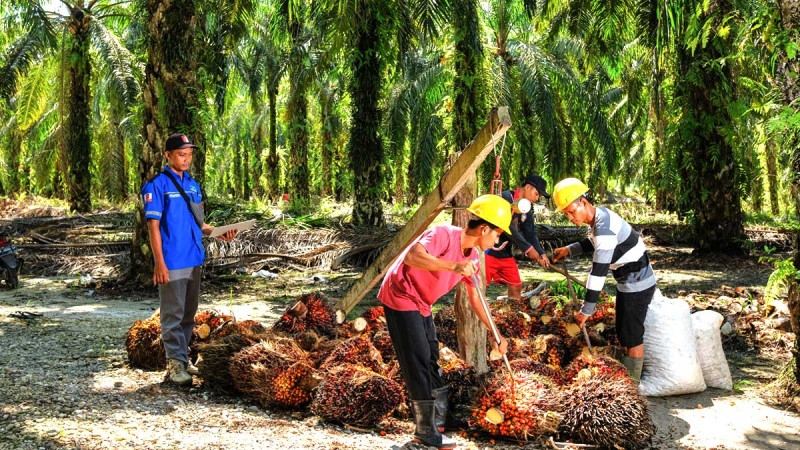
InfoSAWIT, NAGAN RAYA – Fifty-five students from the Occupational Safety and Health (OSH) Study Program at the Faculty of Health Sciences, Teuku Umar University (UTU), have begun a month-long field learning program across Indonesia's strategic industrial sectors, including oil palm plantations, mining operations, and power generation facilities in Aceh Province.
Running from July 1 to July 30, 2026, the practical training is designed to strengthen students' professional competencies and prepare future occupational safety practitioners for the challenges of high-risk industrial environments.
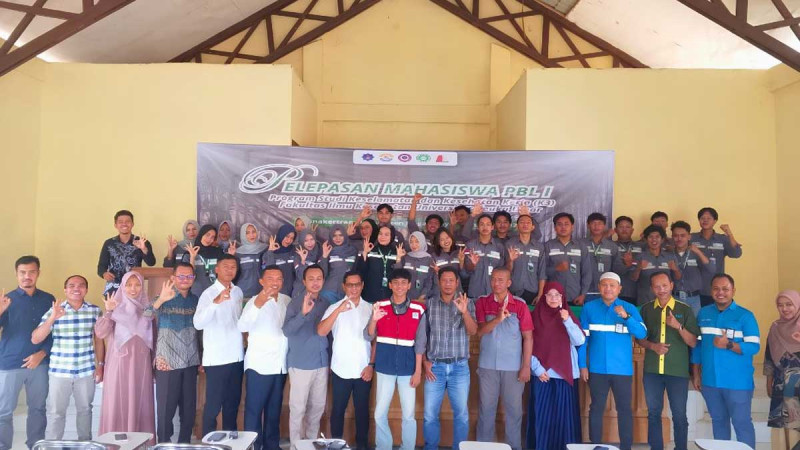
The students, drawn from the fifth and sixth semesters, were officially dispatched during a ceremony held at the Nagan Raya Job Training Center (BLK) before being assigned to partner companies located in Nagan Raya, West Aceh, and Aceh Jaya regencies.
Throughout the placement, participants will gain direct experience in identifying workplace hazards, conducting risk assessments, and studying the implementation of Indonesia's Occupational Safety and Health Management System (SMK3) in industries with elevated safety risks.
The launch ceremony was attended by Irwan, Head of the Manpower Division at the Nagan Raya Manpower and Transmigration Office, representing the agency's chief, along with Safrizal, Vice Dean I of the Faculty of Health Sciences, Jun Musnadi Is, Head of the OSH Study Program, Fikri Faidul Jihat, Chair of the field learning committee, supervising lecturers, and representatives of participating companies.
According to an official statement received by InfoSAWIT on Monday (July 20), Mufidah Uty, representing PT Meulaboh Power Generation (PLTU Units 3 and 4), expressed the company's full support for the internship program, describing industry participation in academic activities as part of its corporate social responsibility (CSR) commitment to improving human resource quality.
She encouraged the students to maximize the opportunity by expanding their practical experience, strengthening technical competencies, and gaining a deeper understanding of occupational safety systems in industrial workplaces.
Meanwhile, Jun Musnadi Is praised the commitment of partner companies for opening their facilities as learning environments for students.
According to Jun, collaboration between universities and industry is essential for producing graduates whose competencies match the evolving needs of the labor market.
He added that the partnership is expected to extend beyond internships into broader cooperation under Indonesia's Tri Dharma of Higher Education, including joint research and community service, particularly in the agro-industrial and maritime sectors that form part of the university's strategic development agenda.
Before beginning their industrial placements, all participants completed intensive technical training at the university's Occupational Safety Laboratory. The orientation featured instructors Yolanda Oktaria and Siti Nurmala Dewi, who delivered sessions on industrial safety implementation, risk analysis techniques, professional ethics, and scientific report writing.
Through the Field Learning Program, the Faculty of Health Sciences aims to produce future occupational safety professionals with strong analytical capabilities, adaptability to industrial developments, and practical problem-solving skills in workplace safety management.
The university also expects continued collaboration among higher education institutions, local governments, and industry partners to strengthen workplace safety culture across strategic sectors—including Indonesia's palm oil industry—while contributing to lower workplace accident rates and improved human resource development in Aceh Province. (T2)