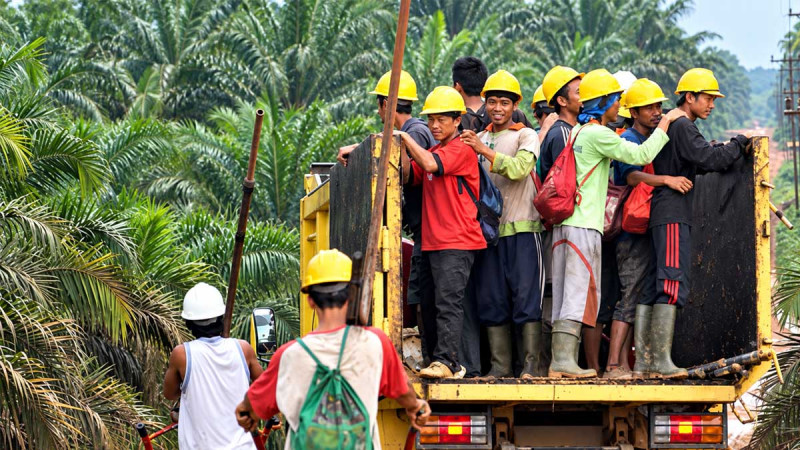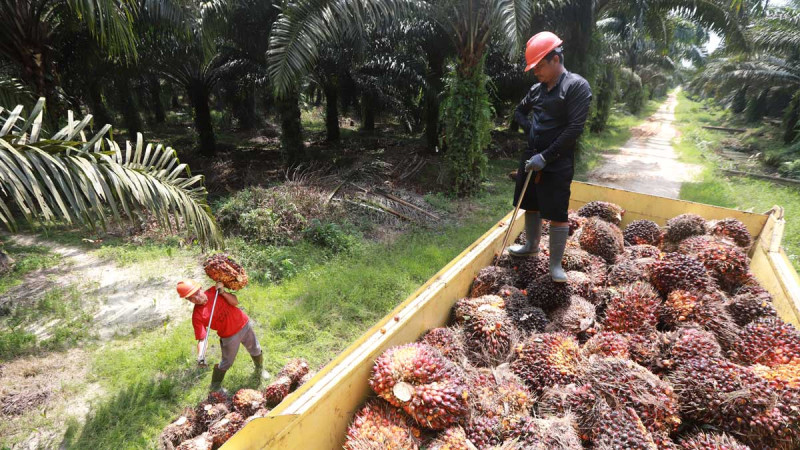
InfoSAWIT, PALANGKA RAYA – The Central Kalimantan Provincial Government is seeking to maximize the use of Palm Oil Revenue Sharing Funds (DBH Sawit) and Reforestation Revenue Sharing Funds (DBH Dana Reboisasi) to strengthen employment social security coverage for vulnerable workers in the province's palm oil and forestry sectors.
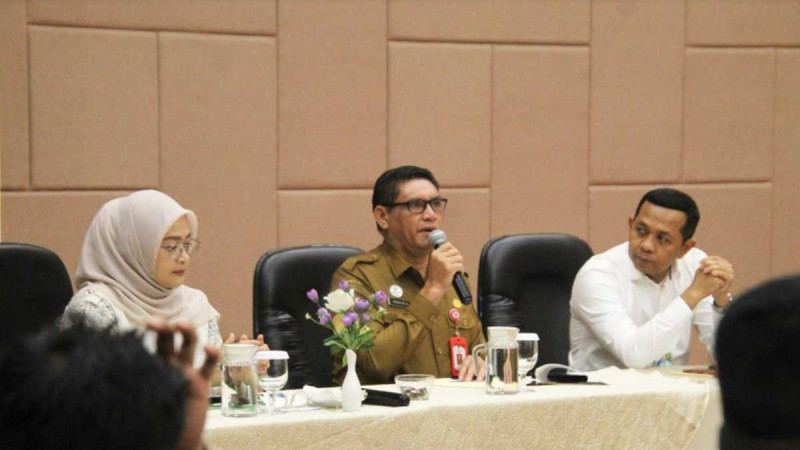
The initiative was highlighted during a Focus Group Discussion (FGD) on optimizing both funding schemes for employment social protection, bringing together representatives from the provincial government, the Ministry of Finance, BPJS Ketenagakerjaan, and other stakeholders.
Representing Provincial Secretary Linae Victoria Aden, Assistant for Economic and Development Affairs Anang Dirjo said the forum marked an important step toward expanding social protection coverage for workers who play a vital role in Central Kalimantan's plantation and forestry industries.
He noted that Ministry of Finance Regulations No. 10/2026 and No. 16/2026 provide a clear legal framework allowing regional governments to allocate revenue-sharing funds to finance employment social security programs.
According to Anang, worker protection should now be viewed as an integral component of sustainable regional development rather than merely a complementary government program.
Despite the available regulatory framework, he acknowledged that significant challenges remain. Data from BPJS Ketenagakerjaan as of July 24, 2026, showed that only 12,448 workers—around 20.07% of the targeted 80,926 beneficiaries—had been covered through the Palm Oil and Reforestation Revenue Sharing schemes.
The province's Universal Coverage Jamsostek (UCJ) currently stands at 39.89%, well below the 73.10% target set for 2026.
"This situation requires stronger collaboration among all stakeholders so that worker protection can be expanded more rapidly," Anang said, as quoted by InfoSAWIT from the Central Kalimantan Provincial Government.
He stressed that closer coordination between local governments, BPJS Ketenagakerjaan, and the Ministry of Finance would be essential to ensure the revenue-sharing funds directly benefit workers while strengthening long-term regional welfare.
During the same forum, Faisal Rahman, Head of BPJS Ketenagakerjaan's Kalimantan Regional Office, emphasized that sustainable development must go hand in hand with comprehensive social protection.
"Economic growth alone is not enough. Success should also be measured by how effectively workers are protected against occupational and social risks," Faisal said.
He added that expanding employment social security requires strong collaboration among central and regional governments, BPJS Ketenagakerjaan, businesses, academics, and other stakeholders.
Through the FGD, participants are expected to formulate practical recommendations to optimize the use of Palm Oil and Reforestation Revenue Sharing Funds, with Central Kalimantan aiming to become a national model for integrating revenue-sharing mechanisms into broader worker welfare and social protection programs. (T2)