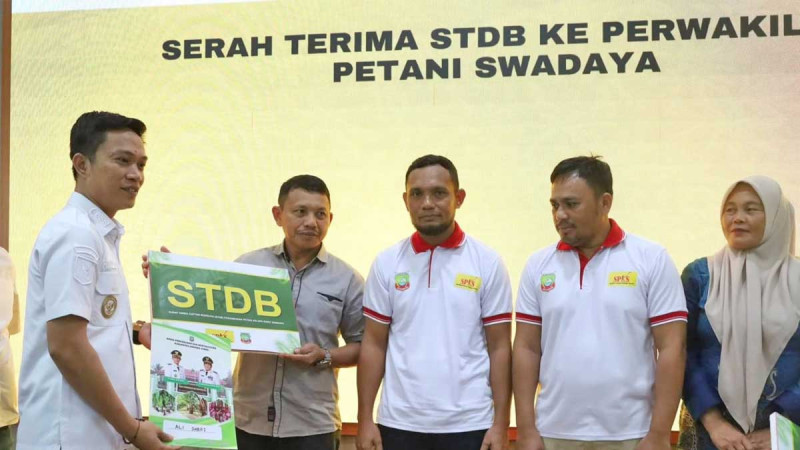
InfoSAWIT, NORTH KONAWE – The North Konawe Regency Government in Southeast Sulawesi is intensifying the registration of oil palm smallholders as part of a broader effort to strengthen plantation legality and accelerate the implementation of sustainable palm oil practices through the issuance of Cultivation Registration Certificates (STDB) and Indonesian Sustainable Palm Oil (ISPO) certification.
According to InfoSAWIT, citing Kendari Pos on Tuesday (August 4), the initiative was highlighted during a Multi-Stakeholder Sustainable Palm Oil Workshop, which also served as a platform to accelerate the collection of comprehensive data on oil palm growers. The event brought together local government officials, the National Oil Palm Smallholders Union (SPKS), regional agencies, and village heads from across North Konawe.
North Konawe Regent Ikbar emphasized that registering smallholders is a strategic step toward establishing better governance in the oil palm sector while ensuring compliance with national sustainability standards.
He explained that the registration process extends beyond administrative requirements, providing the government with an integrated database containing information on farmers’ identities, plantation locations, land size, land status, planting materials, and production potential. Such data will play a crucial role in designing development policies and delivering government assistance programs more effectively.
Ikbar stressed the importance of maintaining accurate records to prevent duplicate land registrations and ensure that no eligible farmers are left unregistered. Reliable data, he noted, would also strengthen government efforts to provide protection, technical assistance, and targeted support for smallholders.
He further urged village administrations and related institutions to verify all beneficiary data carefully before distributing certified seedlings and other government support programs, ensuring transparency and accountability.
Meanwhile, North Konawe Regional Legislative Council (DPRD) Chairman Herman Sewani expressed strong support for the accelerated registration program, describing the palm oil industry as one of the region’s strategic economic sectors with significant potential to improve rural livelihoods.
He also called for greater attention to unresolved issues surrounding plantation areas located within designated forest zones, emphasizing that regulatory challenges should not hinder efforts to improve farmers’ productivity and welfare.
Through the accelerated implementation of STDB registration and ISPO certification, the North Konawe administration aims to strengthen the legal standing of smallholders, expand their access to government development programs, and enhance the competitiveness of the region’s palm oil industry while promoting long-term sustainability. (T2)