InfoSAWIT, NEW DELHI – Indonesia's tighter control over exports of selected palm oil products is being viewed in India not merely as a shift in global trade dynamics, but as a catalyst for accelerating the country's long-term drive toward edible oil self-sufficiency.
According to Fortune India, Indonesia's decision to maintain export restrictions on Palm Oil Mill Effluent (POME) and Used Cooking Oil (UCO) is aimed at securing sufficient feedstock for the domestic expansion of biodiesel and Sustainable Aviation Fuel (SAF) production.
Indonesia is also reportedly considering a centralized export mechanism for strategic commodities, including crude palm oil (CPO), through designated state-owned enterprises. The move signals a stronger government role in managing exports of key agricultural commodities with global market significance.
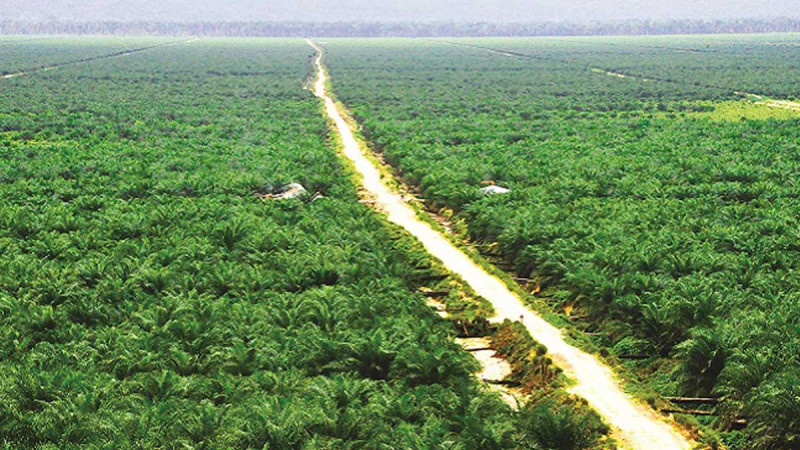
For India, these policy developments present an opportunity to reduce its heavy reliance on imported vegetable oils by strengthening domestic palm oil production.
The country launched the National Mission on Edible Oils–Oil Palm (NMEO-OP) in 2021, targeting the expansion of oil palm cultivation to 650,000 hectares by the 2025–2026 fiscal year.
Although implementation has progressed more slowly than initially anticipated, India had already reached approximately 640,000 hectares of planted oil palm by March 2026, placing the program close to its official target.
As more plantations mature, domestic crude palm oil production is expected to increase significantly, with national output projected to reach around 1.5 million tonnes by 2030–2031, nearly three times current production levels.
The report also challenges the long-held perception that India's climate is unsuitable for oil palm cultivation. While much of the country lies outside the equatorial tropics, southern states possess favorable agro-climatic conditions when supported by proper irrigation systems and modern cultivation practices.
This is particularly evident in Andhra Pradesh and Telangana, which together account for approximately 98% of India's palm oil production.
Beyond enhancing food security, India's palm oil expansion strategy also incorporates sustainability objectives. New plantations are being developed primarily on degraded land or agricultural areas previously planted with lower-value crops, minimizing pressure on natural forests.
Palm oil is also recognized as one of the world's most productive vegetable oil crops, producing substantially more oil per hectare than alternatives such as soybean or sunflower.
In addition, biomass generated from palm oil processing offers opportunities for renewable energy development. Indian agribusiness company Godrej Agrovet, for example, has announced plans to develop compressed biogas (CBG) facilities utilizing POME as feedstock, supporting cleaner energy production for transportation, households, power generation, and industrial applications.
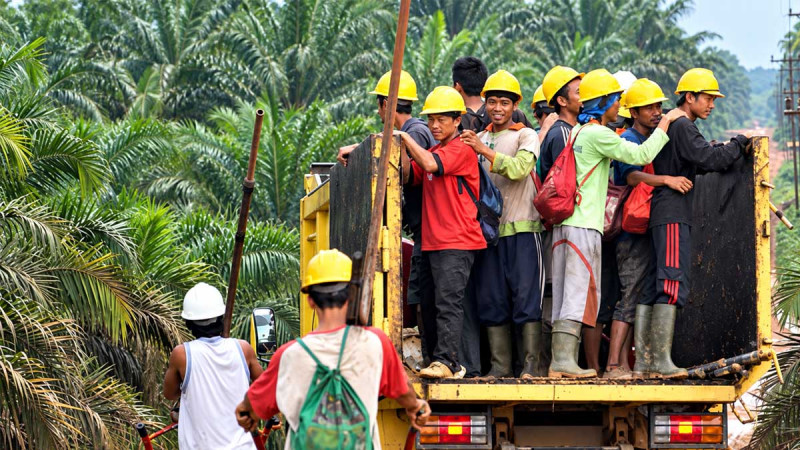
According to the report, Indonesia's evolving export policy should not be viewed as a threat to India's food security. Instead, it provides additional momentum for the country to strengthen domestic edible oil production, expand renewable energy initiatives, and improve farmer incomes through a more sustainable palm oil industry. (T2)
Source: Fortune India