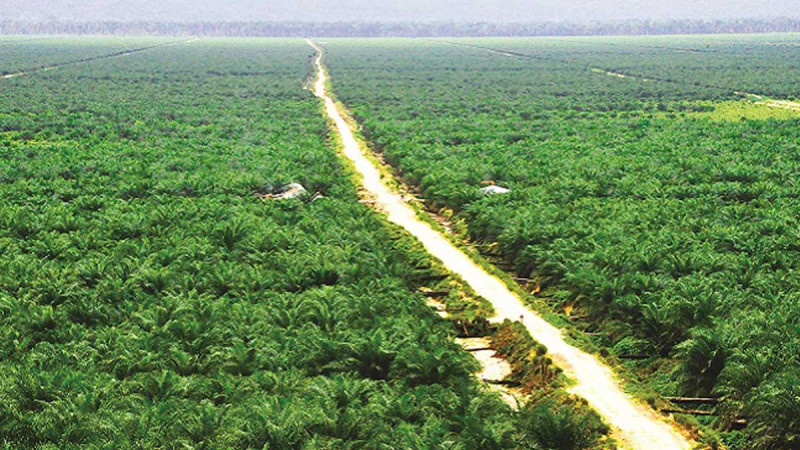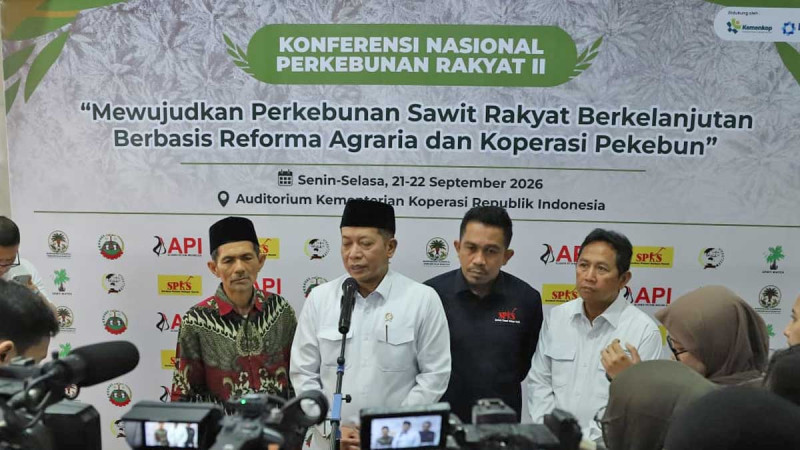

InfoSAWIT, PALEMBANG – A total of 99 independent oil palm smallholders from Musi Rawas Regency, South Sumatra, have completed a six-day intensive training program aimed at improving technical skills and promoting sustainable palm oil cultivation practices.
The training, held from July 14–19, 2026, at Benston Hotel in Palembang, was jointly organized by the Palm Oil Plantation Fund Management Agency (BPDP), the Directorate General of Plantations under the Ministry of Agriculture, and IPB Training. The initiative forms part of Indonesia's broader effort to strengthen human capital and improve productivity in the smallholder palm oil sector.
Participants received comprehensive instruction covering plantation regulations and policies, the use of certified high-quality planting materials, nursery management, land preparation, field planting, legume cover crop (LCC) establishment, maintenance of immature and mature palms, weed management, balanced fertilization, as well as pest and disease control.
The program combined classroom lectures with interactive discussions, simulations, practical exercises, and field visits, allowing participants to gain both theoretical knowledge and hands-on experience that can be directly applied in their own plantations.
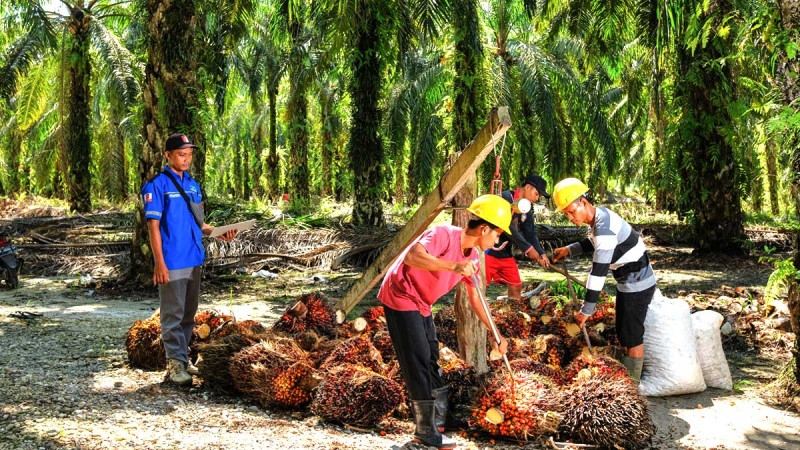
Beyond classroom sessions, participants took part in a series of technical practical exercises, including fertilizer solubility testing, soil acidity measurement using pH meters and litmus paper, nursery operations using specialized equipment, and field staking techniques to ensure proper planting distance and plantation layout.
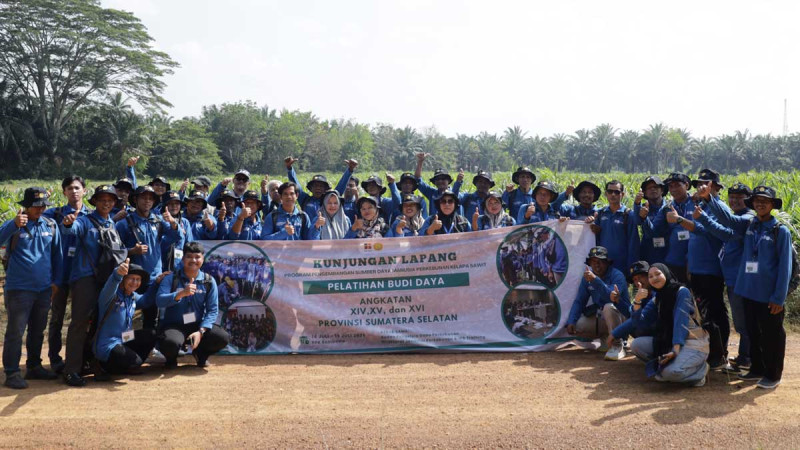
A key component of the program was a field study at PPKS Sembawa, where participants observed best management practices across three critical stages of oil palm cultivation: nursery operations, immature palms (TBM), and mature palms (TM). During the visit, they learned seedling management, young palm maintenance, weed control, pruning techniques, crop monitoring, and productivity-oriented plantation management.
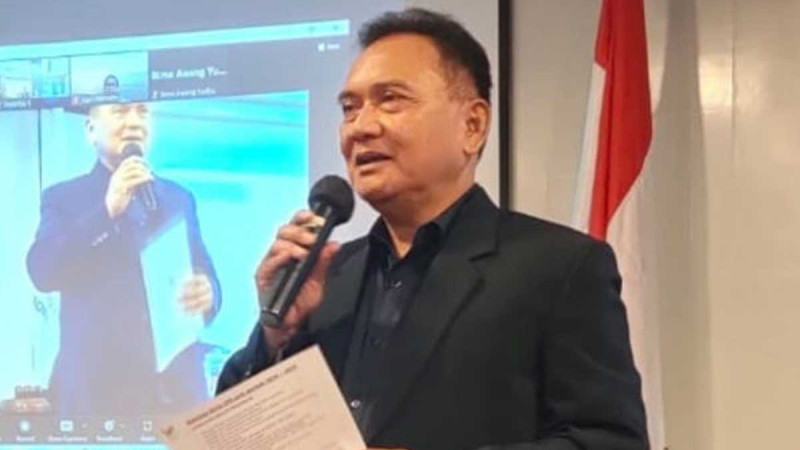
The training was officially opened by representatives from several government institutions, including officials from the Agricultural Extension and Human Resources Development Agency (BPPSDMP), the Directorate General of Plantations, the South Sumatra Plantation Office, and the Musi Rawas Plantation Office.
To ensure the curriculum reflected the latest scientific developments and industry requirements, the organizers invited academics and experienced plantation practitioners to share research findings, field experience, and best management practices relevant to Indonesia's smallholder plantations.
Throughout the program, participants actively discussed practical challenges ranging from selecting superior seedlings and preparing land to fertilizer management, weed control, and improving plantation productivity. The combination of classroom learning, practical training, and field observation is expected to help farmers adopt more efficient and sustainable cultivation practices after returning to their respective plantations.
BPDP, together with the Directorate General of Plantations and IPB Training, emphasized that the program reflects their long-term commitment to developing Indonesia's palm oil human resources. By enhancing smallholder competencies, the initiative is expected to improve plantation productivity, strengthen the competitiveness of Indonesia's sustainable palm oil industry, and ultimately increase farmers' welfare. (T2)