InfoSAWIT, SIMALUNGUN – Nurhayati (52), affectionately known as Bu Nur, never imagined her life as a smallholder palm oil farmer would take her to Brussels, London, and Rome. This female farmer from Simalungun, North Sumatra, has now become a face for the smallholder movement on the international stage.
For the past 20 years, Bu Nur has independently managed her palm oil farm. Starting with just one hectare, she now tends to three hectares of palm oil that support her family. "Since participating in RSPO certification with KPUD Lestari in 2018, my income has increased. From that, I was able to purchase two additional hectares to help cover the school fees for my three children," she recounted, quoted by InfoSAWIT from Fortasbi on Friday (9/26/2025).
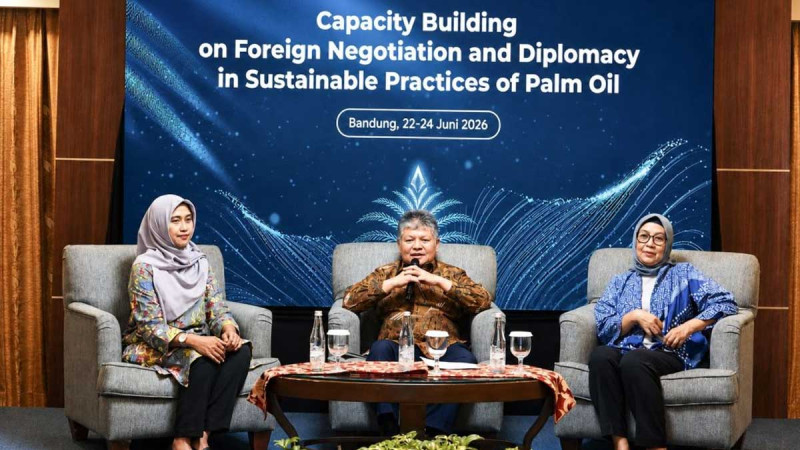
A special opportunity arose in September 2025. Bu Nur was selected as one of nine Indonesian women delegates facilitated by the Ministry of Foreign Affairs for a roadshow to Brussels, London, and Rome. In these international forums, she voiced the concerns of palm oil farmers, especially women, who are now anxious about the European Union's new regulation: the EU Deforestation Regulation (EUDR).
The Burden of Women in the Palm Oil Industry For Bu Nur, palm oil is more than just an export commodity; it is a source of food, education, and family life. "If the palm oil is not sold, it is women who are most affected. We are the ones who have to manage the kitchen, children's school fees, and household needs," she asserted.
As a member of the KPUD Lestari Gender Committee, Bu Nur is also active in encouraging women's involvement in the cooperative. Together with her group, she has proven that RSPO certification can transform farming practices into more environmentally friendly ones. "We no longer use excessive pesticides. We use organic fertilizer from animal manure, we don't pollute rivers, and we do not employ pregnant women or children," she explained.
However, all these efforts seem potentially in vain if the EUDR does not recognize the RSPO certification. "Yet, participating in certification is not easy, and the costs are not cheap. We just want our struggle to be appreciated," she said during a testimony before stakeholders in London.
From Palm Oil to Frond Handicrafts Bu Nur does not rely solely on harvested palm oil. She and the women's community in her village use palm fronds to make brooms and handicrafts. This group is known as Carli (Pencari Lidi - Frond Seekers) Angels. The activity not only provides extra income but also strengthens the role of palm oil women in supporting the family economy.
"For us, palm oil is the source of life. We will fiercely protect and maintain it," she said with sparkling eyes.
Bu Nur's presence on the international stage serves as a reminder that behind the large CPO export figures lie millions of stories of smallholder farmers, especially women. They do not reject sustainability regulations but hope that policies are implemented fairly and gradually, so as not to destroy the livelihoods of small communities.
Bu Nur is just a farmer with three hectares of land. Yet her voice now resonates far into the heart of Europe—delivering a simple message: that true sustainability must be aligned with supporting the smallholder farmer. (T2)