InfoSAWIT, BELITUNG – An innovative organic compost made from Fly Ash and Bottom Ash (FABA) has entered field trials in an oil palm plantation in Belitung, marking a new step toward developing environmentally friendly and cost-effective fertilizer solutions for Indonesia's agricultural sector.
The pilot project is being conducted at an oil palm demonstration plot managed by Tanjungpandan Class IIB Correctional Facility in Cerucuk Village, Belitung Regency, following a compost production training program previously provided to inmates and clients of the local Correctional Center (Bapas).
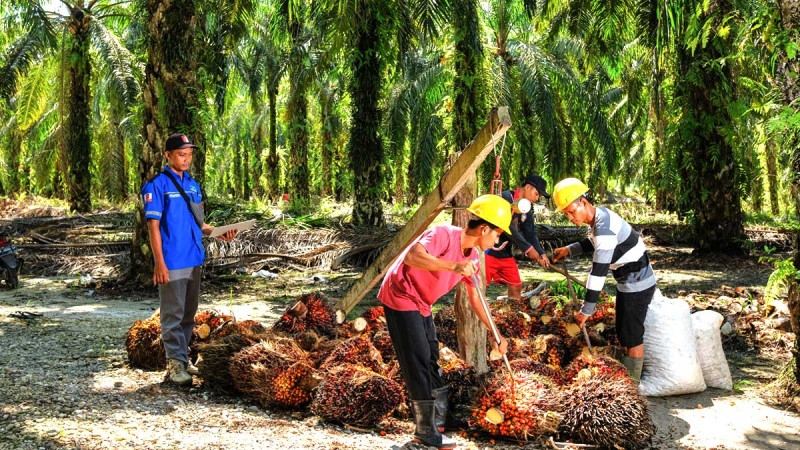
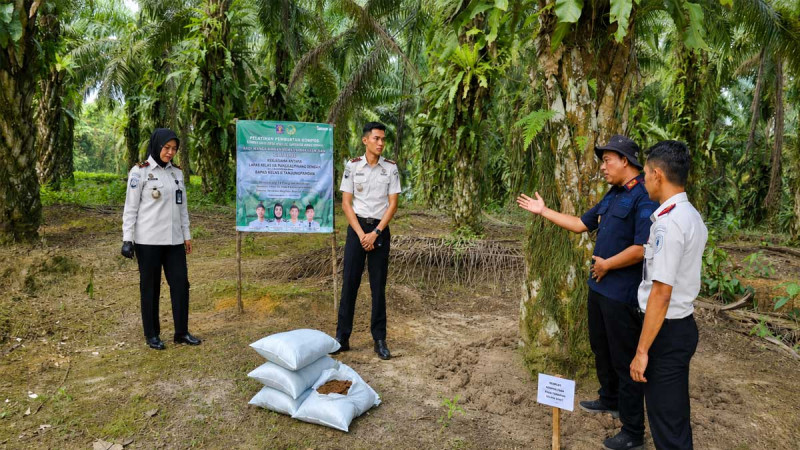
A total of 10 oil palm trees have been selected for the trial to evaluate the effectiveness of FABA compost in supporting plant growth while demonstrating proper field application techniques.
Sugeng Indrawan, Head of Pangkalpinang Class IIA Correctional Facility, said the field trial is intended to validate the performance of the institution's FABA compost innovation under actual plantation conditions.
He expressed hope that successful results would pave the way for wider adoption of the technology while strengthening inmate rehabilitation programs through the development of products with commercial value.
The activity was attended by Ade Agustina, Head of the Regional Office of the Directorate General of Corrections (Ditjenpas) for Bangka Belitung Islands, Royhan Al Faisal, Head of Tanjungpandan Correctional Facility, and Muhamad Irfani, Head of the Tanjungpandan Correctional Center. The officials also participated in demonstrating the application of the compost to oil palm trees.
According to an official statement received by InfoSAWIT on Monday (July 20), Ade Agustina said the collaboration between correctional institutions serves as an example of how innovation can generate practical benefits for both inmate rehabilitation and community empowerment.
She explained that the use of FABA compost supports vocational training and self-reliance programs for inmates while contributing to food security, promoting a circular economy, and encouraging more sustainable farming practices.
Meanwhile, Royhan Al Faisal welcomed the implementation of the innovation in Belitung, describing the demonstration plot as an important stage in transforming classroom training into practical agricultural application.
He said the project could become the starting point for broader utilization of FABA compost across correctional agricultural programs and eventually throughout the plantation sector.
The performance of the compost on the 10 oil palm trees will be closely monitored before the technology is introduced to other agricultural commodities across Bangka Belitung Province.
In addition to launching the field trial, the Regional Office of the Directorate General of Corrections distributed compost assistance to 10 farmers in villages partnered with the Tanjungpandan Correctional Facility. The initiative is expected to improve agricultural productivity while encouraging sustainable use of local resources.
Ade noted that the community partnership program reflects the correctional system's broader commitment to delivering tangible benefits beyond prison walls through collaboration with local governments and surrounding communities.
She added that wider adoption of organic compost could improve soil quality, increase crop yields, and reduce farmers' dependence on chemical fertilizers, ultimately supporting more environmentally responsible agricultural practices.
One of the farmer beneficiaries, Ibnu, welcomed the assistance and expressed hope that the compost would improve soil fertility while providing a more affordable alternative to conventional fertilizers.
Through the FABA compost innovation and its village partnership initiative, Indonesia's correctional institutions aim to foster more productive, self-reliant, and competitive agricultural communities while strengthening collaboration between correctional facilities and local stakeholders in support of sustainable agricultural development. (T2)