InfoSAWIT, BOGOR – Amid the commemoration of International Day of Indigenous Peoples, the Indigenous Territory Registration Agency (BRWA) released new data highlighting the gap between mapping and legal recognition of indigenous territories in Indonesia. Of the 33.64 million hectares of mapped indigenous territories, only 18.9% have received legal legitimacy through regional regulations or local government decisions.
This figure indicates a significant potential that has yet to be optimally utilized. Indigenous territories, besides being a source of local food and a bastion of biodiversity, also play a strategic role in climate change mitigation—a factor increasingly considered in risk maps and sustainable investment.
BRWA Head, Kasmita Widodo, emphasized that legal recognition is the foundation for protecting the rights of indigenous peoples. “Without the ratification of the Indigenous Peoples Bill, we risk losing cultural identity as well as ecological assets that are crucial for achieving Indonesia's Golden Age by 2045,” he stated in an official statement to InfoSAWIT on Tuesday (August 12, 2025).
BRWA data shows that 4.9 million hectares of indigenous territories are utilized for traditional agriculture, forming the basis of local food sovereignty. Practices such as shifting cultivation, mixed gardens, and the preservation of native seeds exemplify sustainable practices that can provide food without damaging ecosystems. Indigenous women play a key role in maintaining this knowledge and passing it on to future generations.
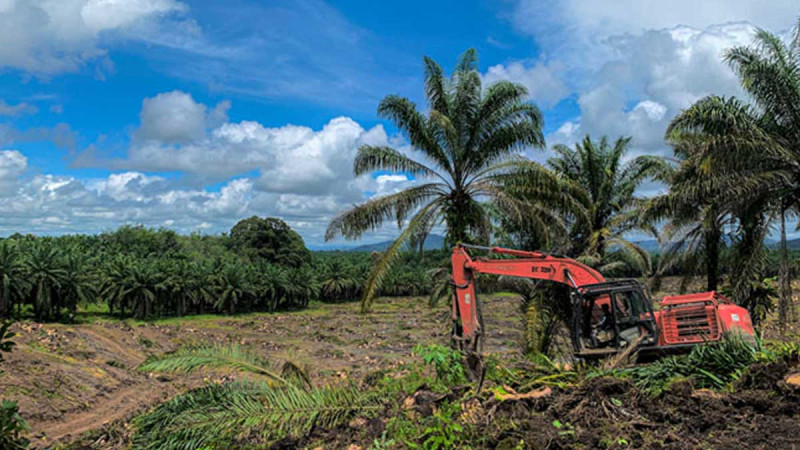
However, the threat of land conversion and industrial expansion remains significant. The area of business permits in indigenous territories is recorded at 7.3 million hectares—higher than the area of indigenous territories that have been legally recognized. This condition indicates a high risk of tenure conflicts, environmental degradation, and loss of local food sources.
“The current recognition procedure is too complex. The government needs to expedite the discussion and ratification of the Indigenous Peoples Bill,” said Veni Siregar from the Indigenous Peoples Bill Coalition Secretariat.
With 23.9 million hectares of forest cover in indigenous territories, its contribution to carbon absorption and global climate stability is very significant. Legal recognition is not only a human rights issue but also a relevant green economic strategy aligned with net-zero targets and the FOLU Net Sink 2030 commitment.
AMAN Secretary-General, Rukka Sombolinggi, stressed that delaying means losing. “As long as indigenous territories are not recognized and protected, the threats to local food and forests remain high,” she said.
For the government, recognizing indigenous territories is not just a moral obligation or a fulfillment of human rights but a strategic investment for food security, environmental sustainability, and Indonesia's economic competitiveness in an increasingly sustainability-oriented global market. (T2)