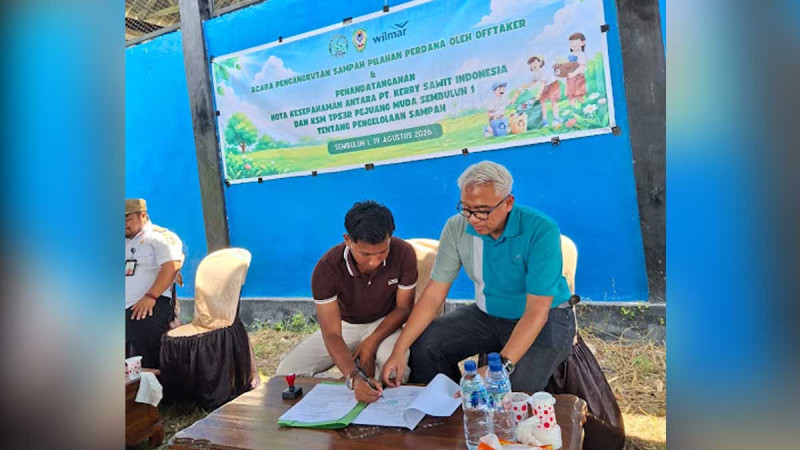
InfoSAWIT, SERUYAN – Waste generated by plantation operations is being integrated into a community-based recycling initiative in Sembuluh I Village, Seruyan Regency, Central Kalimantan. PT Kerry Sawit Indonesia (KSY), part of Wilmar Group, has partnered with the Pejuang Muda Community Self-Help Group (KSM), which manages the village’s Reduce, Reuse, Recycle (TPS3R) waste-processing facility.
The partnership is designed not only to reduce waste from company activities but also to provide a more consistent supply of recyclable materials for the community-run facility. The initiative is expected to create additional economic value while strengthening the operational sustainability of the TPS3R.
Dilansir InfoSAWIT dari Wilmar Group, Selasa (1/9/2026), the partnership was formally marked by the symbolic signing of a memorandum of understanding on waste management on August 19, 2026. Under the agreement, organic and inorganic waste that has been separated at the source will be delivered to the Sembuluh I TPS3R for further processing.
As its first shipment, the company delivered 113 kilograms of cardboard waste and 50 kilograms of plastic waste to the community waste-management group.
Community Waste Facility Seeks Greater Independence
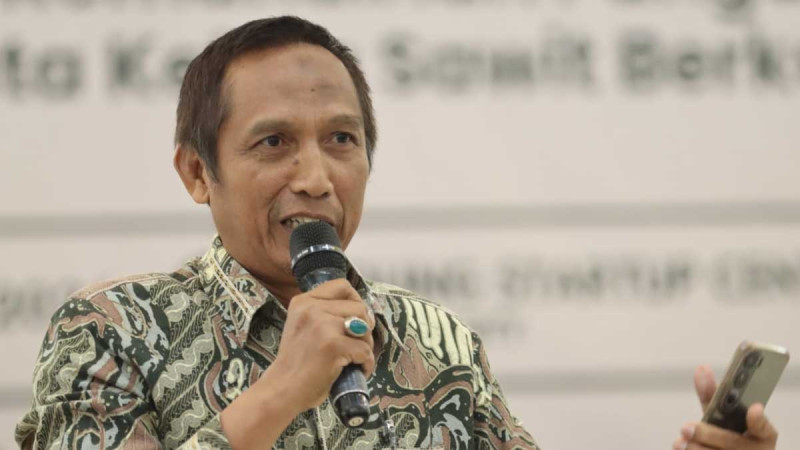
Sembuluh I Village Head Hery Subrata welcomed the partnership, saying it could provide benefits beyond simply reducing waste.
The TPS3R already receives waste from 388 households, which have supplied materials to the facility over the past two months. The additional supply from the company is expected to strengthen the facility’s operations and provide opportunities for local employment.
According to Hery, cooperation with the company could help the TPS3R become more independent as a community-based waste-management unit.
The model provides an opportunity to transform waste management from a purely environmental activity into a productive community enterprise.
Government Welcomes Corporate Participation
The Seruyan Environmental and Forestry Agency (DLHK) also welcomed the initiative.
Muhammad Taufik, Head of the agency’s Waste Management Division, said collaboration between companies and communities could become an example for other stakeholders seeking to strengthen environmental protection and community empowerment.
He emphasized that environmental protection requires participation from multiple parties.
DLHK Seruyan Head Akhmad Hidayat likewise expressed appreciation for Wilmar Group’s partnership with the Sembuluh I TPS3R and hoped the initiative would contribute to improving waste management across the regency while continuing on a sustainable basis.
Waste Is Sorted Before Leaving the Company
Wilmar Group Central Kalimantan Corporate Social Responsibility Manager Widiyanto said the company would supply recyclable inorganic materials generated by its operations and employees.
The materials include paper, plastic and metal. Before being sent to the TPS3R, the waste is sorted at the source to ensure that different materials can be handled appropriately.
The company also ensures that the materials delivered to the community facility are not mixed with hazardous and toxic materials, or B3 waste.
Source separation is an important element of the partnership because properly sorted materials are easier to process, reuse and sell.
Reliable Waste Supply Strengthens TPS3R
For community-based waste facilities, maintaining a consistent supply of recyclable materials can be one of the challenges affecting their long-term operations.
Wilmar’s partnership is intended to address that issue by providing a reliable stream of recyclable material from company activities.
Widiyanto said the company could help guarantee the supply of waste materials, while the community could gain additional economic value from managing and processing them.
The initiative illustrates how cooperation between companies, local government and communities can connect environmental management with local economic development.
For Sembuluh I Village, the partnership could help the TPS3R evolve beyond a facility for reducing waste into a more independent and sustainable community-based enterprise.
In plantation regions such as Seruyan, such collaboration offers a model in which waste that would otherwise become an environmental burden can instead become a resource capable of generating economic benefits for local residents. (T2)