InfoSAWIT, JAKARTA – Indonesian palm oil farmers are raising concerns over a proposed margin fee in the country’s palm oil export governance system, warning that additional export costs could eventually be passed down to the plantation sector and reduce the price received by farmers.
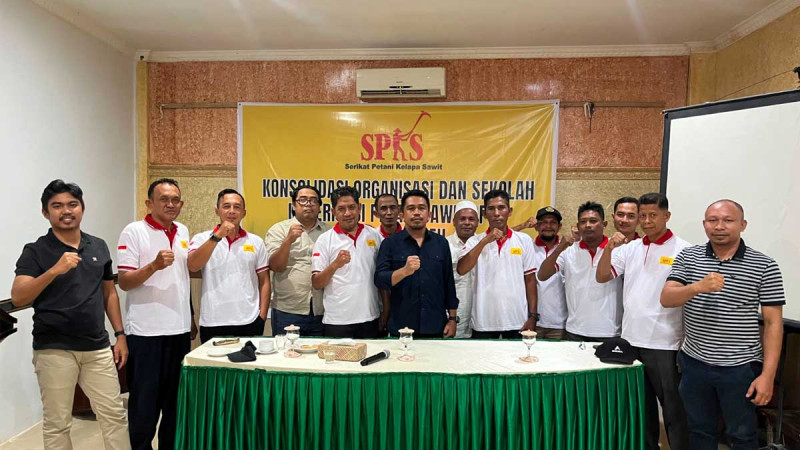
The Serikat Petani Kelapa Sawit (SPKS), an Indonesian palm oil farmers’ organization, is urging the government to ensure that any new export mechanism implemented through PT Danantara Sumberdaya Indonesia (DSI) does not place additional pressure on smallholder incomes.
According to SPKS, Tuesday (1/9/2026), Chairman Sabarudin said improvements in export governance and efforts to increase state revenue were possible, but such policies needed to take into account the economic sustainability of palm oil plantations, particularly smallholder farms.
The organization is concerned that additional costs associated with palm oil exports could eventually be transferred upstream through lower fresh fruit bunch (FFB) prices.
Farmers Already Feel Impact of Export Levy
SPKS also highlighted the existing export levy imposed on palm oil products. According to Sabarudin, the current 12.5 percent export levy has already placed considerable pressure on farmers’ FFB prices.
“Even the current 12.5 percent export levy has significantly pressured FFB prices,” Sabarudin said.
Based on data cited by SPKS, the existing levy could reduce farmers’ FFB prices by approximately Rp1,000 to Rp1,500 per kilogram. The organization also estimates that every 1 percentage-point increase in the export levy could potentially put additional pressure of around Rp300 to Rp400 per kilogram on farmers’ FFB prices.
Against that backdrop, SPKS is calling for careful consideration of the margin fee to prevent the new mechanism from creating another burden for farmers.
The organization argues that the larger the additional costs introduced downstream, the greater the risk that those costs will eventually be transferred to farmers as producers of palm oil raw materials.
SPKS Questions Distribution of Export Revenue
Beyond the proposed margin fee, SPKS is also questioning whether revenue collected through palm oil export levies has generated sufficient direct benefits for smallholders.
Sabarudin said the amount of revenue collected from the palm oil sector was substantial, but argued that the benefits received by farmers had not been proportional to the scale of the funds collected.
SPKS is therefore calling on the government to balance efforts to increase state revenue with stronger mechanisms to protect farmers’ incomes.
One proposal is to establish a floor price for farmers’ FFB. Such a mechanism could provide greater protection when export policies change or global palm oil prices experience significant volatility.
Farmers Seek FFB Floor Price
SPKS believes an FFB floor price should be based on a fair and transparent formula. The calculation, it said, should take production costs and farmers’ welfare into consideration.
Such a mechanism would help ensure that farmers do not become the first party to absorb the impact of changes in export policy or rising costs elsewhere in the supply chain.
“Farmers should not be left to bear the entire loss when prices fall,” Sabarudin said.
SPKS is also proposing a protection mechanism for situations in which actual FFB prices fall below the established floor price.
One option being considered is a price subsidy funded through palm oil export levy revenues. Under such a system, funds collected from the palm oil industry could be redirected to provide direct protection for smallholders when market conditions deteriorate.
DSI Urged to Engage Farmer Organizations
As the government considers the new export governance mechanism, SPKS is also asking PT DSI to engage directly with palm oil farmer associations and organizations.
The farmers’ group argues that consultation should take place before the margin fee is fully implemented. Direct dialogue would allow policymakers and DSI to better understand conditions at the plantation level and assess the potential consequences for FFB prices.
SPKS emphasized that discussions should not be limited to exporters and plantation companies.
“Farmers must also be involved because those of us at the upstream level will directly feel the impact of downstream policies,” Sabarudin said.
According to SPKS, excluding farmers from the policy-making process could increase resistance to the proposed margin fee. The organization instead favors an open dialogue involving all stakeholders, with farmers recognized as key participants in Indonesia’s palm oil supply chain.
Ultimately, SPKS maintains that improvements in palm oil export governance should go hand in hand with stronger protection for smallholders. Policies designed to increase state revenue and improve export management, it argues, should not come at the expense of farmers’ incomes. (T2)
Source InfoSAWIT