InfoSAWIT, JAKARTA – Indonesia’s efforts to strengthen food security, energy independence and climate resilience require a more integrated approach to managing land and natural resources. Rather than addressing each sector separately, policymakers are being urged to manage the entire landscape as one interconnected system.
The approach is considered increasingly important as Indonesia seeks to balance the interests of conservation, forestry, palm oil plantations, food production and infrastructure while maintaining clear spatial planning and legal certainty.
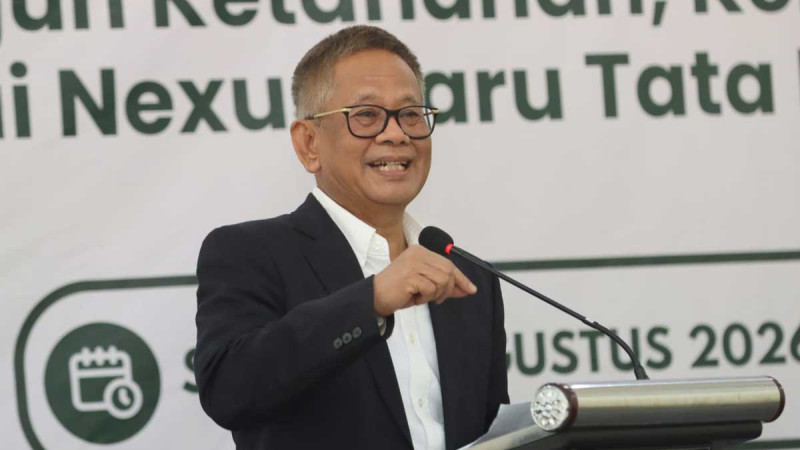
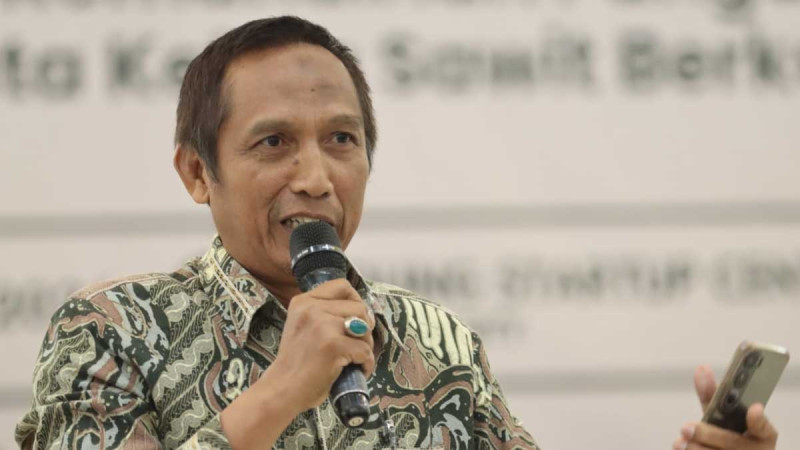
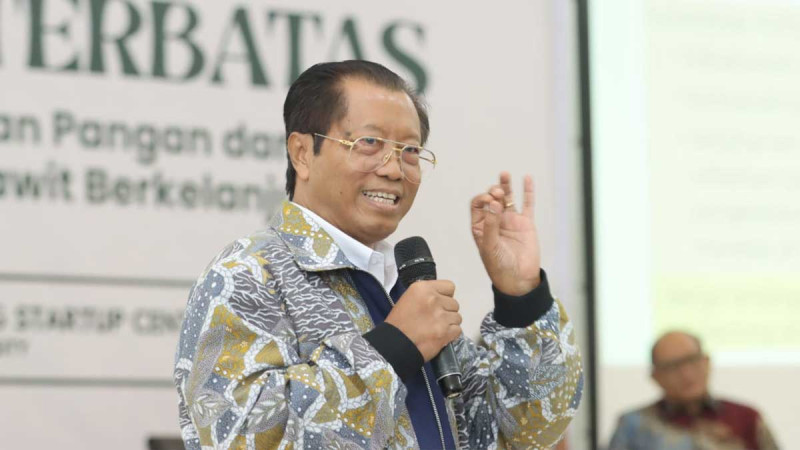
According to Dr. Petrus Gunarso, Founder of the Panca Palma Tropika Indonesia Foundation, speaking at a Limited Discussion Forum organized by Rumah Sawit Indonesia (RSI) at IPB University in Bogor, Monday (31/8/2026), ecological and development challenges cannot be effectively addressed through fragmented sectoral policies. Instead, they should be viewed as part of an integrated landscape-management framework.
Petrus said Indonesia’s position as a tropical country with only two seasons provides a comparative advantage in environmental management. However, realizing that potential depends heavily on certainty over spatial planning and sustainable landscape governance.
Five Key Land Functions Need Integration
Under the proposed approach, sustainable landscape management should integrate different land functions according to their respective roles.
These include conservation areas, production forests, palm oil plantations, food-producing agricultural areas, as well as rivers and watersheds. Each component needs to be managed proportionally while being supported by legal certainty.
Petrus emphasized that the proportion of areas designated for ecosystem protection needs to be clearly established and safeguarded. At the same time, sustainable forestry cultivation should be optimized as part of the broader landscape-management strategy.
The approach does not place palm oil outside the sustainability framework. Instead, the plantation sector is expected to operate within clearly defined spatial boundaries while contributing to national food and energy objectives.
Palm Oil and Food Security Must Be Planned Together
For the palm oil sector, Petrus called for greater precision in determining the area allocated to strategic commodities.
At the same time, the productivity and protection of Indonesia’s food-producing land must remain a priority. He pointed to the country’s approximately 7 million hectares of rice fields as a key national asset that needs to be protected and managed productively.
Residential areas also need to be incorporated into spatial planning as population patterns evolve. Planned road and bridge networks are similarly important to support changing demographic and economic dynamics.
This broader perspective means agricultural, plantation, conservation and settlement policies cannot be designed independently if Indonesia wants to achieve long-term resilience.
Spatial Certainty Supports Climate Action
Petrus also linked spatial certainty directly to climate policy.
Clear boundaries and land-use functions would make it easier to implement conservation programs, calculate carbon sequestration potential, protect biodiversity and develop climate resilience.
“When space is certain, conservation can be implemented, carbon sequestration potential can be accurately calculated, biodiversity can be protected, climate resilience can be built, and the palm oil industry can make a tangible contribution to national food and energy sovereignty,” Petrus said.
The argument places spatial planning at the center of the climate agenda rather than treating climate policy as a separate issue.
Cross-Sector Commitment Needed
Petrus stressed that integrated landscape governance would require commitment across sectors. Spatial planning, biodiversity conservation, carbon accounting and the transformation of the palm oil sector need to operate within a common framework.
Such an approach could also provide greater certainty for industry and communities while ensuring that conservation and food-production objectives remain protected.
For Indonesia, the challenge is therefore not simply how to expand or restrict individual commodities, but how to manage the broader landscape so that economic development, environmental protection, food security and energy resilience can coexist. (T2)
Source: InfoSAWIT