InfoSAWIT, JAKARTA – Once the world's largest palm oil producer, Nigeria is now struggling to meet domestic demand and increasingly depends on imports, highlighting decades of underinvestment, inconsistent policies, and limited technological advancement.
According to InfoSAWIT, citing Business Day on Sunday (August 2), Nigeria currently accounts for only about 2% of global palm oil production, despite having once supplied nearly 43% of the world's crude palm oil.
Joe Onyiuke, President of the National Oil Palm Growers Association of Nigeria (OPGAN), said insufficient investment in plantation development, research, financing, and replanting programs has steadily weakened the country's competitiveness.
"We once controlled around 43 percent of global crude palm oil supply, but today we produce only about two percent," Onyiuke said.
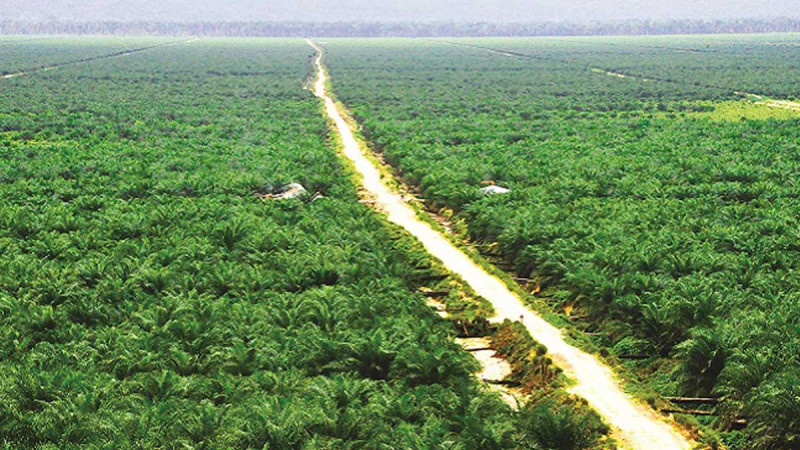
In contrast, Malaysia has transformed palm oil into one of the pillars of its national economy through consistent government policies, sustained investment, advanced research, and downstream industrial development.
Although oil palm originated in West Africa and was introduced to Malaysia during the British colonial era in the late 19th century, Malaysia surpassed Nigeria in palm oil exports during the 1960s before Indonesia eventually became the world's largest producer.
Malaysia produced approximately 20.28 million tons of palm oil in 2025 and exported its products to more than 150 countries worldwide.
The industry employs roughly three million workers, contributes about 3% of Malaysia's Gross Domestic Product (GDP), and generated approximately US$27.5 billion in export earnings last year, according to the Malaysia Palm Oil Council (MPOC).
Industry observers attribute Malaysia's success to continuous replanting programs, research investment, integrated processing facilities, and stronger participation of independent smallholders in the supply chain.
Nigeria, meanwhile, faces a widening production deficit. Domestic palm oil demand is estimated at 2.7 million tons annually, while local production stands at only 1.5 million tons, forcing the country to import palm oil primarily from Indonesia and Malaysia.
According to UN Comtrade, Nigeria spent around US$155 million on palm oil imports in 2024, placing additional pressure on foreign exchange reserves and food inflation.
Onyiuke acknowledged recent investments in processing facilities but said slow technology adoption, limited financing, inconsistent government policies, and the absence of a nationwide replanting strategy continue to hamper production growth.
A similar view was expressed by David Iweta, Vice President of the National Association of Chambers of Commerce, Industry, Mines and Agriculture (NACCIMA), who believes Nigeria has significant opportunities to reduce import dependence and strengthen its non-oil exports by developing a more competitive palm oil industry.
Speaking at the Malaysia Market Connect forum in Lagos, Iweta said Malaysia's experience offers valuable lessons in long-term policymaking, investment, innovation, and integrated industrial development.
Experts, however, caution that Nigeria cannot simply replicate Malaysia's model. Future development strategies must be tailored to Nigeria's unique geographical, social, and economic conditions.
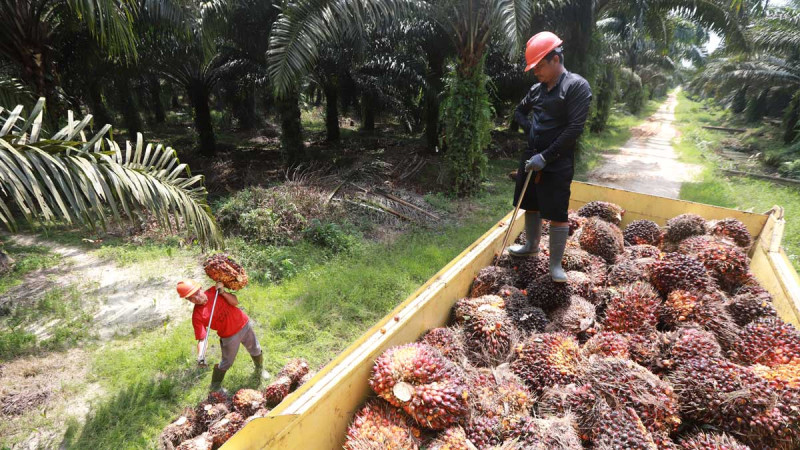
Around 80% of Nigeria's palm oil output still comes from smallholders harvesting semi-wild palms using traditional processing methods. Yet the country's palm belt spans 24 states, including the Niger Delta and southeastern regions, providing significant room for expansion.
Analysts estimate Nigeria needs around three million hectares of productive oil palm plantations to achieve self-sufficiency. Without stronger investment in research, replanting, processing capacity, affordable financing, and market infrastructure, the country is expected to remain a net importer of a commodity it once dominated globally. (T2)