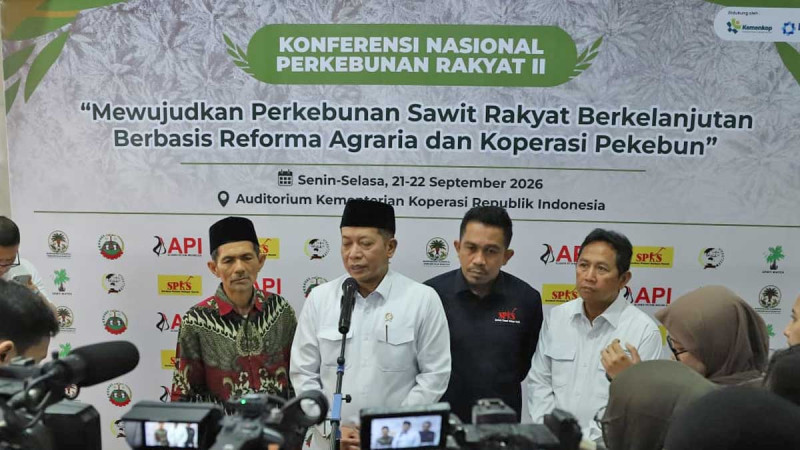
InfoSAWIT, KONAWE UTARA – The Indonesian Oil Palm Smallholders Union (SPKS) has reaffirmed its commitment to supporting the Konawe Utara Regency Government in accelerating the implementation of the Regional Action Plan (RAD) for Sustainable Palm Oil, with a strong focus on farmer registration, legality, and sustainability certification.
According to an official statement released by SPKS and received by InfoSAWIT, SPKS Chairman Sabarudin delivered the commitment during a multi-stakeholder workshop on sustainable palm oil held at the Regional Development Planning Agency (Baperidda) office in Konawe Utara on July 30. The event was officially opened by Regent Dr. H. Ikbar.
Sabarudin emphasized that successful implementation of the regional action plan requires close collaboration among local governments, farmers, plantation companies, academics, and civil society organizations.
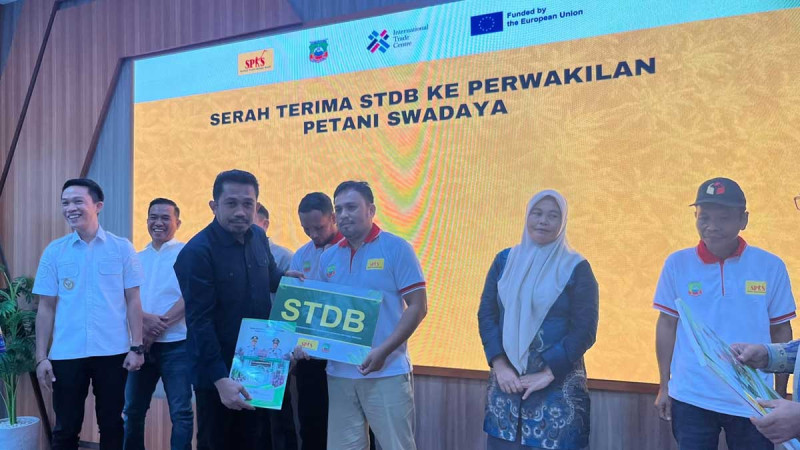
He said that accelerating farmer data collection, polygon-based plantation mapping, issuance of the Smallholder Plantation Registration Certificate (STDB), and wider adoption of the Indonesian Sustainable Palm Oil (ISPO) standard are fundamental to improving governance across Indonesia's independent smallholder sector.
"Farmer registration is the foundation of sustainable smallholder palm oil development. Accurate data will accelerate business legality, improve access to financing, expand certification opportunities, and strengthen the competitiveness of independent smallholders in both domestic and international markets," Sabarudin said.
SPKS also pledged to serve as a strategic partner for the Konawe Utara administration by assisting farmers through institutional strengthening, capacity building, technical support, and faster ISPO certification.
Beyond certification, the organization plans to improve smallholder productivity through the adoption of Good Agricultural Practices (GAP), the use of high-quality planting materials, implementation of the Smallholder Replanting Program (PSR), and continuous technical assistance aimed at increasing yields without expanding cultivated land.
SPKS also expressed support for Indonesia's mandatory B50 biodiesel program, while stressing that higher biodiesel demand must be matched by stronger support for smallholder plantations.
According to Sabarudin, improving farm productivity, expanding access to technology, strengthening extension services, and ensuring fair fresh fruit bunch (FFB) pricing are essential to ensuring that millions of Indonesian oil palm farmers benefit directly from the country's renewable energy transition.
Regent Ikbar described farmer registration as a strategic step toward achieving better plantation governance and meeting ISPO certification requirements.
He noted that reliable data would enable the government to identify farmers, plantation locations, land status, planted areas, and production potential, providing a stronger basis for policy formulation, financial assistance, technical support, and future development programs.
Looking ahead, the Konawe Utara administration aims to accelerate STDB issuance and ISPO certification, strengthening the legal standing of smallholders while enhancing the competitiveness of independently produced palm oil in both domestic and global markets. (T2)