InfoSAWIT, JAKARTA – Indonesia’s Meteorology, Climatology and Geophysics Agency (BMKG) has forecast that most of the country’s major oil palm-growing regions will experience low to moderate rainfall between August and October 2026, as the ongoing El Niño phenomenon continues to suppress precipitation across much of the archipelago.
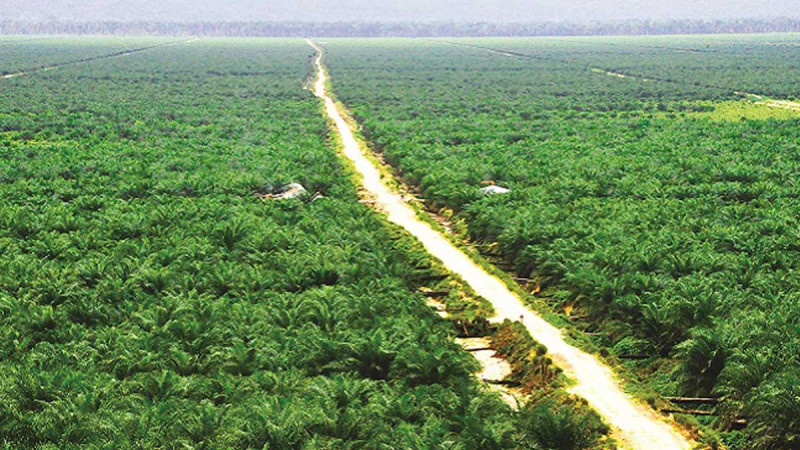
According to BMKG’s Palm Oil Plantation Climate Information Bulletin, Indonesia—responsible for approximately 57% of global palm oil production—remains highly dependent on weather conditions, with plantation productivity closely linked to rainfall patterns and water availability.
BMKG’s latest atmospheric and oceanic observations indicate that the Indian Ocean Dipole (IOD) remains in a neutral phase, while sea surface temperature anomalies in the equatorial Pacific continue to reflect El Niño conditions. Although Indonesian waters remain relatively warm and continue supplying atmospheric moisture, the agency said this has not been sufficient to offset El Niño’s influence on rainfall formation.
For August 2026, BMKG projects that 71.55% of Indonesia will receive below-average rainfall, while 28.31% is expected to experience moderate precipitation. Only a small fraction of the country is forecast to record high rainfall.
Conditions are expected to become even drier in September, when nearly 77.5% of the country is projected to receive low rainfall. Rainfall distribution is forecast to improve slightly in October, although low to moderate precipitation will continue to dominate most oil palm-producing areas.
The agency also expects rainfall characteristics during the August–October period to remain below normal, with more than 80% of Indonesia likely to experience drier-than-average conditions throughout the season.
Among the areas expected to face below-normal rainfall are parts of Aceh, southern Riau, Jambi, West Kalimantan, Central Kalimantan, East Kalimantan, and South Kalimantan—all key palm oil production regions.
While BMKG’s latest analysis indicates that soil moisture remains generally adequate across many plantation areas, water reserves have begun declining in several districts, including Pelalawan, Kuantan Singingi, Indragiri Hulu, Kutai Timur, Kutai Kartanegara, Banjar, Barito Kuala, and parts of Aceh.
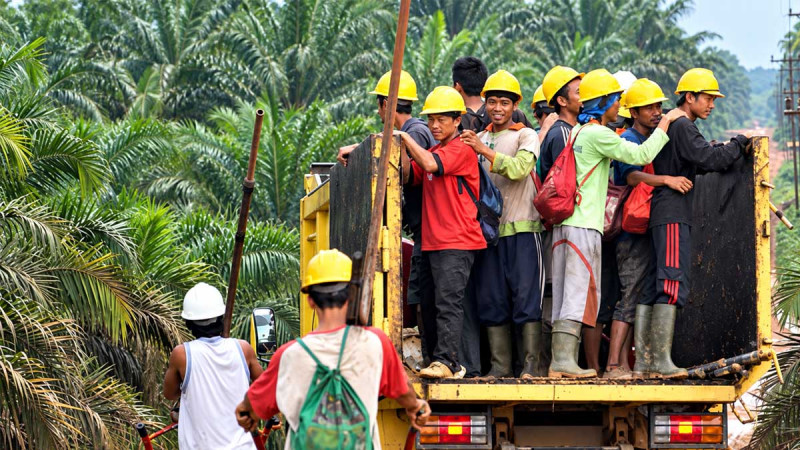
The agency advised plantation companies and oil palm smallholders to strengthen water management practices, conserve soil moisture, and closely monitor climate developments throughout the dry season to minimize potential impacts on plantation productivity during the remainder of 2026.
The latest climate outlook underscores the importance of proactive water conservation and adaptive plantation management as Indonesia’s palm oil sector prepares for an extended period of drier weather conditions. (T2)
Source: InfoSAWIT