GAPKI Calls for Solution-Driven Palm Oil Research to Strengthen Sustainable Industry
InfoSAWIT, JAKARTA – The Indonesian Palm Oil Association (GAPKI) has urged researchers and universities to focus on practical, industry-oriented innovations that address real challenges faced by Indonesia's palm oil sector, emphasizing that research should deliver tangible solutions rather than end as academic publications.
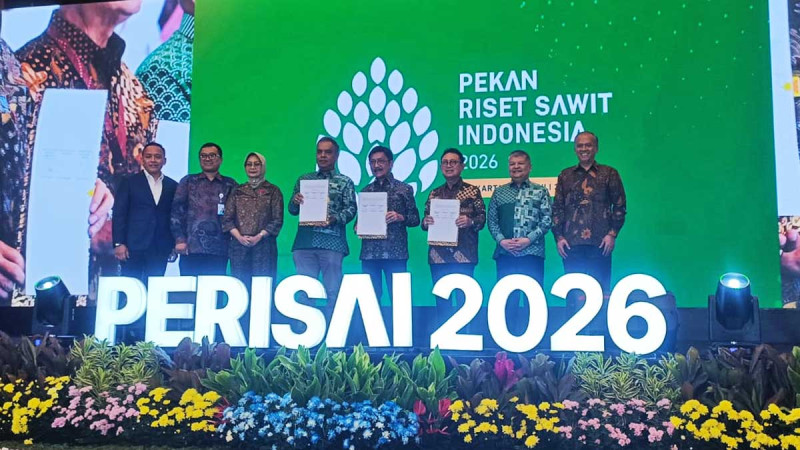
The commitment was reaffirmed through the signing of a Joint Commitment between the Directorate General of Plantations of the Ministry of Agriculture, the Palm Oil Plantation Fund Management Agency (BPDP), and GAPKI to support the Palm Oil Scholarship Program for plantation human resource development. The initiative aims to strengthen collaboration among government institutions, universities, and industry players in producing skilled professionals while accelerating the commercialization of research-based innovations.
Speaking during the Indonesia Palm Oil Research Week (PERISAI) 2026, GAPKI Chairman Eddy Martono stressed that the industry's future competitiveness depends on research capable of solving operational challenges encountered by both plantation companies and independent smallholders.
"The palm oil industry needs research that delivers practical solutions to the real issues faced in the field," Eddy said in a statement received by InfoSAWIT on Wednesday (July 22, 2026).
Among the industry's pressing concerns, Eddy highlighted Ganoderma basal stem rot, one of the most destructive diseases affecting oil palm plantations. The disease has increasingly been detected in replanted estates, making early detection technologies and more effective control methods critical priorities for future research.
He also encouraged universities to align their research agendas more closely with industry needs. By understanding field challenges from the outset, research conducted by students and academics can generate technologies and innovations that improve productivity, operational efficiency, and sustainability across the plantation sector.
"Researchers and students should begin by understanding the industry's needs. If they fully grasp the challenges faced on plantations, their research will be more relevant and deliver greater value," he said.
Under the memorandum of understanding, GAPKI will serve as a bridge between academia and industry through its member companies. The association will facilitate internship opportunities, fieldwork placements, and industry input for curriculum development to ensure graduates possess skills that meet the evolving demands of the palm oil sector.
BPDP noted that its Palm Oil Research Grant Program, launched in 2015, has funded 466 research contracts involving 109 research institutions, 1,873 researchers, and 383 students. The program has produced 395 scientific publications and 84 patents, demonstrating the growing contribution of research to Indonesia's palm oil industry.
In 2026, BPDP signed 56 new research contracts covering a broad range of topics, including plantation management, bioenergy, oleochemicals, biomaterials, environmental studies, socio-economic research, information technology, coconut development, and studies supporting the implementation of Indonesia's B50 biodiesel program.
The agency also reported significant progress in human capital development. BPDP currently collaborates with 44 universities, has awarded scholarships to 13,265 students, and has provided training to more than 30,000 farmers and smallholders as part of efforts to accelerate technology adoption across Indonesia's plantation sector.
In addition, BPDP revealed that more than 100 research outputs have entered the commercialization stage through Letters of Intent (LoIs) signed with industry partners or through the establishment of research-based start-up companies.
According to Eddy, stronger collaboration between government agencies, research institutions, universities, and the private sector is essential for building an innovation ecosystem capable of supporting the long-term competitiveness of Indonesia's palm oil industry.
The Joint Commitment was signed during PERISAI 2026, held in Jakarta on July 20–21, 2026. Carrying the theme "Shaping the Palm Oil Industry Ecosystems for a Sustainable Future," the event served as a platform for disseminating research findings, fostering knowledge exchange, and strengthening partnerships to accelerate the adoption of innovation throughout Indonesia's sustainable palm oil industry. (T2)