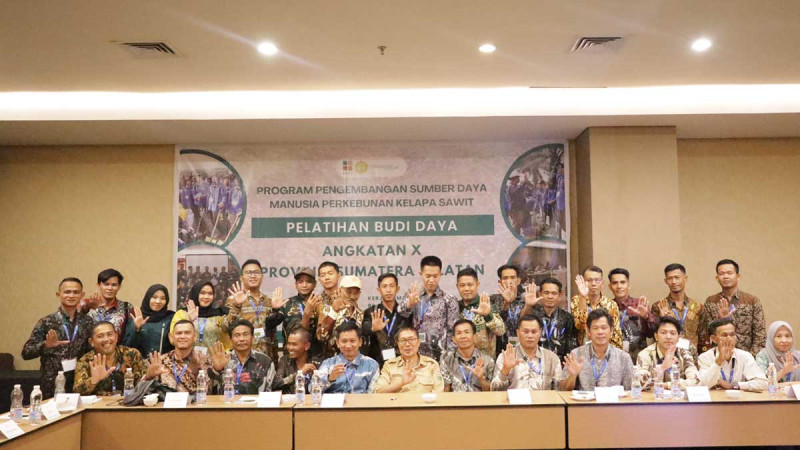
InfoSAWIT, PALEMBANG – A total of 118 oil palm smallholders from Empat Lawang Regency, South Sumatra, have completed an intensive training program designed to strengthen sustainable cultivation practices and improve plantation productivity.
The six-day program, held from July 14–19, 2026, at Benston Hotel in Palembang, formed part of Indonesia's Palm Oil Human Resources Development Program, jointly organized by the Palm Oil Plantation Fund Management Agency (BPDP), the Directorate General of Plantations under the Ministry of Agriculture, and IPB Training.
Conducted across four training batches, the program aimed to enhance farmers' technical capabilities in applying Good Agricultural Practices (GAP) to improve productivity, operational efficiency, and the long-term sustainability of smallholder oil palm plantations.
Participants received comprehensive instruction covering the entire cultivation cycle, including plantation regulations and policies, certified seed selection, nursery management, land preparation, planting techniques, the establishment of legume cover crops, maintenance of immature and mature palms, balanced fertilization, weed management, and integrated pest and disease control.
According to an official statement received by InfoSAWIT on Tuesday (July 21), the program combined classroom learning with extensive practical sessions to strengthen participants' technical skills.
Hands-on activities included fertilizer dissolution tests to evaluate nutrient characteristics, soil acidity analysis using pH meters and litmus paper, nursery management techniques utilizing specialized planting tools, and field marking practices to ensure proper planting density and spacing.
Interactive discussion sessions allowed farmers to raise real-world challenges they encounter on their plantations, including selecting high-quality seedlings, managing oil palm cultivation on hilly terrain, pruning techniques, weed control strategies, and improving fertilizer efficiency. Trainers responded with practical recommendations tailored to local plantation conditions.
As part of the field-based learning component, participants visited PT Dutareka Mandiri, where they observed commercial plantation operations through four learning stations covering nurseries, immature palms (TBM), mature plantations (TM), and harvesting quality control.
At the nursery, participants learned company-standard seedling management practices. In immature plantations, they practiced flower removal (castration) and weed management to encourage vegetative growth. Meanwhile, mature plantation sessions focused on proper frond pruning techniques to support productivity and facilitate harvesting.
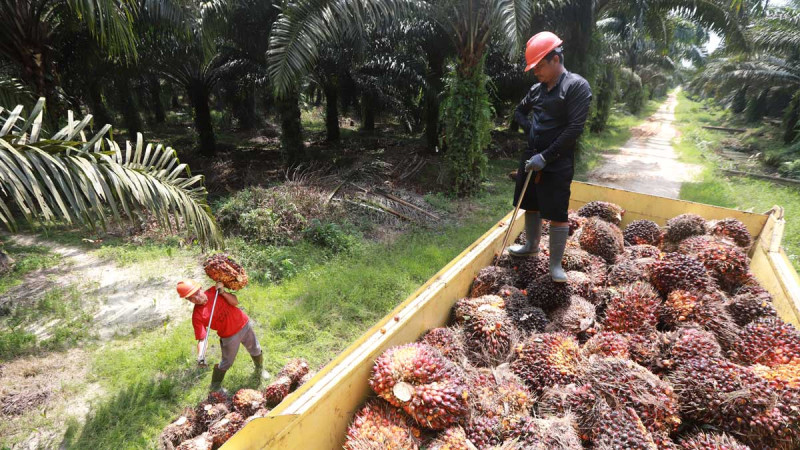
The field program concluded at the grading station, where participants evaluated the quality of 20 fresh fruit bunches (FFB) based on ripeness and grading standards, reinforcing the importance of quality control in maximizing harvest value.
The training was officially opened by representatives from both the central and regional governments, including officials from the Agricultural Human Resources Extension and Development Agency (BPPSDMP), the Directorate General of Plantations, the South Sumatra Plantation Agency, and the Empat Lawang Agriculture Office.
Supported by academics and plantation practitioners, the program reflects BPDP's continuing commitment to strengthening Indonesia's palm oil workforce.
By combining classroom instruction, laboratory practice, field demonstrations, and interactive discussions, organizers expect participants to implement improved cultivation techniques that will increase productivity, enhance plantation management efficiency, improve crop quality, and ultimately strengthen the competitiveness of Indonesia's sustainable palm oil industry. (T2)