
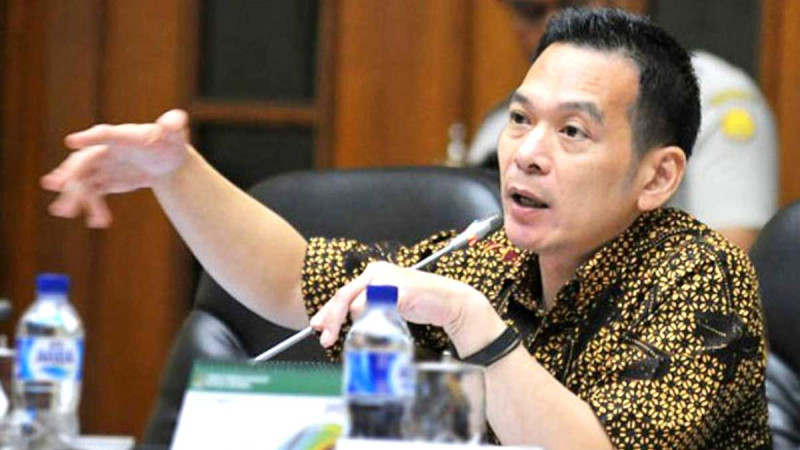
InfoSAWIT, JAKARTA – Indonesian House of Representatives (DPR RI) Commission IV member Daniel Johan has praised an environmental restoration initiative that removed approximately 1,300 illegally planted oil palm trees from a protected forest in Aceh, calling it a strong example of collaboration between local communities, environmental groups, and government institutions.
According to a statement published by Parlementaria and obtained by InfoSAWIT on Monday (July 13, 2026), Daniel said the restoration effort demonstrates meaningful public participation in recovering the ecological functions of protected forest areas.
"The initiative carried out by environmental activist Jerhemy Nemo together with community groups and local residents is a positive action that deserves broad support," Daniel said.
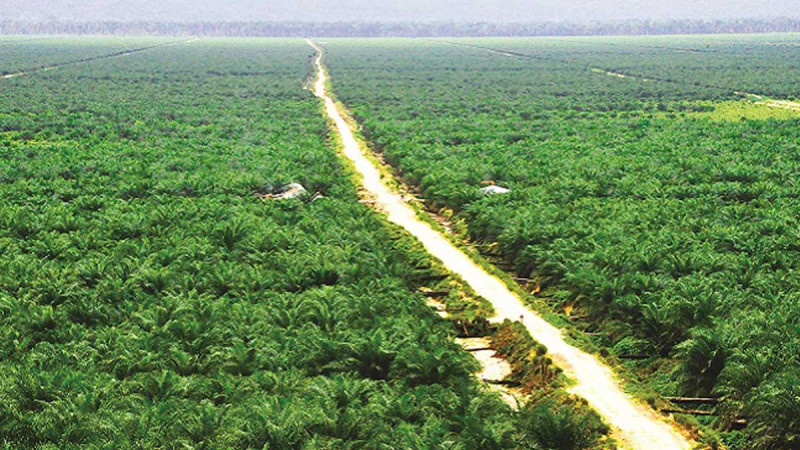
The operation took place across approximately 10 hectares of protected forest in Aceh that had been illegally converted into oil palm plantations. Following the removal of the trees, the area is scheduled to undergo ecological rehabilitation through the planting of native forest species to restore biodiversity and ecosystem functions.
The restoration program involves local communities, the Forest Management Unit (KPH) Region VII, and several conservation organizations operating in Aceh Tamiang, highlighting the importance of multi-stakeholder cooperation in forest recovery.
Daniel emphasized that the success of forest rehabilitation should not be measured solely by the number of trees planted or the size of restored areas. Instead, he argued that long-term success depends on active community involvement in protecting forests from future encroachment and degradation.
He noted that many rehabilitation programs have traditionally focused on achieving planting targets while paying insufficient attention to post-restoration maintenance. As a result, several rehabilitated forests have experienced renewed degradation due to weak monitoring systems and limited incentives for surrounding communities.
To address these challenges, Daniel urged the Ministry of Forestry to develop a Community-Based Forest Landscape Restoration Program, integrating stronger community institutions, social forestry initiatives, watershed rehabilitation, and the use of native tree species with both ecological and economic value.
The legislator also proposed establishing a National Forest Restoration Monitoring System utilizing satellite imagery, drone technology, and community-based reporting to regularly assess vegetation growth and detect potential illegal encroachment at an early stage.
Furthermore, Daniel encouraged broader participation from young people, universities, environmental organizations, and civil society through more inclusive conservation partnerships.
According to him, successful forest restoration should ultimately be measured by the recovery of ecological functions, improved livelihoods for communities living around forest areas, and stronger contributions to Indonesia's environmental resilience, water security, and food security. (T2)