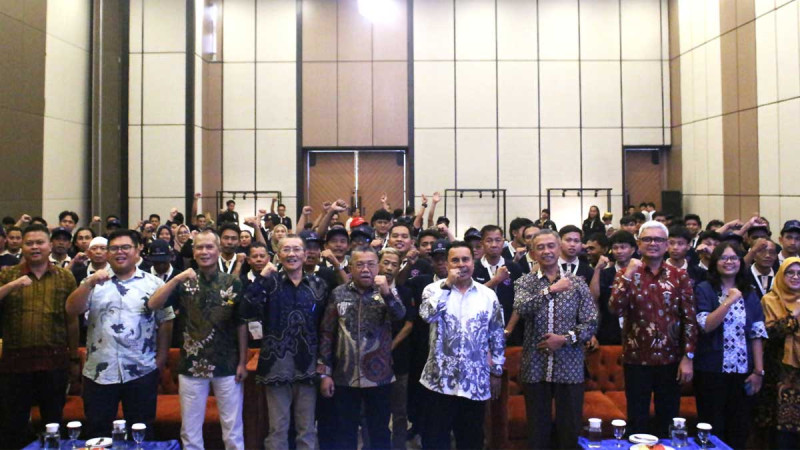
InfoSAWIT, PALU – A total of 127 independent oil palm smallholders from Pasangkayu Regency, West Sulawesi, have begun participating in the 2026 Plantation Human Resources Development Programme, an initiative designed to improve technical skills and accelerate the adoption of sustainable palm oil practices among Indonesia’s smallholder growers.
The programme, officially opened at Aston Hotel Palu, is jointly organised by the Palm Oil Plantation Fund Management Agency (BPDP), the Directorate General of Plantations of the Ministry of Agriculture, and PT Citra Widya Education.
The opening ceremony was attended by Stefanus Nugroho Kristono, Director of PT Citra Widya Education; Muhammad Muh. Zain Machmud, Regional Secretary of Pasangkayu Regency; H. Abidin, Head of the Pasangkayu Plantation and Livestock Office; and Mula Putera, representing the Directorate of Oil Palm and Palmae Crops, who joined virtually.
Stefanus said the programme reflects a collaborative effort to strengthen the quality of Indonesia’s plantation workforce by equipping smallholders—the backbone of the country's palm oil sector—with practical knowledge and professional skills.
He explained that the training is designed to improve growers’ technical competence while encouraging the adoption of sustainable plantation management practices. To ensure practical value, all training sessions are delivered by experienced industry practitioners.
According to H. Abidin, the programme demonstrates a shared commitment between the central government, regional authorities, and industry stakeholders to enhance human resource capacity across the palm oil sector.
The 127 participants have been divided into two technical courses: 59 growers are attending Oil Palm Cultivation Training, while 68 participants are enrolled in Harvesting and Post-Harvest Management Training.
The curriculum is intended to strengthen growers' capabilities across the entire production cycle, from crop establishment and maintenance to harvesting and post-harvest handling.
Representing the Ministry of Agriculture, Mula Putera emphasised that improving human resource capacity remains one of the government's key strategies for raising national palm oil productivity.
Although Indonesia remains the world's largest palm oil producer, he noted that smallholder productivity averages only 3.3 tonnes per hectare annually, well below its estimated potential of 5–6 tonnes per hectare.
He said improving productivity requires more than technical cultivation skills. Better maintenance practices, effective pest management, improved access to financing, and stronger supply chain management all depend on continuous investment in both technical and soft skills.
The ministry also urged instructors to provide ongoing post-training assistance, encouraged participants to share newly acquired knowledge with fellow growers, and called on local governments to monitor field implementation to ensure the training delivers measurable improvements.
Officially opening the programme, Regional Secretary Muhammad Muh. Zain Machmud, representing the Regent of Pasangkayu, highlighted the strategic importance of strengthening farmer capacity in one of West Sulawesi’s largest oil palm producing regions.
He expressed hope that participants would combine the knowledge gained during the training with their existing field experience to improve cultivation, harvesting, and post-harvest practices.
The Pasangkayu administration has also committed to providing continuous mentoring and post-training monitoring to maximise the programme’s long-term impact.
Through the 2026 Human Resources Development Programme, the government aims to develop technically competent and professionally managed smallholders capable of improving productivity, supporting sustainable palm oil production, and contributing to the wider implementation of the Indonesian Sustainable Palm Oil (ISPO) certification system in Pasangkayu Regency. (T2)