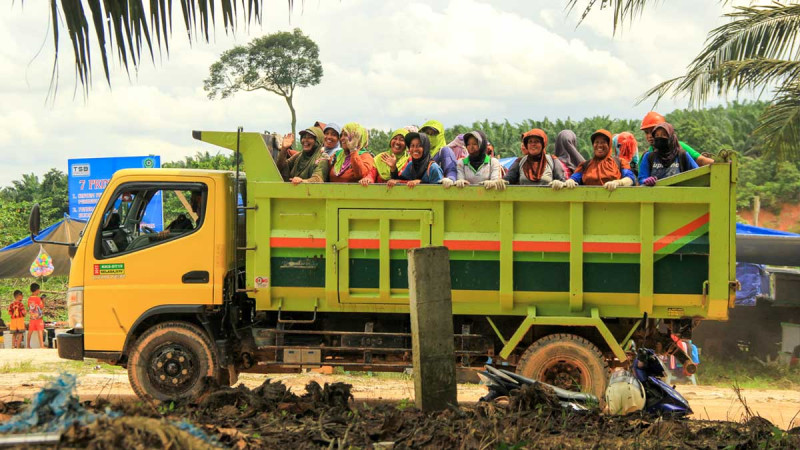
InfoSAWIT, JAKARTA — Gender equality is now a mandatory component in sustainability standards across the palm oil sector, including the Roundtable on Sustainable Palm Oil (RSPO) and the Indonesian Sustainable Palm Oil (ISPO) scheme. Both emphasize that gender mainstreaming is not optional—it is a core requirement.
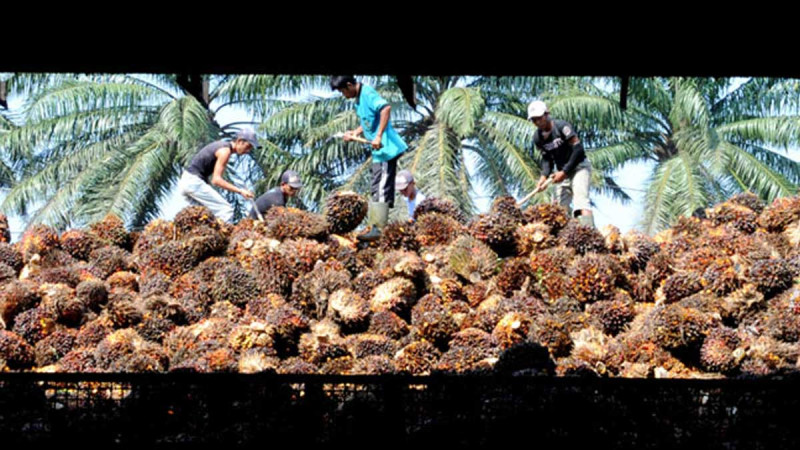
Yet field realities show persistent inequality. A 2022 study by Fatchiya Anna in Lampung found that plantation management remains male-dominated, while women are largely relegated to maintenance tasks such as fertilizing and leaf care—often while still bearing the full load of domestic responsibilities.
Other research paints an even more troubling picture: lower wages, weak occupational safety standards, health risks, and cases of sexual harassment (Rini Hani et al., 2017). On smallholder farms, women’s participation is strikingly low. APSSI reports that only 6% of 700 assisted farmers are women.
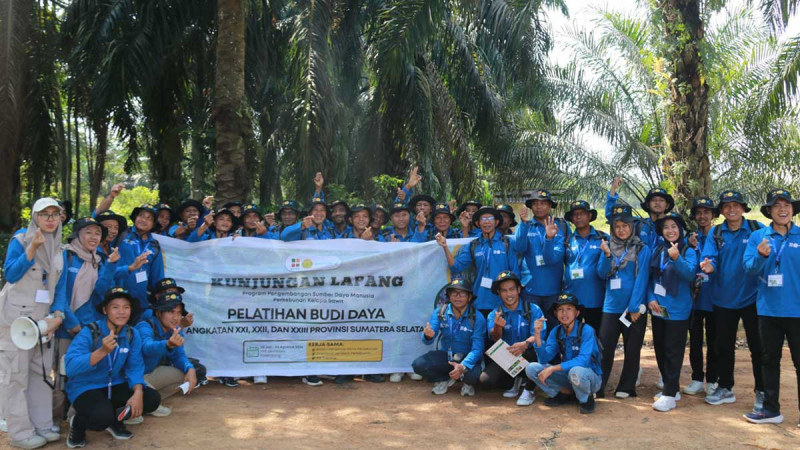
Training participation is similarly limited. In GAP field schools, only 10% of 750 participants were women.
Economic pressures also influence women’s involvement. Research by Maya Sari et al. (2023) shows that smaller landholdings significantly increase women’s contribution to household income. In some APSSI-assisted villages in Indragiri Hulu, women play a central role in family finances—yet weak financial management knowledge leaves farms underinvested, with only 10% of income allocated for maintenance.
APSSI data (2023–2024) shows smallholder yields averaging 700 kg/ha/month, trailing large estates in Riau, which reach over 4,000 kg/ha.
Unlocking Potential through Gender Inclusion
Strengthening women’s roles—from training access to decision-making and work protection—is increasingly seen as essential for improving productivity and long-term sustainability.
Gender empowerment not only supports compliance with RSPO and ISPO standards but also boosts household economic resilience. As the sector evolves, women’s participation becomes a key bridge toward an inclusive, community-driven palm oil industry.
Author: Muhamad Yazid Fauzi, STAI Nurul Falah. Opinions are personal.
Disclaimer: This article represents the author’s personal opinion and is entirely the author’s responsibility, and is not related to InfoSAWIT in any way.