InfoSAWIT, JAKARTA - As climate experts warn of a prolonged El Niño phenomenon that could potentially continue into early 2027, Indonesia once again faces a classic and daunting threat: forest and land fires. A prolonged El Niño will severely test Indonesia’s ecological resilience.
The Indonesian Agency for Meteorology, Climatology, and Geophysics (BMKG) report shows that the surge in hotspots has already entered the red zone. West Kalimantan recorded the nation’s most severe escalation with 1,083 hotspots burning thousands of hectares of land.
The socioeconomic and health impacts will not be confined to Indonesia but will also spread to neighbouring countries. Extreme drought caused by El Niño is triggering forest and land fires across the country, particularly in Kalimantan and Sumatra, which will heighten the risk of transboundary haze and spark an ecological crisis in the Southeast Asian region.
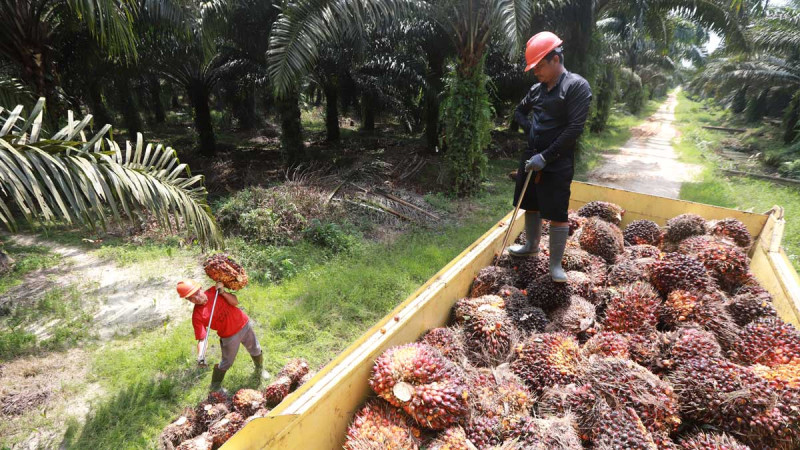
Forest and land fires will directly impact the credibility of land-based commodities, particularly palm oil, which were often singled out as the culprit. Public discourse almost always follows the same pattern: narratives filled with clichéd and simplistic accusations that palm oil is the epicentre of the forest and land fire disaster, and searching for scapegoats to blame for the fires, rather than focusing on how to build more effective prevention systems. However, if we look at the actual data from the field, the reality turns out differently.
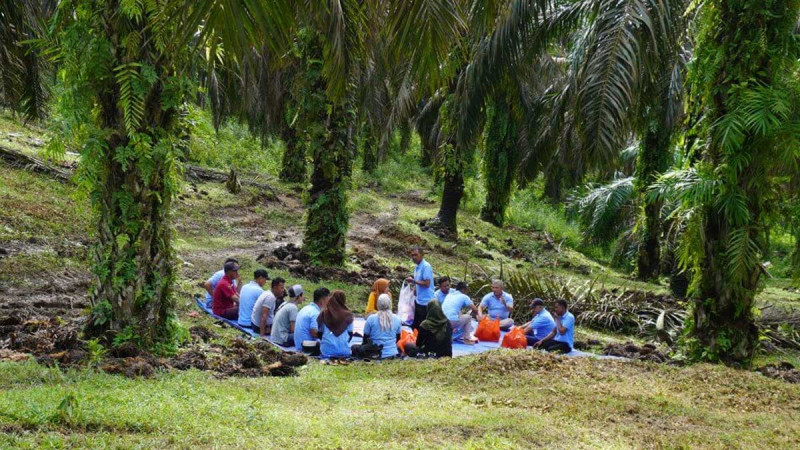
In many fire-prone villages, the success of conserving water and preventing fires is largely determined by the strength of local social networks. When villagers work together when a fire breaks out, the risk of disaster can be mitigated long before it escalates into a large-scale fire and haze crisis.
Various studies show that fires almost never occur due to climatic factors alone. Drought does indeed increase the risk, but the primary causes often stem from issues of land management, weak oversight of open areas, the high cost of clearing land without burning, and a lack of collaboration among stakeholders.
In Penajam Paser Utara, East Kalimantan, near the Nusantara Capital City (IKN), for example, a number of hotspots that had raised concerns turned out to originate from traditional land clearing outside plantation areas. Similar patterns were also found in various other regions. This fact demonstrates that sources of vulnerability are not always confined to a single sector but are spread across a broader landscapes.
Recent research in West Kalimantan shows that the majority of hotspots actually appear in enclave areas—pockets of territory that are administratively located within concessions but are socially and economically managed by local communities. In such areas, slash-and-burn practices are still considered the cheapest way to clear land. In addition to economic factors, this method has long been part of indigenous farming traditions.
These findings offer an important lesson: forest and land fires are fundamentally a governance issue. Fires often occur when communities’ economic needs intersect with weak oversight, unclear land tenure, and a lack of affordable alternatives to clearing land without burning. Therefore, framing forest and land fires solely as a technical firefighting issue is clearly insufficient.
It is in this context that collaboration becomes a decisive factor. Experience in Ketapang, West Kalimantan, shows that the number of fires can be significantly reduced when various stakeholders work together within a collaborative framework.
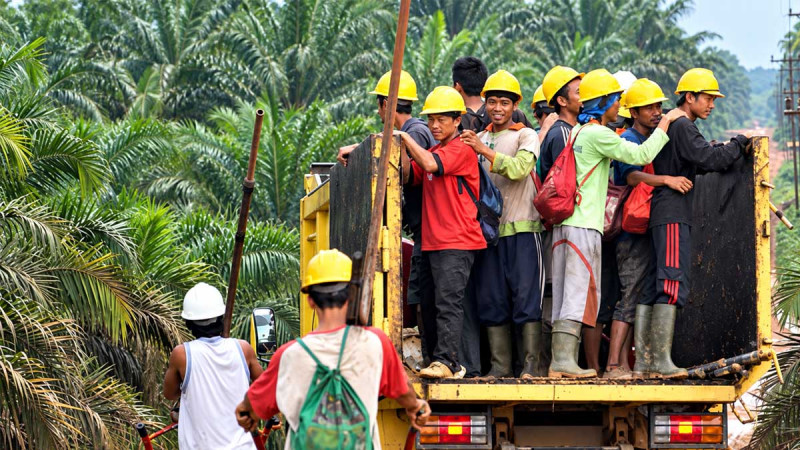
Village and subdistrict governments, farmer groups dedicated to fire prevention, law enforcement, companies, and government fire response team each play their respective roles according to their capacities. Communities receive training and equipment support; the government strengthens on-the-ground coordination; while resources from various parties are mobilized for patrols, education, and early response when hotspots emerge.
The success of this approach sends a clear message: forest and land fire mitigation succeeds when risk is viewed as a shared responsibility. No single actor can tackle the threat of fire alone. Fire knows no boundaries—whether forest area boundaries, or the concession limits of a business unit. A small fire in one location can quickly spread into a cross-regional disaster.
The capabilities of land-based industries—whether plantations or forestry—as well as the Ministry of Forestry and the Ministry of the Environment, in preventing fires have indeed reached an advanced stage. This was also acknowledged at the ASEAN meeting on Transboundary Haze Pollution in Bali on July 9.
However, what was still overlooked at that meeting were the issues of governance, social and cultural factors, and budgetary efficiency facing local governments. When local governments face resource constraints in monitoring areas without clear management, coupled with tolerance for traditional agricultural practices involving burning, the sophistication of various mitigation measures seems to be rendered meaningless.
Currently, the palm oil industry has implemented early-warning monitoring technology through observation towers and thermal aerial monitoring systems capable of detecting temperature changes and hotspots at the earliest stages. Economic logic provides a straightforward explanation: for an industry making large-scale investments, fire is not a production tool but a threat to business sustainability. The risks faced by land-based industries today are also far greater than they were a decade ago. The implementation of sustainability certifications (ISPO, RSPO), global market demands such as the EUDR, and various national regulations classify fires as violations with serious implications.
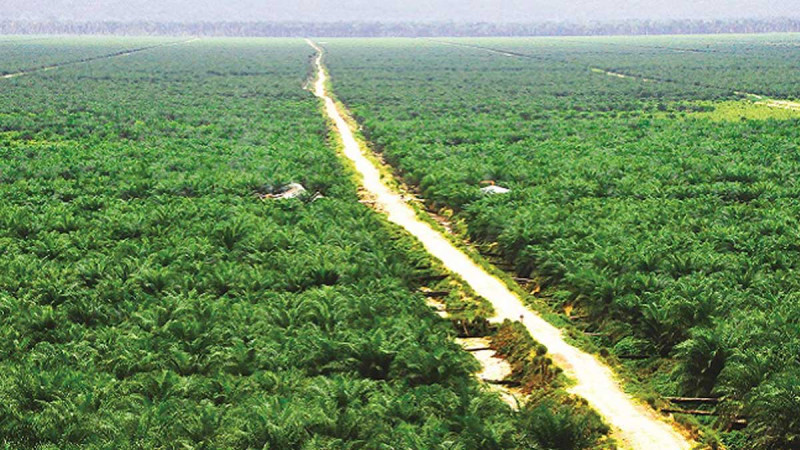
Best fire mitigation practices in various regions demonstrate that integrating the roles of various stakeholders can significantly reduce the incidence of forest and land fires. Since fires recognize neither administrative boundaries nor concession boundaries, managing them requires cooperation based on a landscape approach, with local communities at the centre and serving as the frontline defence for mitigation on the ground.
The national strategy needs to shift from an approach that is overly focused on fire suppression toward landscape-based prevention. This approach views the entire landscape as a single, interconnected ecosystem. The focus is no longer on assigning blame, but rather on how all parties can collectively work in tandem to reduce fires risks.
Ultimately, when the dry season arrives, the first line of defence against forest and land fires is neither technology nor bureaucracy. The strongest defence is an organized community, supported by an engaged government, and strengthened by collaboration among all stakeholders, including industry. Because when fires break out, what is most needed is the ability to act together.
The success of forest and land fire mitigation rests on at least three key priorities: tightening oversight of land without clear management or that has been neglected; expanding education and providing economic incentives to eliminate land clearing by burning; and strengthening collaboration based on a unified ecosystem landscape among actors at the field level. (*)
By: Edi Suhardi / Sustainability Analyst
Disclaimer: This article represents the author’s personal opinion and is entirely the author’s responsibility, and is not related to InfoSAWIT in any way.