InfoSAWIT, MUMBAI – Scientific discussions surrounding palm oil are expanding beyond its conventional role as an edible oil, with researchers increasingly examining naturally occurring bioactive compounds and their potential links to health.
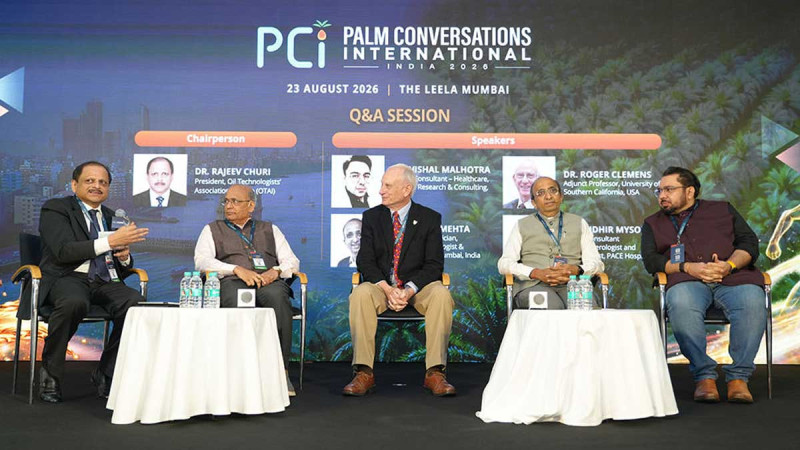
The Malaysian Palm Oil Council (MPOC) brought the discussion to India through Palm Conversations International India 2026 (PCI), held in Mumbai on August 24. The forum gathered researchers, healthcare professionals, nutrition experts, policymakers and industry representatives to discuss palm oil, nutrition and emerging research on bioactive compounds.
Held under the theme “Bioactive Power from the Palm: Reimagining Health for a World Facing Non-Communicable Diseases (NCDs),” the event was also positioned as part of efforts to strengthen scientific and commercial ties between Malaysia and India, one of Malaysia’s major palm oil markets.
Among the studies discussed was a review examining the relationship between palm oil consumption and cardiovascular health. The review screened 4,515 citations and found no consistent association between palm oil consumption and heart disease, stroke or cardiovascular mortality. Researchers, however, also acknowledged limitations in the available evidence.
The forum also examined palm oil’s semi-solid structure, which allows it to be used in various food applications without partial hydrogenation, a process associated with the formation of industrial trans fats. Its heat and oxidation stability were also discussed in relation to cooking applications.
Attention also turned to tocotrienols and palm phenolics, two areas of ongoing research involving potential links with inflammation and non-communicable diseases.
Dr. Roger Clemens, Adjunct Professor at the University of Southern California, presented early research involving these compounds. However, further studies are still required to establish their safety, dosage, bioavailability and clinical significance.
Research on tocotrienols also extended into oncology. A small Phase II study involving recurrent ovarian cancer was presented, but the findings remain preliminary and require larger clinical studies before therapeutic conclusions can be drawn.
MPOC CEO Belvinder Sron said the forum was designed to encourage evidence-based scientific dialogue and strengthen cooperation between Malaysia and India in science, nutrition, health and innovation. (T2)
Source: InfoSAWIT