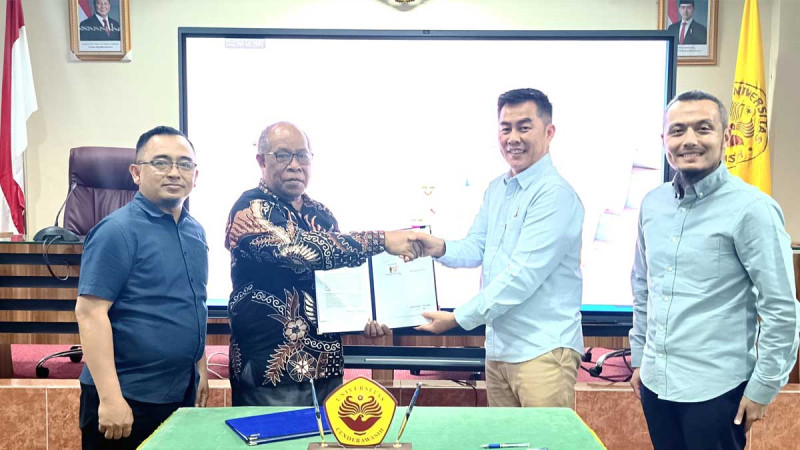
InfoSAWIT, JAYAPURA – PT Agrinas Palma Nusantara (Persero) and Cenderawasih University have established a cooperation framework covering research, studies and academic activities to support plantation and food-sector development in South Papua.
The partnership is intended to provide a stronger scientific basis for development planning while taking into account local land conditions, environmental considerations and the needs of communities in the region.
The cooperation covers strategic studies, research and technology development, as well as scientific assistance. Areas of focus include improving productivity, sustainable cultivation systems, agro-industrial downstream development, smallholder empowerment, governance, and environmental and social considerations.
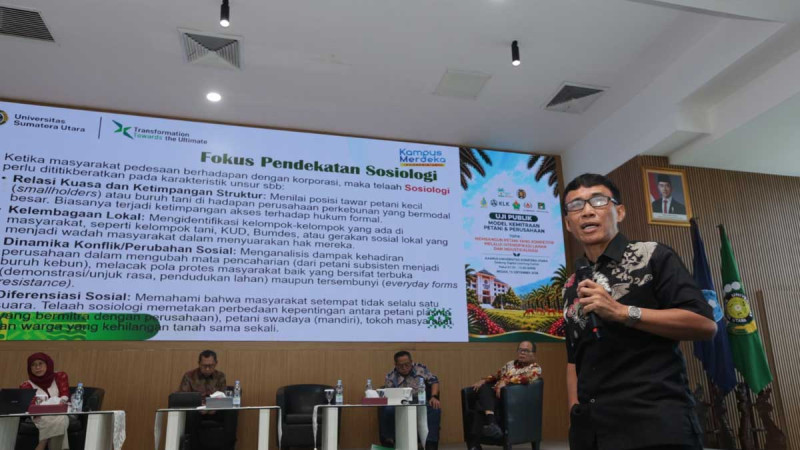
A social dimension is also included in the collaboration. The Faculty of Social and Political Sciences at Cenderawasih University will conduct anthropological and sociological studies to help Agrinas Palma better understand the region’s social structures, cultural values, customary rights and community needs.
The studies are expected to contribute to planning for plantation and food development in South Papua, including assessments of land suitability and the formulation of phased development strategies that consider both social research and local environmental conditions.
Agrinas Palma is planning the development of a plantation and food-production area covering approximately 400,000 hectares in South Papua. The company said the cooperation with the university is expected to ensure that development steps are supported by scientific studies and take local communities into account.
Agrinas Palma Corporate Secretary Division Head Bambang Agustian said the cooperation was important to ensure that development plans were supported by a strong scientific foundation and could generate benefits for local communities as well as the wider country.
Cenderawasih University Vice Rector IV Dr. Basir Rohrohmana said the partnership would provide opportunities for the university to contribute expertise from various disciplines. He also highlighted the role of anthropology and sociology in understanding the conditions and needs of communities in South Papua.
The two institutions expect the results of the collaboration to support decision-making for future development in South Papua. In the longer term, the initiative is expected to contribute to agro-industrial raw material supply, national food and energy security, as well as employment and partnership opportunities for local communities. (T1)
Source: InfoSAWIT