InfoSAWIT, MEDAN – Partnerships between palm oil companies and local communities can extend beyond economic arrangements, with unresolved land and plantation issues potentially developing into broader social and cultural conflicts. A researcher from the University of North Sumatra (USU) has therefore called for stronger sociological and anthropological approaches in developing more equitable and sustainable partnerships.
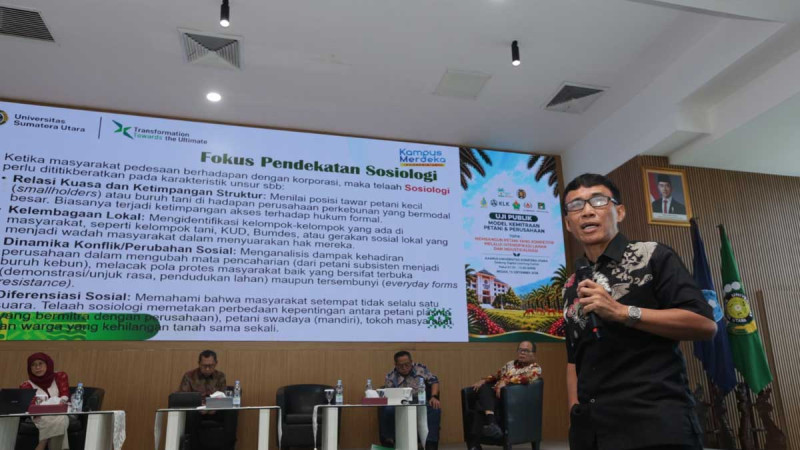
USU social and economic researcher Yusak Maryunianta said company–smallholder partnerships and conflict resolution have often relied heavily on formal regulatory or legal mechanisms and material considerations.
However, conflicts originating from palm oil partnership arrangements can affect broader community relations, social structures and cultural life.
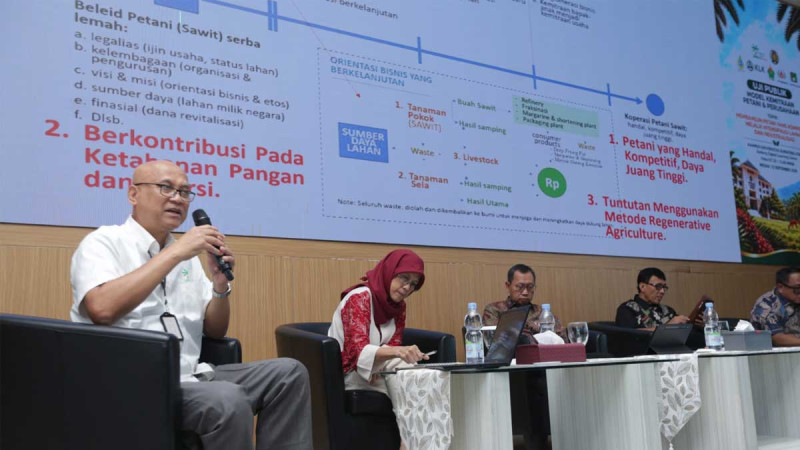
Yusak made the remarks during a public consultation discussion organized by Rumah Sawit Indonesia (RSI) and USU in Medan. The discussion carried the theme “Smallholder–Company Partnerships in Building Reliable and Competitive Smallholders through Land Intensification and Industrialization.”
According to Yusak, a fair and sustainable partnership should begin with a better understanding of local communities. From a sociological perspective, this includes examining power relations, structural inequality, local institutions, conflict dynamics and social differentiation.
Such an approach allows partnerships to be viewed not merely as economic relationships between companies and smallholders, but also as arrangements shaped by local social structures and relationships among stakeholders.
Anthropology can provide another important perspective, particularly in understanding the non-economic dimensions of land.
For indigenous and local communities, Yusak explained, land can carry spiritual, historical and social meanings and serve as a foundation for collective identity. Losing land, therefore, may have consequences that extend beyond the loss of an economic asset, affecting cultural life and the community's living space.
USU Proposed as Strategic Palm Oil Research Hub
The same discussion also highlighted the potential role of universities in developing strategic studies on Indonesia's palm oil industry.
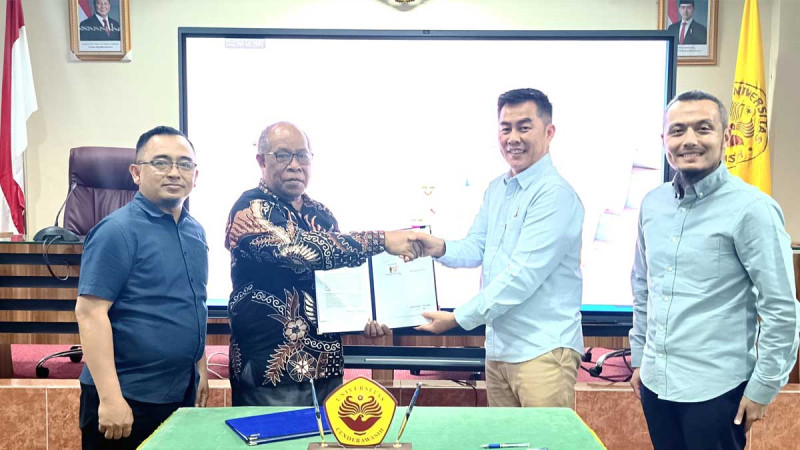
RSI Chairman Kacuk Sumarto said USU could become an early foundation for a palm oil think tank capable of producing research and recommendations for policymakers.
Such an institution could contribute to policy discussions, propose new regulations and evaluate existing rules related to the palm oil sector.
PT Agrinas Palma Nusantara Director Seger Budiharjo also supported the idea, pointing to North Sumatra's historical role in Indonesia's palm oil development and USU's pool of experts from different academic disciplines.
He said multidisciplinary expertise could support research covering plantation management, economics, social issues, law, technology and public policy.
Seger also emphasized the importance of strengthening smallholder institutions alongside improvements in company–smallholder partnerships. Increasing productivity through the People's Palm Oil Replanting Program (PSR) was also highlighted as an important priority. (T2)
Source: InfoSAWIT