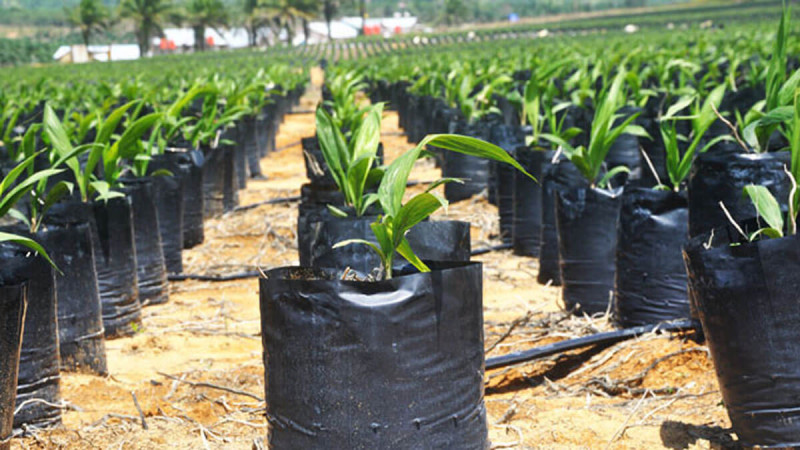
InfoSAWIT, YOGYAKARTA – Efforts to improve fertiliser efficiency in oil palm cultivation may gain new momentum following research at Universitas Gadjah Mada (UGM), which identified two candidate genes with potential applications in selecting oil palm plants capable of using phosphorus more efficiently.
The study identified EgPti1 and EgPap3 as candidate molecular markers associated with phosphorus-use efficiency. The findings could support future breeding programmes aimed at developing oil palm planting materials that are better adapted to conditions where phosphorus availability is limited.
Phosphorus is an essential nutrient for plant growth and development. However, its availability is not always optimal, particularly in certain tropical soils. This makes phosphorus fertilisation an important component of plantation management while also creating opportunities to develop oil palm varieties that can absorb and utilise the nutrient more efficiently.
The UGM research, titled “Identification and Characterisation of Genes Associated with Phosphorus Deficiency in Oil Palm (Elaeis guineensis Jacq.)”, further examined the two candidate genes to understand their expression patterns, associated enzyme activity, relationships between genotype and plant characteristics, and inheritance patterns.
Examining Genetic Responses to Phosphorus Availability
The researchers used two groups of planting materials: clonal oil palms with Prolific and non-Prolific genotypes, as well as Dura × Pisifera (DxP) seedlings.
The DxP materials originated from heterozygous parents that had previously been selected based on single nucleotide polymorphism (SNP) variations in the two target genes.
To identify genetic variation, the study used the Unlabeled Probe High-Resolution Melting (UP-HRM) method to analyse SNPs in the EgPti1 gene. Meanwhile, SNPs in EgPap3 were analysed using the Cleavage Amplified Polymorphism Sequence (CAPS) method.
Progenies carrying different alleles were subsequently tested under varying phosphorus levels using a hydroponic water-culture system. The expression levels of EgPti1 and EgPap3 were then evaluated through Real-Time Quantitative Polymerase Chain Reaction (RT-qPCR).
The study found different responses between clonal materials and DxP seedlings.
In Prolific clonal palms, the expression of both genes increased in root and leaf tissues. In DxP seedlings, however, increased expression of EgPti1 and EgPap3 was primarily observed in the roots.
The findings highlight the importance of the root system in the plant's response to phosphorus availability. As the first plant organ to interact directly with nutrients in the growing medium, roots play a central role in nutrient absorption and adaptation to nutrient stress.
Potential Role in Oil Palm Breeding
The researchers also examined the activity of two enzymes associated with the candidate genes: acid phosphatase (APase) and serine/threonine kinase.
Under phosphorus-deficient conditions, clonal palms showed increased activity of both enzymes in roots and leaves. Among DxP seedlings, APase activity increased in the roots and rose significantly in the leaves, while serine/threonine kinase activity also increased significantly in both plant organs.
Further analysis using Principal Component Analysis (PCA) revealed distinct clustering patterns. The Prolific genotype formed a separate group from neutral and non-Prolific genotypes, indicating a potential relationship between genetic variation and the phenotypic characteristics observed in the study.
However, the inheritance patterns of EgPti1 and EgPap3 in the DxP progenies did not fully follow the ratios expected under Mendelian inheritance. Chi-square analysis indicated deviations from the theoretically expected segregation ratios, opening new avenues for further research into the genetic mechanisms influencing phosphorus-use efficiency in oil palm.
Overall, the research identified molecular marker candidates that could potentially be applied in selecting oil palm plants with improved phosphorus uptake efficiency.
If further developed and validated, marker-assisted approaches could help accelerate the breeding and selection of planting materials while supporting more efficient nutrient management in oil palm cultivation.
For the palm oil industry, the development of varieties capable of using nutrients more efficiently could contribute to reducing excessive fertiliser dependence, improving production efficiency and supporting more sustainable plantation practices.
The identification of EgPti1 and EgPap3 therefore represents a step forward in understanding the relationship between oil palm genetics and phosphorus-use efficiency, with potential implications for the future development of Indonesia's oil palm breeding and innovation programmes. (T2)
Source: InfoSAWIT