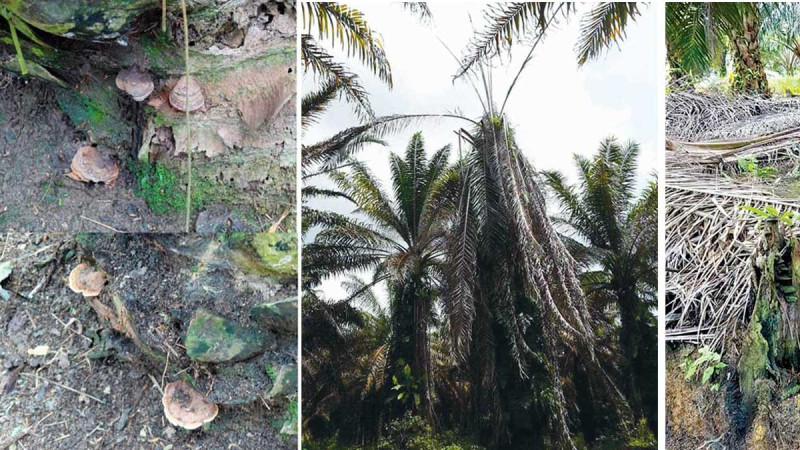
InfoSAWIT, JAKARTA – It moves slowly and often without visible warning. By the time the symptoms emerge above ground, the damage may already be difficult to reverse.
Ganoderma, one of the most serious diseases affecting oil palm, has long been a major challenge for the plantation industry. Researchers at Indonesia's National Research and Innovation Agency (BRIN) are now seeking ways to detect its presence earlier, before infected palms begin showing obvious signs of decline.
For the palm oil industry, Ganoderma is more than a plant disease. It represents both an economic threat and a scientific challenge that remains far from fully resolved.
Siti Hardiyanti, a junior researcher at the Plantation Crops Research Center under BRIN's Research Organization for Agriculture and Food, explained that Ganoderma boninense is the primary cause of basal stem rot (BSR) and upper stem rot in oil palm.
The pathogen attacks the root system and stem tissues, disrupting the movement of water and nutrients throughout the plant. Over time, the palm weakens, productivity declines and, in severe cases, the tree eventually dies.
What makes Ganoderma particularly difficult to manage is its ability to survive for long periods in the soil.
The fungus can persist in infected roots and plant residues, meaning that even after a diseased palm has been removed, the source of infection may remain in the plantation.
A Slow-Moving Disease with Major Economic Consequences
Ganoderma does not strike suddenly. The disease develops gradually, often following the age of the palm and the progression of infection.
As the pathogen spreads through the plant, water and nutrient uptake becomes increasingly disrupted. Fresh fruit bunch production can decline, creating significant economic losses for plantation operators and smallholders alike.
Under severe infection conditions, large numbers of palms can eventually die.
In several areas of North Sumatra, mortality rates have previously been reported at levels reaching as high as 60%, underlining the potential scale of the threat when the disease is not effectively managed.
The challenge for growers is that early-stage infections can be difficult to identify. Visible symptoms may only appear after the pathogen has already caused substantial internal damage.
This makes early detection a critical area of research for scientists and the oil palm industry.
Searching for Ganoderma Before Symptoms Appear
The issue was discussed during BRIN's EstCrops_Corner #26 webinar in late May 2026, where researchers highlighted the importance of understanding how Ganoderma infection develops and how earlier detection methods could help plantation managers respond more effectively.
The research focus reflects a broader shift in plantation disease management: moving away from responding only after symptoms become visible and towards identifying threats before significant damage occurs.
For oil palm growers, this approach could become increasingly important as plantations face the combined pressures of maintaining productivity, controlling disease losses and improving the sustainability of crop management.
The ability of Ganoderma boninense to survive in the soil and remain associated with infected plant residues means that disease management cannot rely on a single intervention.
Long-term control requires a deeper understanding of how the pathogen survives, spreads and interacts with its host.
As researchers continue to investigate the disease, the search for earlier and more reliable detection methods remains central to efforts to reduce its impact.
For Indonesia's palm oil industry, the battle against Ganoderma is taking place long before the first visible symptoms appear—beneath the soil, inside plant tissues and at the earliest stages of infection.
Understanding that hidden process may ultimately provide plantation managers with a better chance of protecting oil palms before the silent threat becomes impossible to ignore. (T2)
Source: InfoSAWIT Magazine, June 2026.