InfoSAWIT, JAKARTA – The issue of deforestation in the palm oil industry has come back into the spotlight, particularly in Southwest Papua, where recent findings reveal a gap between on-the-ground realities and the indicators used in the Indonesian Sustainable Palm Oil (ISPO) certification system.
According to InfoSAWIT Magazine February 2026 edition, Kaoem Telapak researcher Ziadatunnisa Latifa highlighted that satellite-based monitoring and media analysis identified deforestation linked to oil palm expansion, national strategic projects, and illegal logging activities.
However, she emphasized that the term “deforestation” is not explicitly included as an indicator within ISPO principles and criteria.
“In ISPO, what exists is forest protection, not deforestation indicators directly. Meanwhile, in reality, deforestation is clearly happening on the ground,” she said.
Data Gaps and Traceability Challenges
Beyond indicator issues, Ziadatunnisa also pointed to challenges in certification data across Papua. Administrative changes, particularly the creation of West Papua and Southwest Papua provinces, have not been fully reflected in government databases.
This has resulted in data inconsistencies that could affect transparency and reporting accuracy.
Amid increasing global demands for traceability, disorganized domestic data systems pose a serious concern for the credibility of certification schemes.
Recurring Non-Compliance Patterns
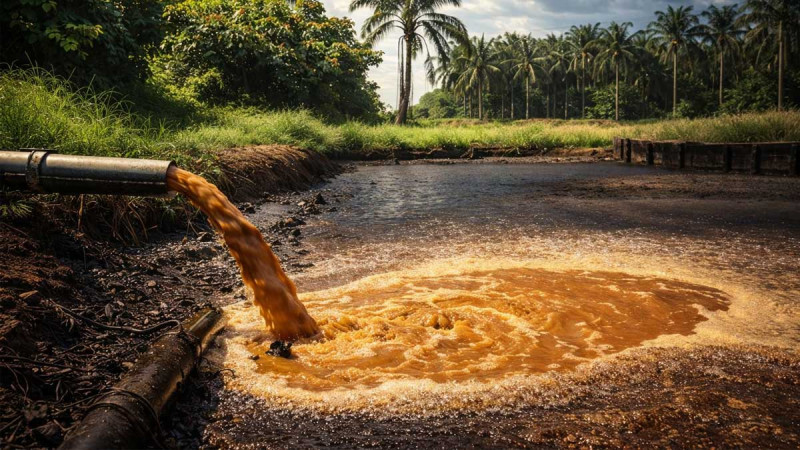
Kaoem Telapak’s monitoring also identified recurring patterns of non-compliance across oil palm plantations, including licensing issues, land tenure conflicts, violations of Free, Prior and Informed Consent (FPIC), environmental pollution, weak forest protection, and planting in restricted areas such as river buffers.
Among these, spatial planning and licensing violations remain the most dominant issues.
Long-Term Conflict Risks
Ziadatunnisa noted that these violations are not new but represent longstanding unresolved issues.
As a result, prolonged conflicts between companies, communities, and the government are increasingly difficult to avoid.
Many of these issues could have been resolved early—before planting began or permits were issued—but have instead evolved into long-term social and environmental burdens.
These findings underline the urgency of improving certification systems, strengthening governance, and enhancing data quality to ensure sustainability is reflected not only in documentation but also in real practices on the ground. (T2)