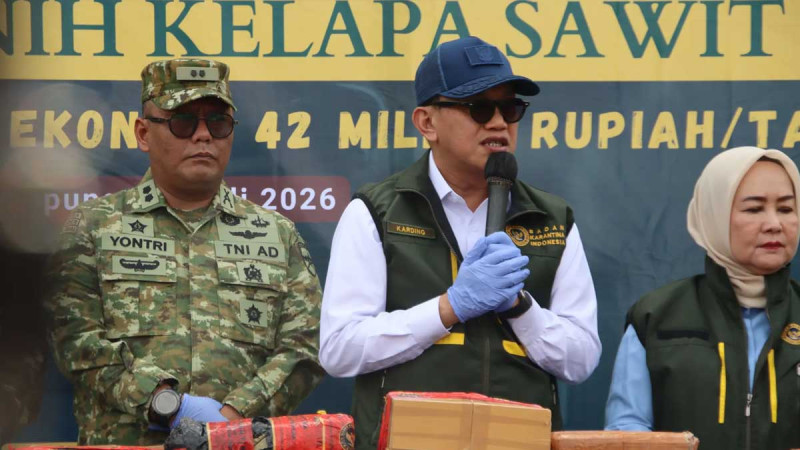
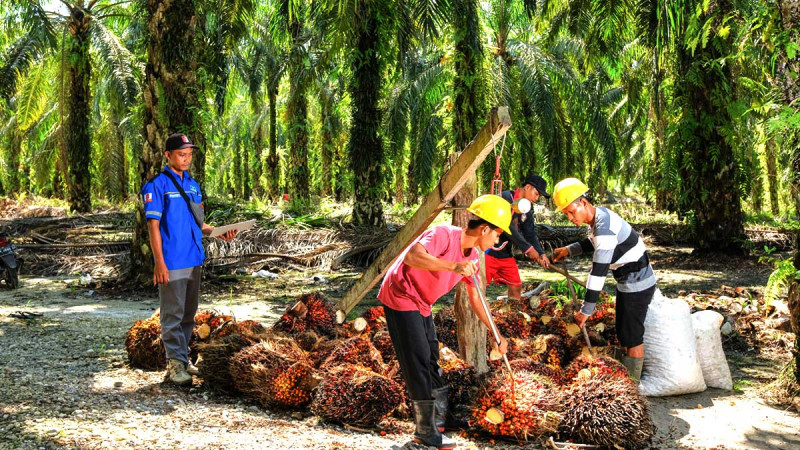
InfoSAWIT, JAKARTA – Whenever debates over forest area enforcement and palm oil plantation seizures arise, the government often closes discussion with a single justification: Article 33 of the 1945 Constitution. Using this constitutional reference, the state proceeds to manage seized palm oil plantations through state-owned enterprises such as Agrinas.
Article 33 mandates state control over natural resources for the greatest prosperity of the people. However, it is not a blank check. It does not justify unlimited state takeover and commercialization of productive assets without clear welfare benchmarks.
The issue has grown more relevant following the issuance of Forestry Minister Regulation No. 20 of 2025, which updates forest planning and utilization frameworks. While this regulation provides technical guidance, administrative legality does not automatically equal constitutional legitimacy.
The Constitutional Court has long emphasized that “state control” entails regulation, management, supervision, and oversight—not absolute ownership. When seized palm oil plantations continue operating under state enterprises, constitutional questions arise: is this enforcement, or a business takeover?
Without clear welfare indicators, the phrase “for the greatest prosperity of the people” risks becoming empty rhetoric—especially when smallholders and plantation workers bear the consequences.
Critiquing this practice does not weaken the state; it safeguards constitutional integrity. Article 33 is a welfare mandate, not a tool for normalizing business takeovers. Maintaining a healthy distance between the state as regulator and as business operator is essential to keeping the constitution alive—not merely a slogan. (*)
Disclaimer: This article reflects the author’s personal views and is entirely his responsibility; it is not affiliated with InfoSAWIT.