InfoSAWIT, JAKARTA – Indonesia's palm oil industry is entering one of the most critical periods in its modern history. Amid shifting domestic regulations, evolving export policies, energy transition agendas, stagnant smallholder productivity, and increasingly stringent market requirements, stakeholders are beginning to question whether the sector's competitiveness is at risk.
Recent discussions surrounding the establishment of PT Danantara Sumber Daya Indonesia (DSI) as a potential sole exporter of strategic commodities, including palm oil products, have sparked concern among industry players and smallholders alike. Rather than providing certainty, the proposal has generated fresh anxiety over the future direction of Indonesia's palm oil trade governance.
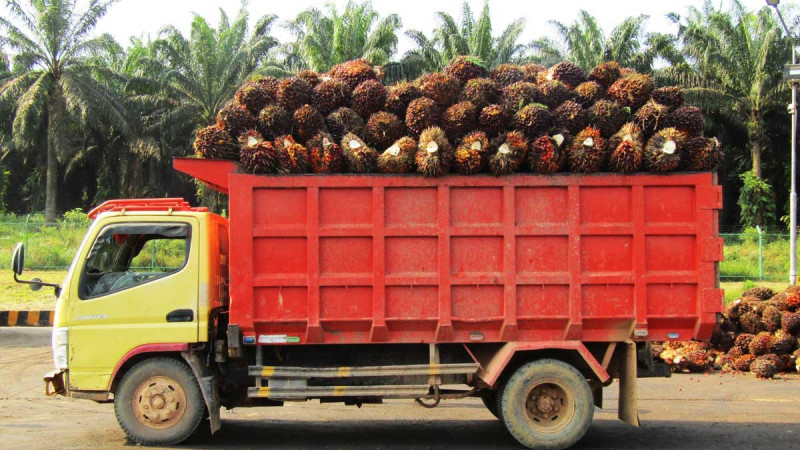
The impact of such policy discourse was felt almost immediately. Even before any formal implementation, fresh fruit bunch (FFB) prices in several regions came under pressure. Some palm oil mills reportedly limited purchases from independent growers, prioritizing supplies from their own nucleus estates.
For independent smallholders, who occupy the most vulnerable position within the supply chain, the consequences were immediate. Unsold fruit began losing value, highlighting how regulatory uncertainty alone can disrupt market confidence.
While government intervention in commodity trade is not a new concept, history suggests that monopolistic structures often carry significant risks. Excessive centralization may create bureaucratic bottlenecks, reduce efficiency, and increase opportunities for rent-seeking behavior.
Industry observers argue that Indonesia's palm oil sector has thrived over the past three decades largely because of its ability to adapt to competitive market pressures. Companies have continuously improved logistics, expanded downstream diversification, and penetrated more than 160 export destinations worldwide.
A single-operator export system, critics warn, could weaken the incentives that drive innovation and operational efficiency. In a highly dynamic global market, where product specifications, delivery schedules, and pricing mechanisms evolve rapidly, responsiveness remains a crucial competitive advantage.
Palm oil is no longer a simple bulk commodity. Approximately 90 percent of Indonesia's palm oil exports now consist of downstream products with varying quality standards and customer requirements. Maintaining flexibility and speed in responding to market developments has therefore become increasingly important.
At the same time, investor confidence remains closely linked to regulatory certainty. As Indonesia continues to promote downstream industrialization, policy stability will play a decisive role in attracting long-term investment into value-added processing industries.
Strengthening export governance and addressing concerns such as under-invoicing are undoubtedly legitimate policy objectives. However, many stakeholders believe these goals can be achieved through transparent oversight mechanisms without necessarily resorting to monopolistic trade arrangements.
As policymakers weigh their options, the choices made today could shape not only the future competitiveness of Indonesia's palm oil sector but also the livelihoods of millions of smallholders who depend on the industry. (*)
By Edi Suhardi, Sustainable Palm Oil Analyst
Disclaimer: The views expressed in this article are solely those of the author and do not necessarily reflect the position of InfoSAWIT.