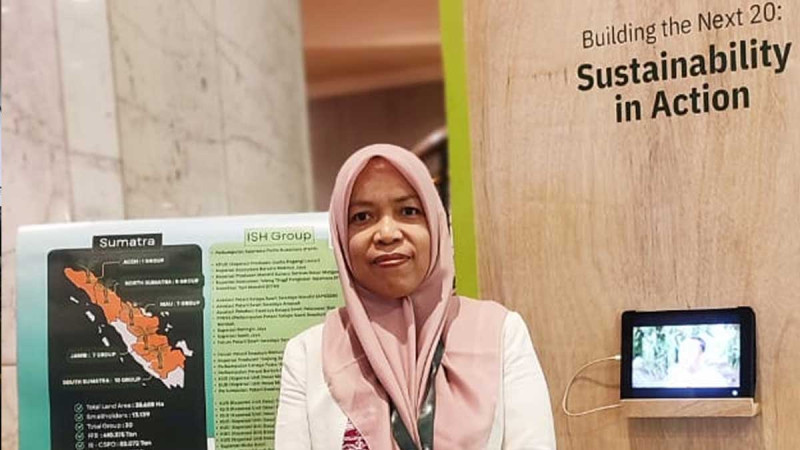
InfoSAWIT, JAKARTA — This year’s General Assembly (GA) of the Roundtable on Sustainable Palm Oil (RSPO) brought a new and compelling dynamic. For the first time, farmers’ voices resonated strongly in a forum that has long been dominated by representatives from industry and international institutions. Around 50 farmers attended the assembly, including 32 from Indonesia. They came not merely as participants, but carrying an important message: to question the commitment of buyers toward RSPO-certified palm oil products.
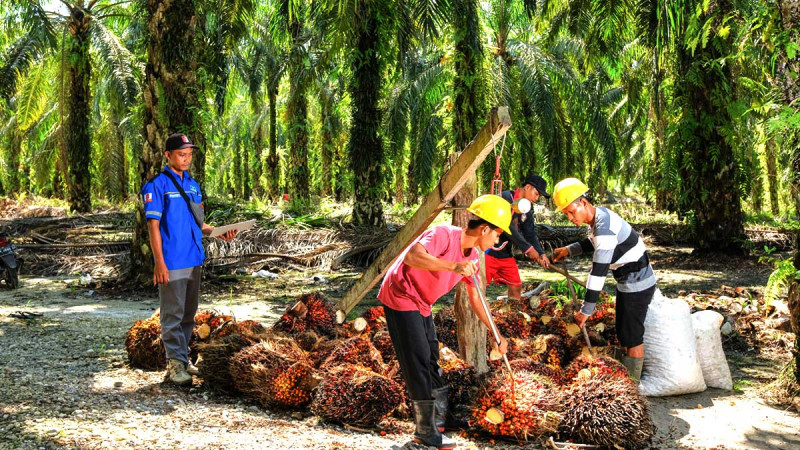
After more than a decade of working under the RSPO certification framework, smallholders are beginning to feel a growing gap between the commitments written on paper and the reality on the ground. Farmers such as Ardiansyah from Jambi and Tri Arianto from West Kalimantan raised concerns about the declining purchase of RSPO credits by buyers—even as the volume of credits generated by certified farmer groups continues to rise each year.
This situation has sparked deep concern. The RSPO credit system was designed to provide added value to certified farmers, serving as an incentive to maintain sustainable practices. Through the PRISMA platform, farmers can trade the sustainability value of their palm oil with purchasing companies worldwide. But as market interest wanes, the system stagnates. Without demand, there are no incentives—and without incentives, sustainability at the smallholder level risks losing its momentum.
For farmers, maintaining RSPO certification is no easy task. It involves audit costs, training, technical assistance, and continuous improvement of cultivation practices—all requiring long-term commitment. Without consistent market support, this burden can become overwhelming. As a result, some farmers have started to reconsider their participation in the RSPO scheme. If this trend continues, the broader effort to build an inclusive, sustainable palm oil supply chain could face serious setbacks.
The RSPO has long positioned itself as a multi-stakeholder platform committed to transforming the palm oil industry toward more environmentally, socially, and economically responsible practices. However, genuine sustainability cannot be achieved if only one side fulfills its commitments. Farmers have already taken concrete steps—changing cultivation methods, conserving forests, and improving governance. Now, it is time for buyers to honor their pledges by consistently supporting certified products and maintaining balance within the value chain.
At the RSPO Roundtable (RT) 2025 held in Kuala Lumpur, the theme “Building the Next 20: Sustainability in Action” served as a timely reminder for all RSPO members. After two decades of progress, RSPO can no longer rely on rhetoric alone—it is time to demonstrate real action. The message is clear: the future of sustainability depends on shared responsibility, not mere promises.
Farmers like Ardiansyah and Tri Arianto represent thousands of smallholders across Indonesia who have placed their hopes in this system. Their investment is not only financial but also personal—through time, effort, and trust. Their success should be proof that smallholders can be part of the global solution, not just passive recipients of policy. Yet, when market support falters, that trust begins to erode.
This crisis of confidence could ultimately undermine the legitimacy of sustainability itself. Without farmers, the sustainable palm oil supply chain will never be complete. Sustainability cannot rely solely on large corporations with abundant resources; it must grow from the ground up—from the smallholders’ plantations that form the backbone of the world’s palm oil supply. Here, the role of buyers is crucial—not only as end consumers but as partners committed both morally and economically.
What is needed now is not another declaration of intent, but proof of commitment. Buyers must ensure that every sustainability claim printed on their product labels truly reflects fair and responsible practices on the ground. Supporting RSPO credits for farmers is not an act of charity—it is a shared responsibility to preserve the integrity of the global sustainability system.
This year’s RSPO General Assembly has become a moment of reflection for the entire sustainable palm oil movement. Farmers have spoken—not out of protest, but out of a genuine desire to see commitments upheld consistently. Because without concrete action at the market level, all the farmers’ efforts will amount to nothing.
True sustainability will only be achieved when every stakeholder dares to keep their word. The farmers have already taken that step, despite their limitations. Now, the future of sustainable palm oil depends on whether buyers are willing to walk alongside them—or stop at the empty rhetoric of commitment. (*)
Writer: Rukaiyah Rafiq, Head of Secretariat, Sustainable Palm Oil Farmers Forum of Indonesia (Fortasbi)
Disclaimer: The views expressed in this article are solely those of the author and do not necessarily reflect the position of InfoSAWIT.