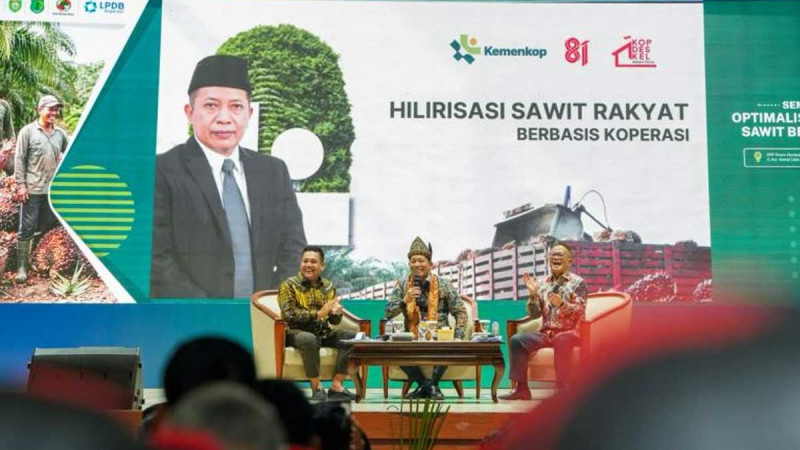
InfoSAWIT, MUSI BANYUASIN – The Indonesian government is encouraging plantation cooperatives to take a larger role in palm oil downstreaming, moving beyond plantation management to become owners and operators of crude palm oil (CPO) processing facilities.
The approach is expected to strengthen the bargaining position of palm oil smallholders while creating greater added value at the regional level. According to Indonesia’s Ministry of Cooperatives, the country currently has 2,587 cooperatives operating in the plantation sector.
Cooperatives are considered an important institutional foundation for developing a palm oil downstreaming ecosystem that directly involves smallholders. The government sees opportunities to connect farmers, cooperatives, processing facilities, financing institutions and markets within an integrated value chain.
Cooperatives located around palm oil plantation areas are being encouraged to move further into the supply chain. Instead of simply selling fresh fruit bunches (FFB), cooperatives could establish their own CPO mills and process the raw material into higher-value products.
Two Models for Cooperative-Based Downstreaming
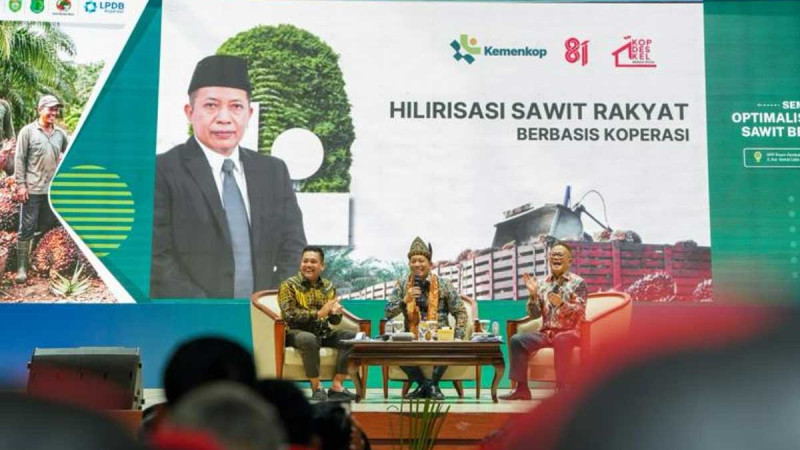
Minister of Cooperatives Ferry Juliantono said there are two approaches that can be pursued to develop cooperative-based palm oil downstreaming.
The first is to strengthen existing cooperatives that are already operating. The second involves consolidating primary cooperatives through larger-scale business entities.
Such consolidation is expected to improve economies of scale while strengthening cooperatives’ capacity to manage FFB supply, financing, processing and product marketing.
Financing will also be critical to accelerating the development of downstream businesses. Plantation cooperatives with established operations can potentially utilize financing facilities provided by the Revolving Fund Management Institution for Cooperatives (LPDB Koperasi).
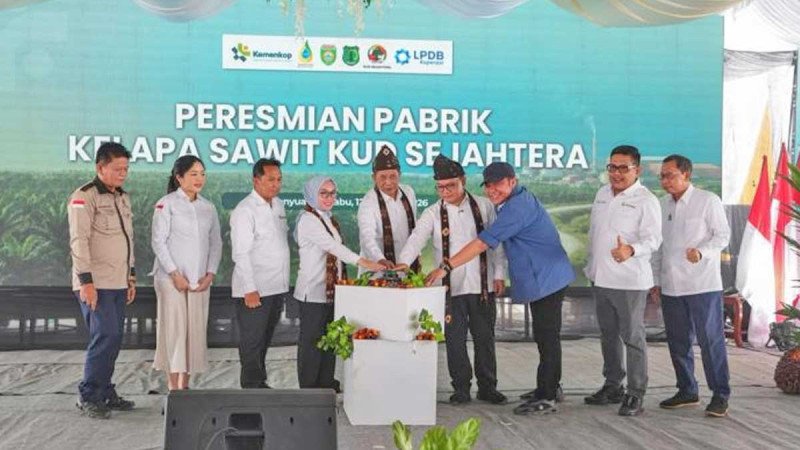
One example is Koperasi Mandiri Makmur, which has secured financing from LPDB Koperasi to build a CPO mill. Construction of the processing facility has reportedly reached around 45%.
Agrinas Palma Opens Partnership Opportunities
PT Agrinas Palma Nusantara (Persero) is also expected to play a role in expanding cooperative participation in palm oil management and downstreaming.
The company has been tasked under Presidential Regulation No. 5/2025 with managing oil palm plantations resulting from government enforcement against illegal cultivation in forest areas.
Agrinas Palma President Director Mohammad Abdul Ghani said the land under management should generate benefits for surrounding communities. Cooperatives are considered one of the key institutions that can participate in managing and developing the areas.
Agrinas Palma is also required to allocate at least 20% of the entrusted plantation area as plasma plantations for communities. Cooperatives are expected to become partners in fulfilling this obligation.
The company plans to prioritize cooperatives operating around the managed areas as partners for plantation maintenance, harvesting and other activities.
With a significant plantation area under management, cooperatives are expected to become strategic partners not only in plantation operations but also in palm oil downstreaming and food security initiatives.
The government hopes the model will encourage cooperatives to expand from upstream plantation activities into downstream processing. In this structure, cooperatives could eventually become owners and operators of CPO processing facilities.
For palm oil smallholders, stronger cooperative institutions could provide greater economies of scale and improve their position within the supply chain.
The development of cooperative-based palm oil downstreaming therefore goes beyond processing the commodity. It represents an effort to build an integrated ecosystem linking farmers, cooperatives, plantations, processing facilities, financing and markets within a stronger value chain. (T2)
Source: InfoSAWIT