InfoSAWIT, SEMARANG – Palm oil empty fruit bunches (EFB), one of the largest biomass residues generated by the palm oil industry, are being transformed into a potential source of value-added livestock feed by students from Universitas Diponegoro (UNDIP).
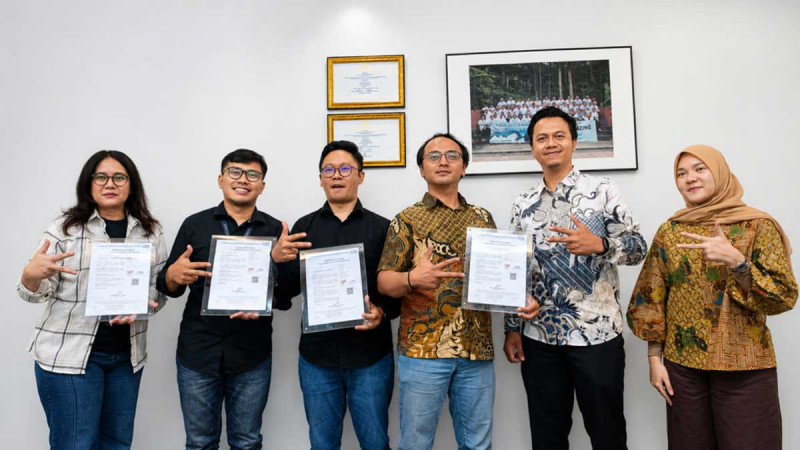
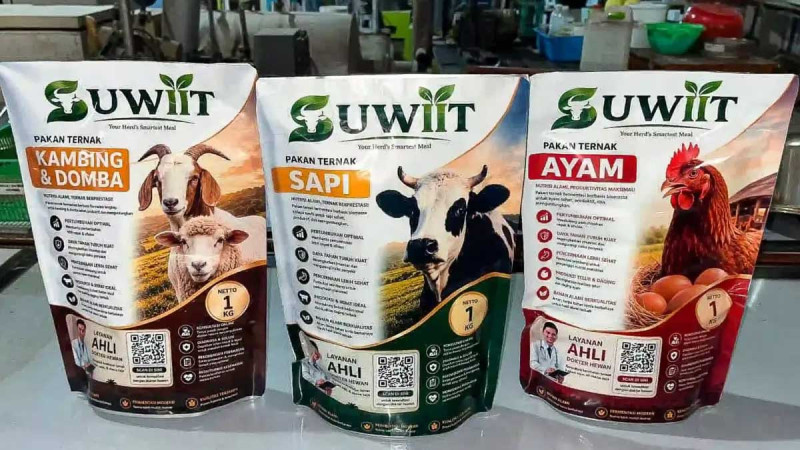
Their innovation, known as SUWIIT (Smart Livestock Integrated Technology), earned a Gold Medal in the Business Plan category at the 11th Olimpiade Vokasi Indonesia (OLIVIA XI) 2026, held at Universitas Negeri Surabaya from August 2–4, 2026.
The concept combines livestock feed made from palm oil biomass with digital livestock services, offering an approach that links the palm oil and livestock sectors through a circular economy model.
The SUWIIT team consists of Luis Ibanez Sitinjak, Kholis Na’imah, and Irgy Khoiroel Al Fahrezi, students of the Applied Bachelor’s Program in Industrial Chemical Engineering Technology at UNDIP’s Vocational School.
Their proposal was presented before a panel of judges representing academia, industry, business, and government institutions. The idea was developed from two challenges faced by communities in palm oil-producing areas: the large volume of biomass generated by plantations and mills, and the high cost of livestock feed.
Turning EFB into Value-Added Feed
Under the SUWIIT concept, palm oil empty fruit bunches are processed into a nutraceutical livestock feed ingredient.
The students use a fermentation process enriched with probiotics, minerals, and natural immunostimulants to improve the nutritional value of the biomass. The approach seeks to turn a material that has traditionally required further management into a potential raw material for the livestock industry.
The resulting feed is designed to support digestive health, strengthen animals’ immune systems, and promote livestock growth.
Beyond waste utilization, the concept seeks to create a new value chain connecting palm oil biomass with livestock production.
This approach reflects the principles of a circular economy, where materials remaining from one production process are redirected into another activity to generate additional economic value.
SUWIIT Adds AI-Based Digital Services
The innovation also extends beyond feed production.
The UNDIP team developed Smart Livestock Assistance, a digital platform designed to help farmers manage livestock more efficiently. Through the platform, farmers can monitor animal health, access veterinary consultations, and receive automated care recommendations supported by artificial intelligence (AI).
The platform also incorporates interactive educational features and a livestock marketplace, creating an integrated digital ecosystem for information, animal health services, farm supplies, and market access.
The combination of physical products and digital services became one of SUWIIT’s key strengths in the Business Plan competition.
Based on the team’s preliminary calculations, the model could potentially reduce feed costs by around 20–40 percent while increasing livestock productivity by a similar range. The concept also estimates that livestock mortality could potentially be reduced by around 10–20 percent.
However, these figures remain initial projections and require further testing under actual field conditions.
Palm Oil Scholarship Supports Student Innovation
The development of SUWIIT was supported by Dr. Fahmi Arifan, who provided guidance on both the technological aspects and business model.
UNDIP Vocational School’s Head of the Industrial Chemical Engineering Technology Study Program, Dr. Mohamad Endy Julianto, said the achievement demonstrates the importance of an educational environment that allows students to turn ideas into practical solutions.
Palm oil scholarships also provided an opportunity for students to broaden their understanding of the palm oil sector and explore opportunities in downstream industries and technology.
For Luis Ibanez, OLIVIA XI 2026 offered an important lesson that technological innovation alone is not enough. A successful concept must also address real community needs, demonstrate business feasibility, and have the potential to be implemented on a broader scale.
Kholis Na’imah highlighted the circular economy principle behind the project, arguing that biomass residues should not necessarily be viewed as the end of a production process but as resources that can still be transformed into higher-value products.
Irgy Khoiroel Al Fahrezi added that livestock farmers face challenges beyond feed availability and prices. Access to information, veterinary services, education, technical assistance, and markets are also important elements in developing sustainable livestock businesses.
For that reason, SUWIIT is designed as an integrated ecosystem combining livestock feed, digital technology, animal health, education, and market access.
The initiative illustrates how palm oil biomass can become a starting point for innovation beyond conventional plantation products, while creating potential links between the palm oil and livestock sectors. (T2)
Source: InfoSAWIT