InfoSAWIT, JAKARTA – The Indonesian Sustainable Palm Oil (ISPO) certification is increasingly becoming a key benchmark for plantation governance as the palm oil industry faces growing regulatory requirements and market expectations for responsible production.
For Kalimantan Agro Sukses (KAS) Group, certification is being positioned not merely as an administrative obligation but as part of a broader effort to strengthen compliance, sustainability, and long-term plantation management.
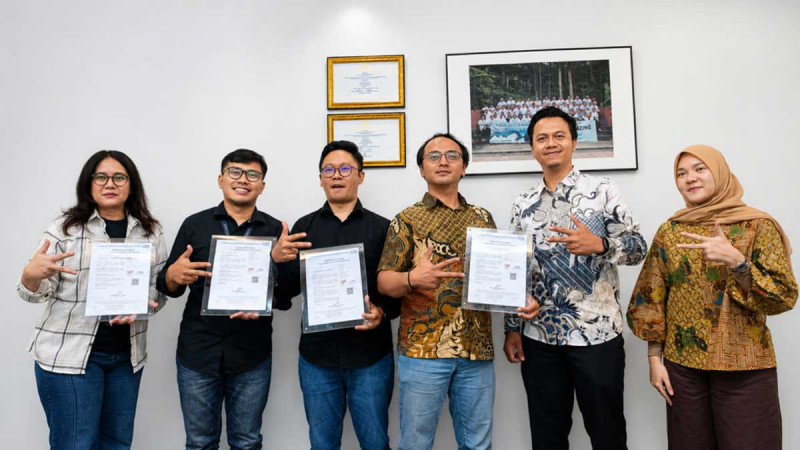
In early June 2026, four KAS Group subsidiaries—PT Agro Manunggal Selaras (AMS), PT Borneo Citra Persada Jaya (BCPJ), PT Borneo Citra Persada Abadi (BCPA), and PT Borneo Citra Persada Mandiri (BCPM)—obtained ISPO certification. Together, the four companies manage approximately 50,000 hectares and three palm oil mills in East Kalimantan.
The achievement followed earlier certifications obtained by PT Citra Palma Pertiwi (CPP) and PT Setia Agro Abadi (SAA), which manage around 20,000 hectares of plantations.
As of mid-2026, six KAS Group plantation companies and three palm oil mills had obtained ISPO certification.
Preparation Began Years Before Certification
KAS Group Sustainability representative Adi Bijaksana said the certification process was not achieved overnight. Preparations began as early as 2021–2022, when the company started strengthening several aspects of plantation operations.
These included infrastructure development, employee facilities, licensing requirements, implementation of ISPO principles and criteria, as well as occupational health and safety measures.
“From the initial land development through production, we have sought to ensure that every process is properly managed. That became our main foundation and gave us confidence to enter the ISPO certification process,” Adi told InfoSAWIT in June 2026.
The certification application was submitted in 2025 after the company considered its documentation and regulatory requirements sufficiently complete. Internal audits were conducted beforehand to assess readiness for the formal certification process.
Adi said the biggest challenge was not necessarily the administrative or technical requirements, but maintaining consistency in implementing policies from management level down to field operations.
Policies covering occupational safety, social relations, and sustainability governance must be continuously communicated to employees and surrounding communities. Their implementation depends not only on formal procedures but also on daily behavior, understanding, and workplace culture.
“ISPO is essentially a compliance system. Once a company has made the commitment, the challenge is ensuring that every element understands and implements it continuously,” he said.
ISPO as Part of Long-Term Sustainability
KAS Group sees certification as more than a regulatory requirement. The company views it as a tool for assessing how effectively its operations balance business performance, employee welfare, and environmental protection.
The approach reflects the triple bottom line concept of profit, people, and planet, which has become part of the company’s broader perspective on long-term business development.
Currently, approximately 80 percent of KAS Group’s business units have obtained ISPO certification. The group plans to bring two additional subsidiaries into the certification process, with audits scheduled in the near term and completion targeted for 2027.
If the process proceeds as planned, all KAS Group plantation units will have achieved ISPO certification by 2027.
The company is also considering certification under the Roundtable on Sustainable Palm Oil (RSPO), although its immediate priority remains ISPO because it is mandatory under Indonesian regulations.
Certification Requires Consistent Implementation
ISPO Scheme Manager at PT Global Gateway Certifications Indonesia (GGCI), Vallen Sakti Maulana, said the audit process for the four KAS Group companies began in January 2026.
Following verification, corrective actions, and comprehensive assessment, the certificates were issued and handed over on June 6, 2026.
According to Vallen, all ISPO principles and criteria are mandatory. Companies cannot selectively comply with some requirements while overlooking others.
The requirements cover business legality and land rights, good plantation practices, environmental management, worker protection, relations with surrounding communities, supply chain transparency, and long-term sustainability.
“Plantation companies do not operate in isolation. They are part of communities and the environment that must be protected. That is why social relations and environmental responsibility are important elements of certification,” Vallen said.
He added that management commitment was a key factor in the audit process. Both central management and field-level operational teams demonstrated a willingness to undertake continuous improvements.
Well-organized documentation, effective operational controls, and openness to corrective measures also supported the certification process.
The legal foundation for ISPO has also been strengthened through Presidential Regulation No. 16 of 2025, which reinforces certification as an obligation for the plantation sector.
Certification as a Starting Point
For GGCI, the certification of four KAS Group companies should not be viewed simply as an administrative achievement. The standards need to be maintained through continuous implementation of ISPO’s principles in daily operations.
The experience is also expected to provide a reference for other KAS Group units that are still preparing for certification.
Ultimately, sustainability cannot be measured solely by the presence of a certificate on an office wall. Its real test lies in whether companies consistently implement responsible practices while maintaining productivity, protecting workers and communities, and managing environmental impacts.
KAS Group’s progress toward full ISPO certification therefore represents not only regulatory compliance but also an effort to build sustainability into its operational culture.
As global markets place greater emphasis on responsible production, traceability, and accountability, the company’s certification roadmap could become an important foundation for strengthening competitiveness while pursuing a balance between business growth and sustainability. (T2)