InfoSAWIT, JAKARTA – Employee cooperatives should be repositioned as a strategic pillar of workers’ welfare alongside fair wages, occupational safety, and social security, according to Sumarjono Saragih, Chairman and Founder of the Worker Initiatives for Sustainable Palm Oil (WISPO). He argues that stronger, professionally managed cooperatives could significantly improve the quality of life for millions of Indonesian workers, particularly in the palm oil industry.
Writing in an opinion piece received by InfoSAWIT, Sumarjono said the public discourse on workers’ welfare has long focused primarily on wages. While income remains an important indicator, he believes sustainable welfare depends on a broader ecosystem that includes decent work, safe working conditions, social protection, and access to economic opportunities.
"Increasing salaries alone is not enough to build long-term prosperity," he noted. "Workers also need institutions that strengthen their financial resilience and improve their overall quality of life."
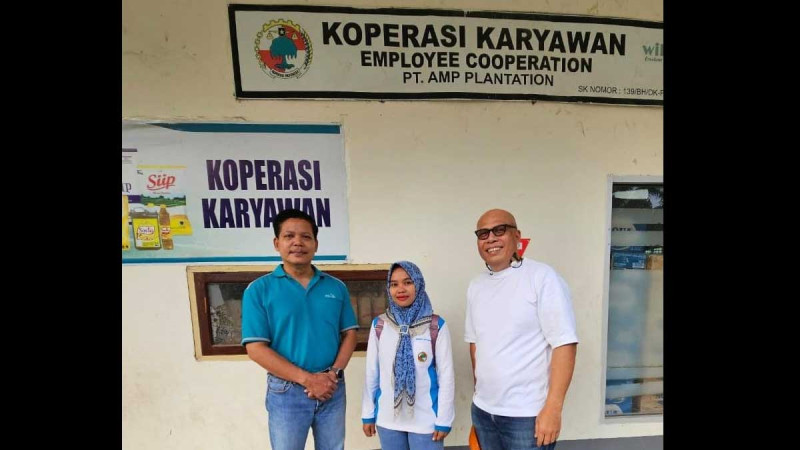
According to Sumarjono, employee cooperatives—or koperasi karyawan (Kopkar)—have gradually faded from national discussions despite their potential to become a practical economic support system for workers and their families. Beyond providing affordable goods and emergency financial assistance, cooperatives also allow members to benefit directly from business profits through annual surplus distributions.
He said this year's National Cooperative Day should serve as an opportunity to restore employee cooperatives to the center of Indonesia's labor welfare strategy. While the government has prioritized the Merah Putih Village Cooperative (KDMP) initiative to strengthen rural economies, a similar commitment should also be extended to cooperatives operating within companies.
The legal foundation already exists. Indonesia's Constitution recognizes cooperatives as a key component of the national economy, while Article 101 of Law No. 13 of 2003 on Manpower encourages the government, employers, and workers to promote employee cooperatives and other productive business initiatives.
Despite this mandate, Sumarjono believes implementation has lagged behind.
Traditionally, Indonesia's labor welfare framework has rested on three major pillars: fair wages and decent work, productivity improvement, and occupational safety supported by social security. As workplaces continue to evolve, he argues that employee cooperatives deserve recognition as a fourth pillar capable of complementing these existing foundations.
Unlike many welfare programs, cooperatives create shared economic value because workers become both customers and owners. As cooperative businesses expand, the financial returns are redistributed to members through annual dividends, creating a sustainable cycle of shared prosperity.
Examples from several palm oil plantations in Central Kalimantan and West Sumatra, as well as companies in Indonesia's automotive sector, demonstrate that professionally managed employee cooperatives can generate annual returns equivalent to one or even two months' wages. International models such as Singapore's NTUC and Spain's Mondragon Corporation further illustrate how worker-owned cooperatives can evolve into competitive, modern business institutions without abandoning cooperative values.
However, Sumarjono acknowledged that governance remains the biggest challenge. Many cooperatives continue to struggle with outdated administration, limited services, weak accountability, and declining member confidence.
To revitalize the movement, he outlined three priorities.
First, employers should actively integrate employee cooperatives into their long-term welfare strategies by supporting leadership development, business partnerships, and institutional capacity building.
Second, cooperative leaders must be selected based on competence and integrity rather than popularity, while ensuring transparent and accountable governance that delivers tangible benefits to members.
Third, digital transformation should become a central objective. Modern digital systems would improve transparency, accelerate services, and provide members with real-time access to financial information, helping rebuild trust among younger generations of workers.
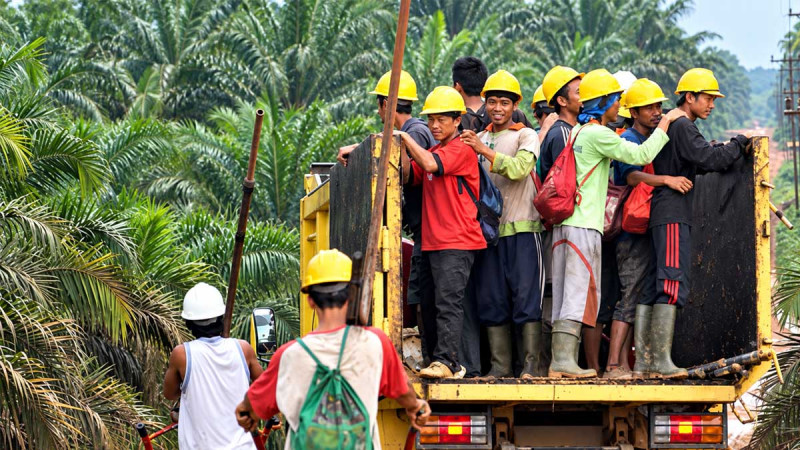
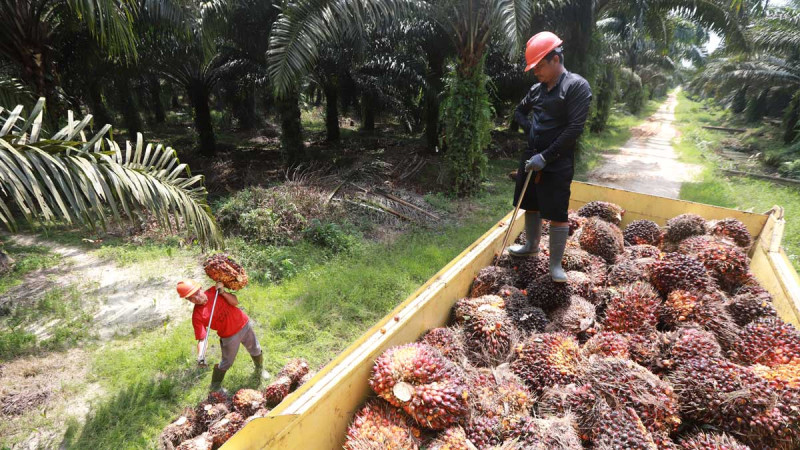
For Indonesia's palm oil industry, the proposal carries particular significance. Around five million direct workers depend on the sector, with plantations spread across approximately 16,000 villages, many of which have limited access to financial services and economic infrastructure.
Within this context, employee cooperatives could evolve beyond internal company organizations into strategic partners for village cooperatives, contributing to stronger local economies while improving workers' financial well-being.
Sumarjono concluded that sustainable palm oil should not be measured solely by productivity or environmental performance, but also by how effectively the industry improves the lives of its workforce.
"People-Centric Indonesia Sustainable Palm Oil means ensuring that workers, as the backbone of the industry, enjoy continuously improving welfare alongside sustainable production," he wrote. (T2)